Shawn Marshall
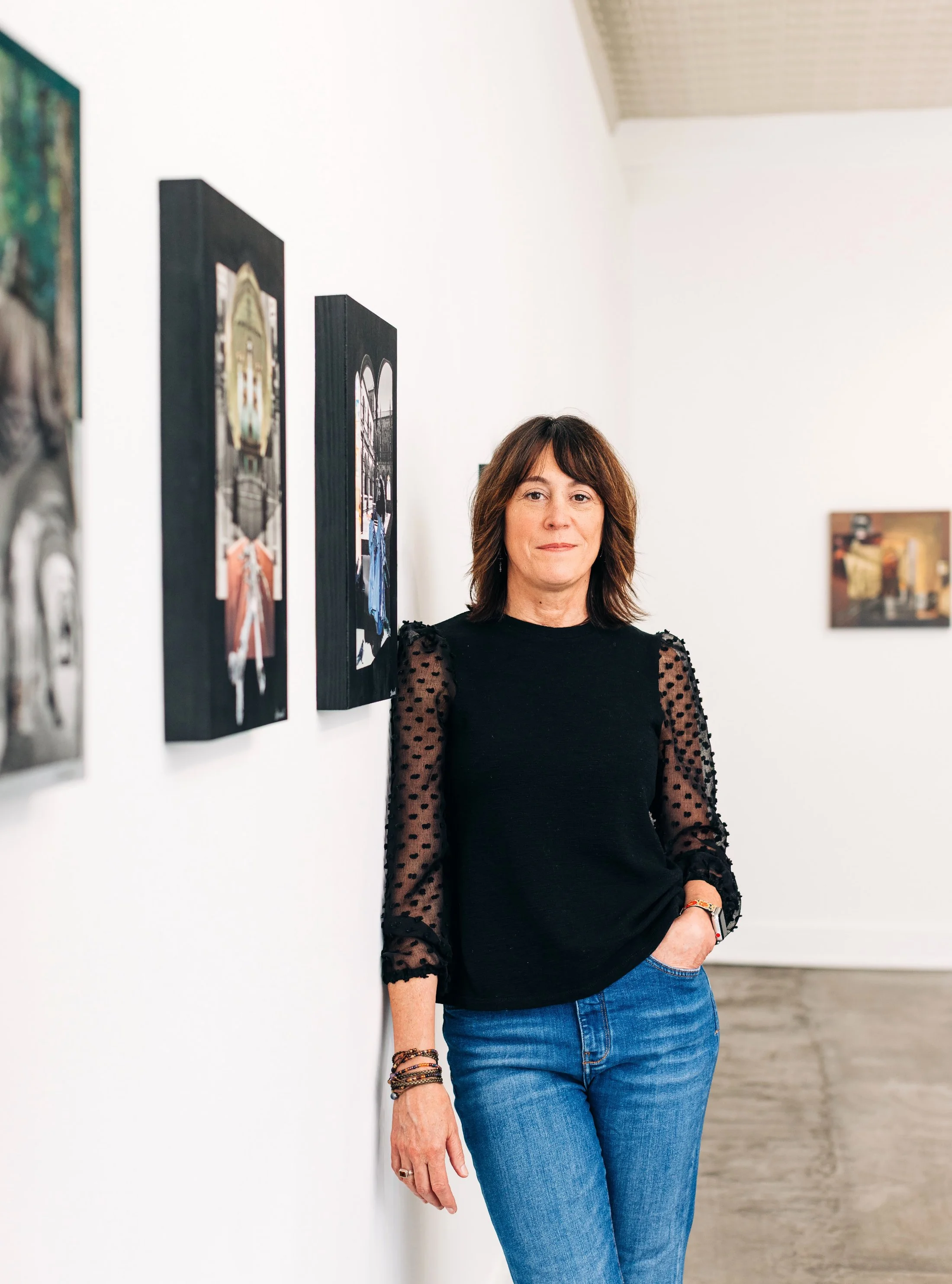
Lousville, KY
Website
www.shawnmarshallart.com
How would you describe your work?
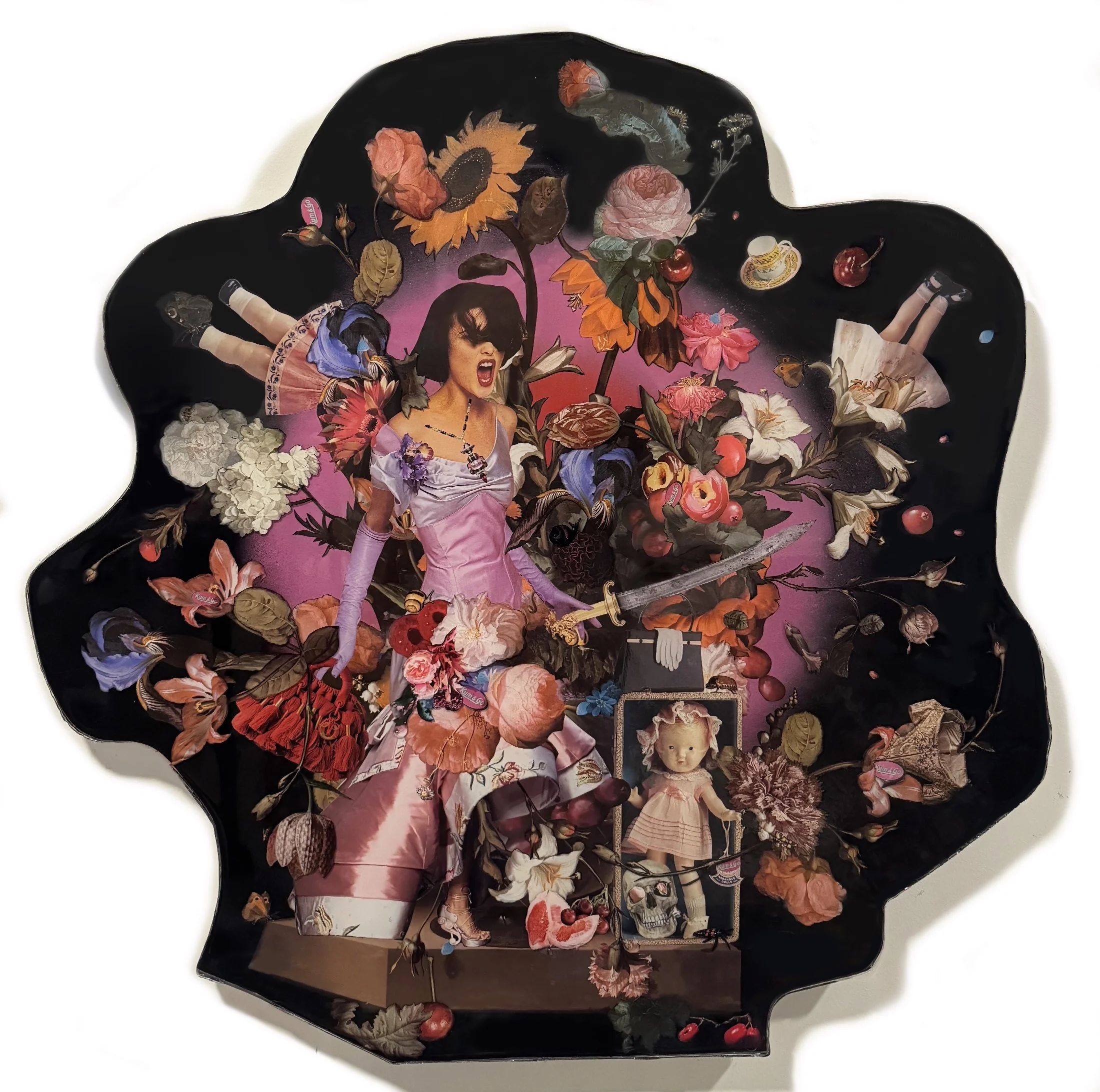
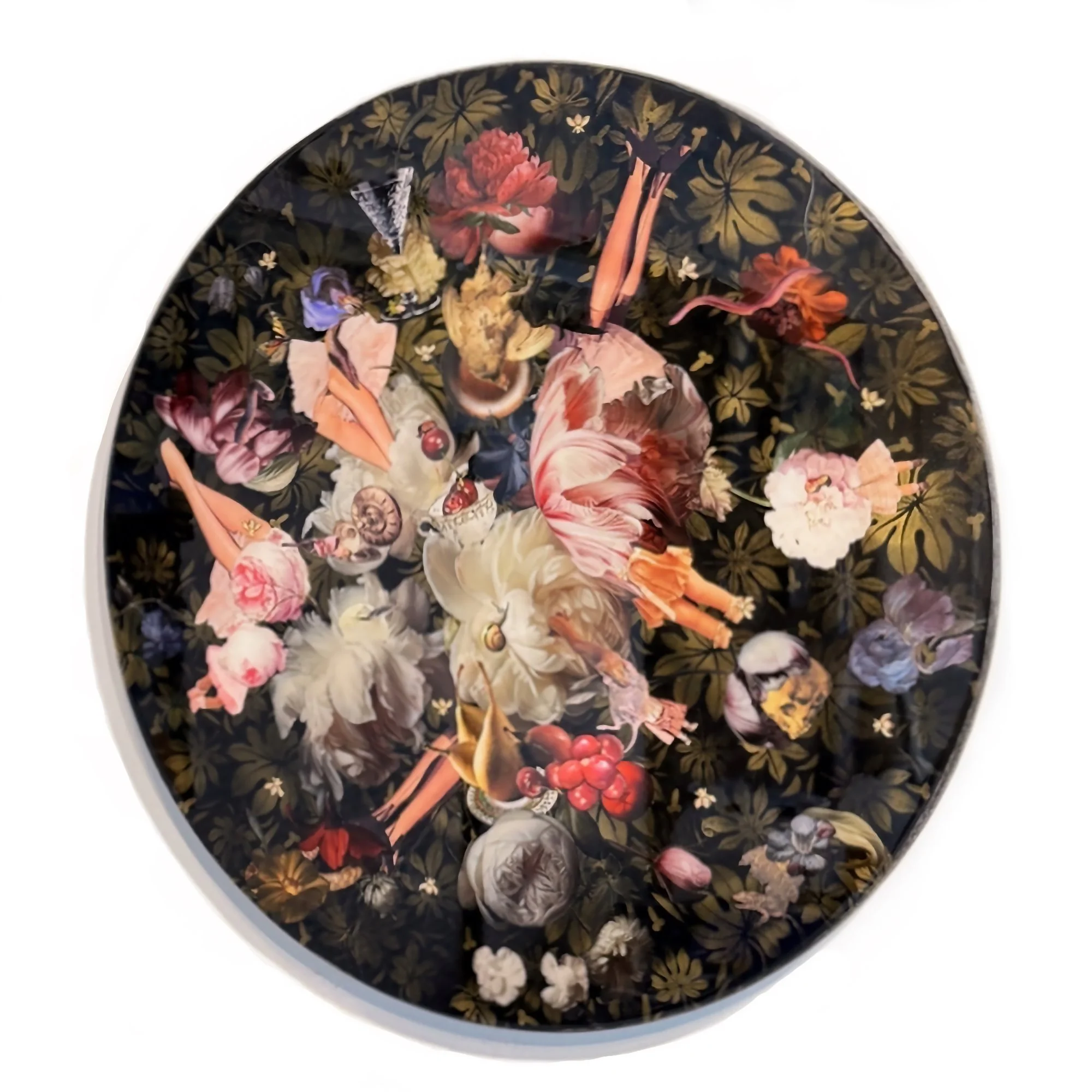
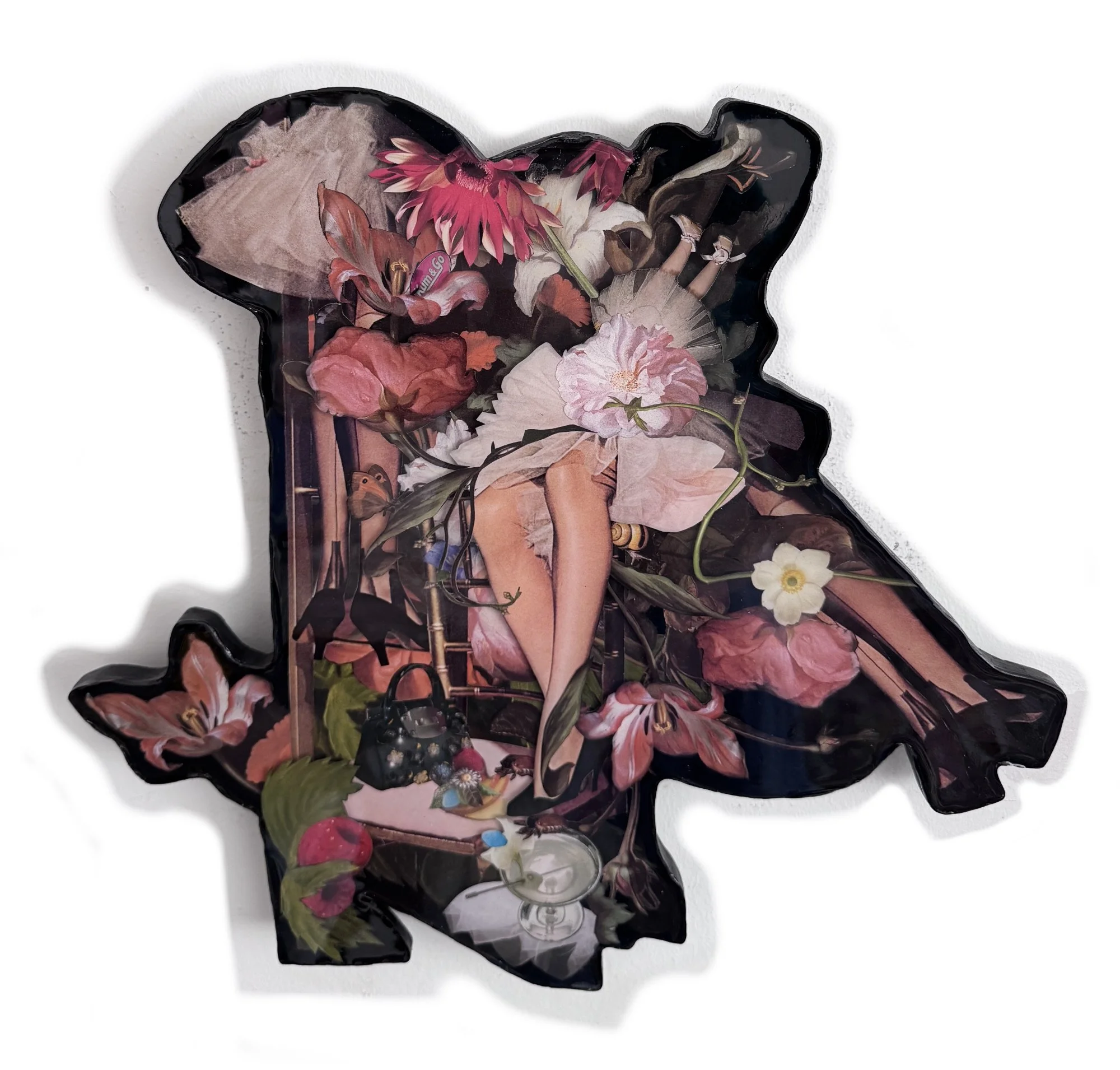
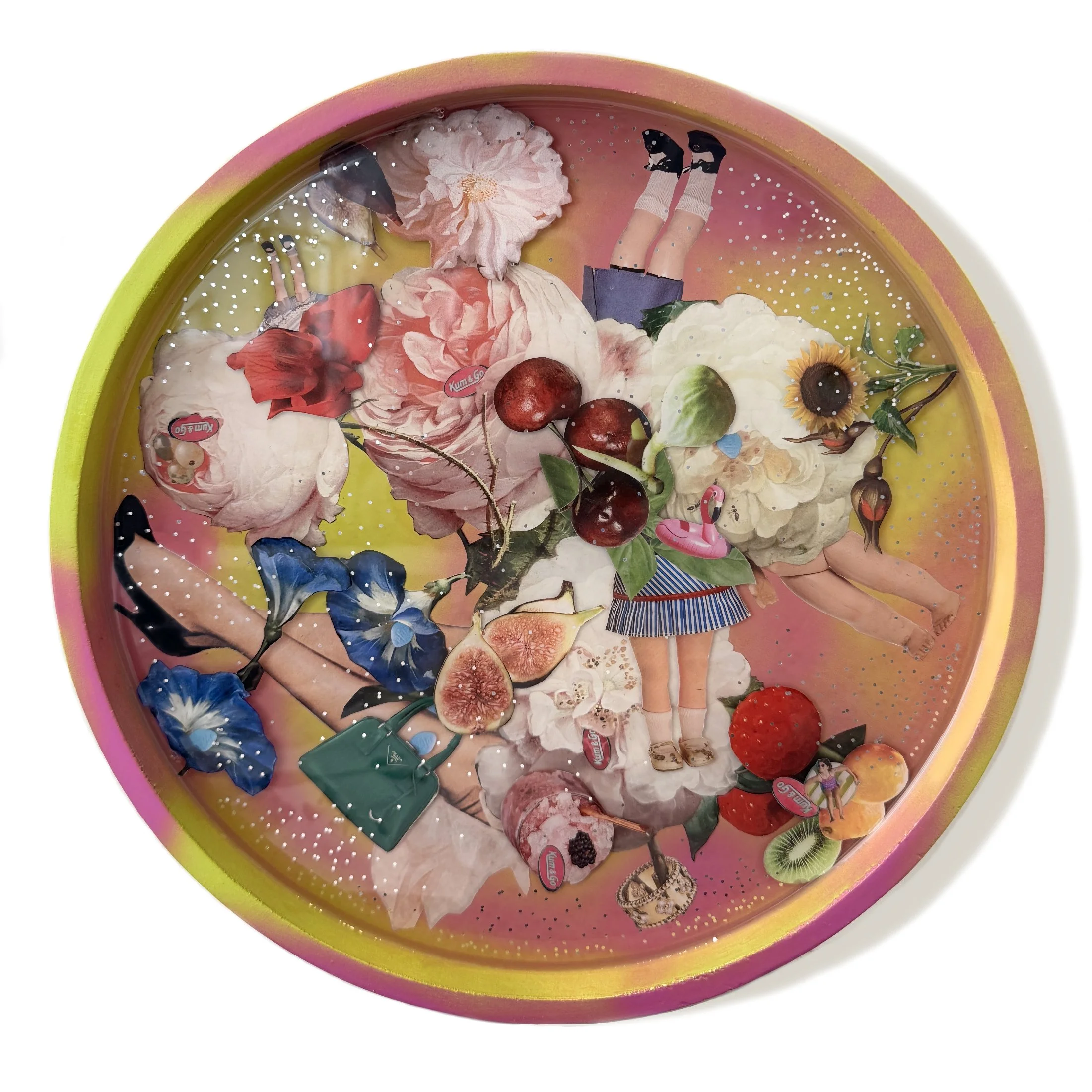
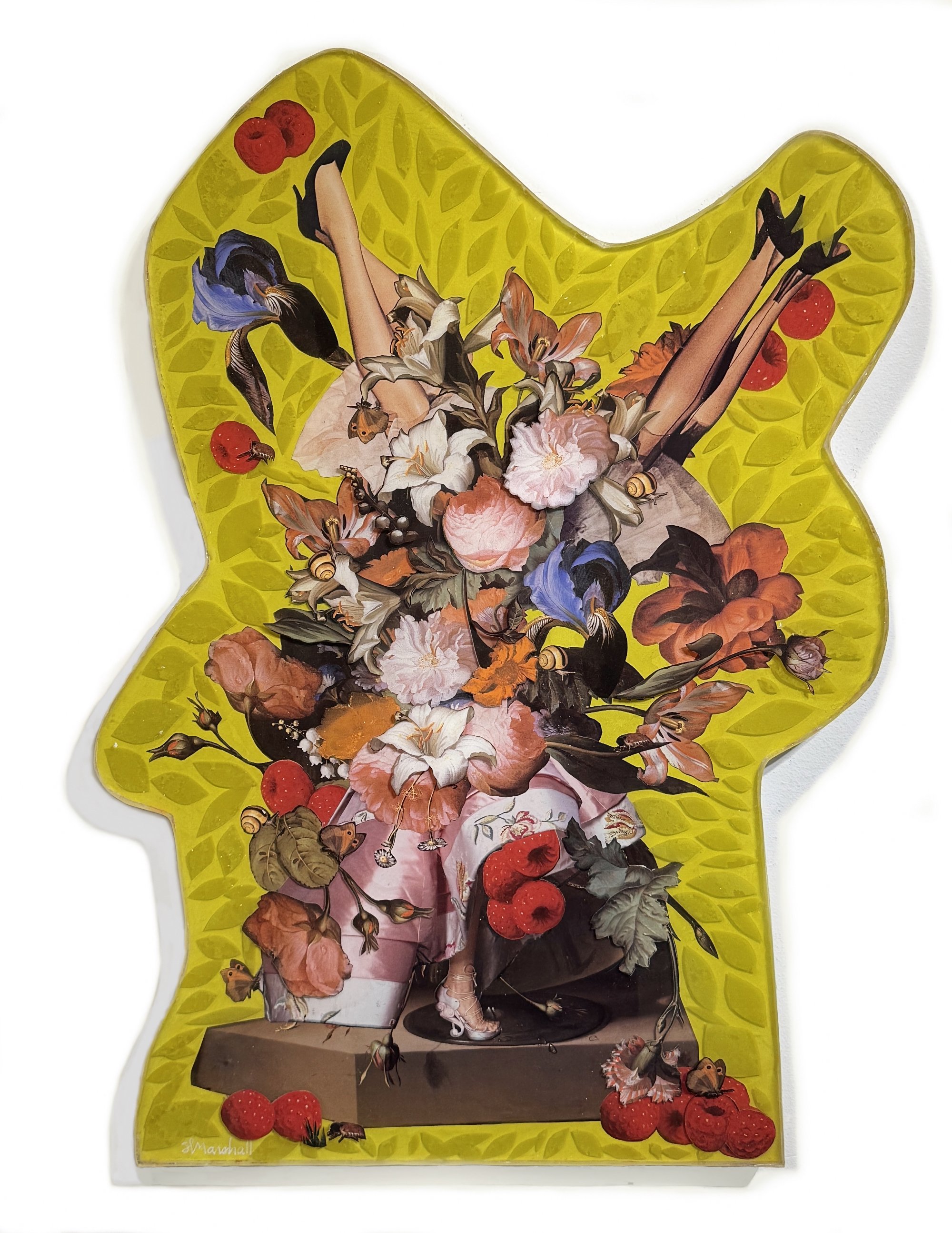
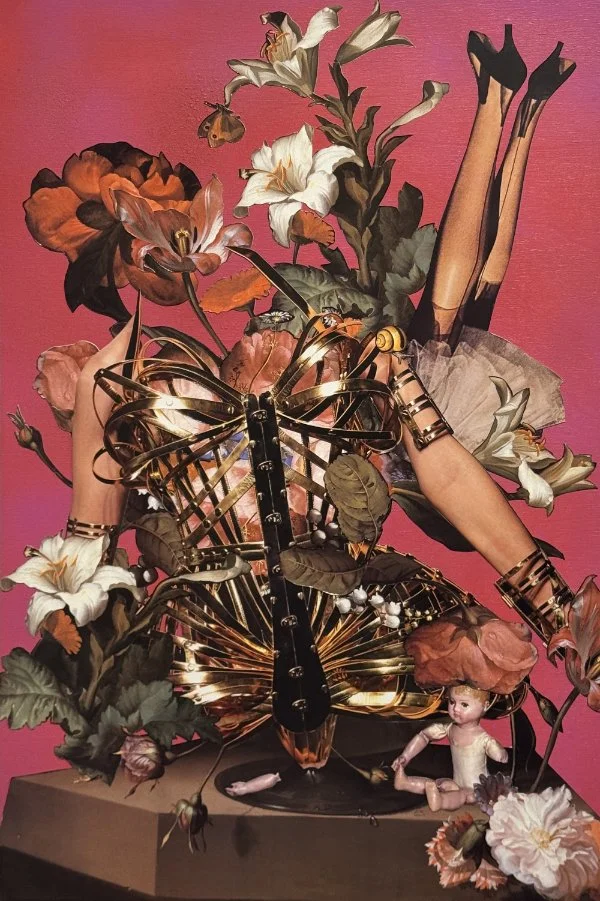
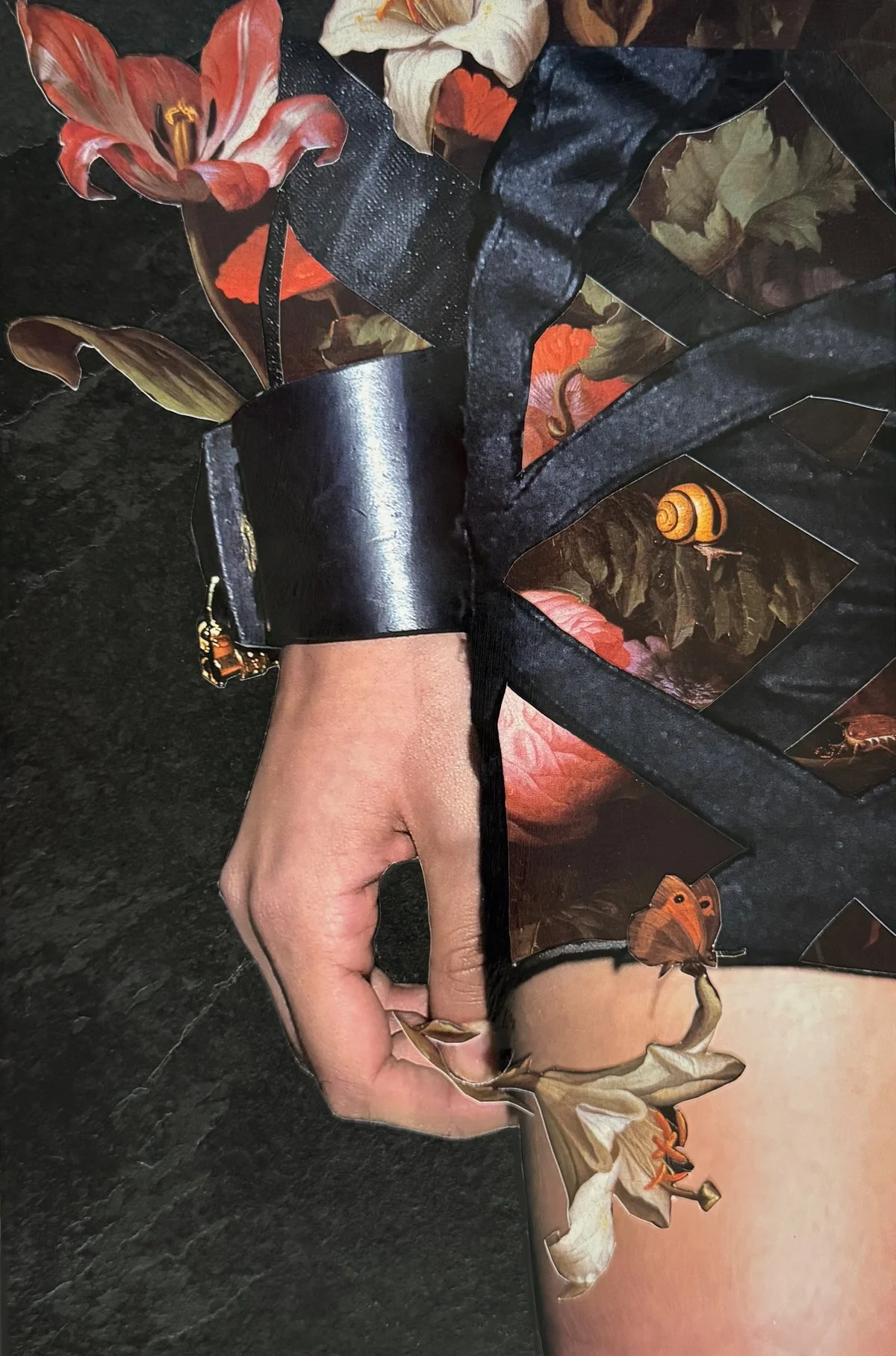
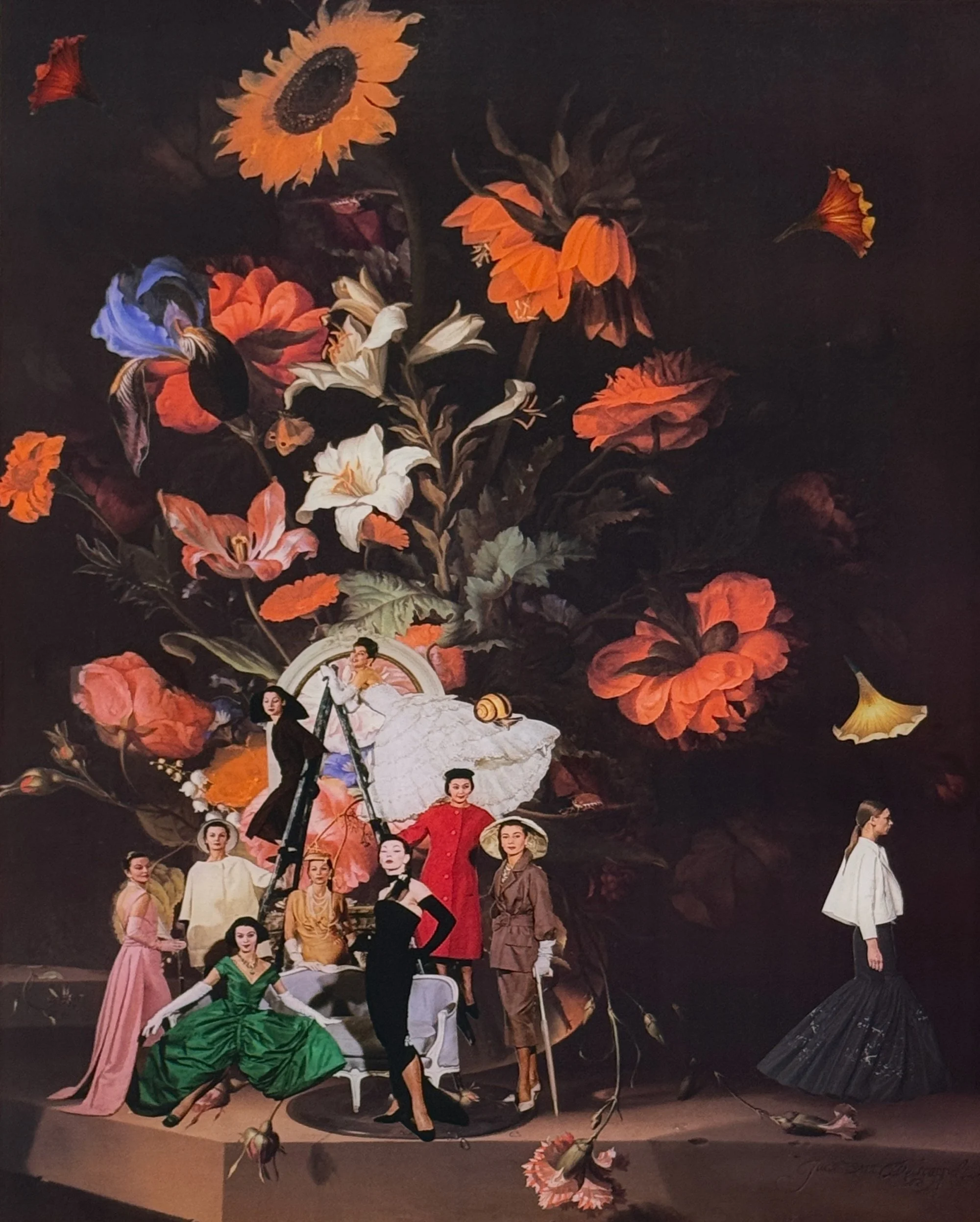
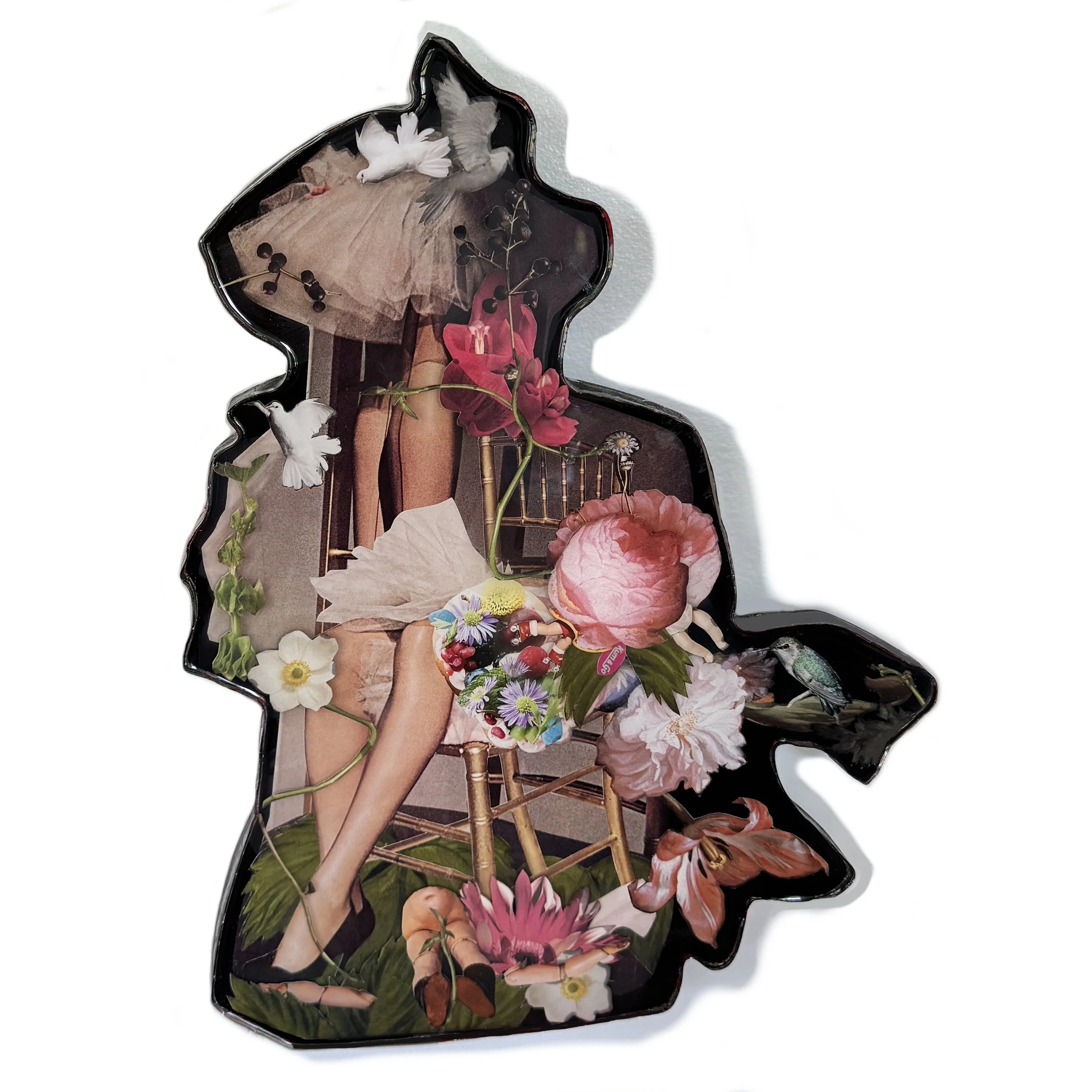
I create hand-cut narrative-driven collages that explore the tension between the classical and the contemporary. My current work examines how femininity is constructed through architecture, material culture, and historical systems of display. Utilizing hand-cut imagery layered with archival resin on wood, I build dense spatial assemblies that function as apertures. From my background in architecture, I view collage not as a flat surface, but as a site of structural layering. In my most recent series, I utilize the visual language of the Vanitas still life. These works are often overflowing with floral abundance and consumer fragments to explore the tension between beauty as an invitation and as a constraint. In some works I integrate architectural structures and religious iconography. In others, I blend disembodied elements of the female form to create vitrines of identity.
What inspires you?
My students inspire me - it's the reason I love teaching visual arts! (I teach high school visual arts; ceramics, sculpture, and architectural design.) My students are full of questions and ideas, and not yet jaded by age and experience. They continually remind me that feeling cynical about art and life in general is a choice, not a foregone conclusion as we age.
Can you speak about your process?
My process is entirely analog and tactile. Everything starts with the hunt for imagery, and I hand cut every element from physical sources like vintage books, magazines, and posters. Because I am so focused on creating depth, I pay close attention to the profile of the paper, and actually hand paint the white edges of every single cut out, even though they are only about .2mm thick.
By tinting those edges to match the imagery or the background, I eliminate that flat paper doll look and allow the pieces to blend seamlessly into the environment I am building. It is tedious, but it helps make the visual depth feel convincing. To add more depth, I alternate two to four layers of these hand painted cutouts with archival resin. This creates a literal sandwich of space where the figures inhabit different planes. I also often work with a craftsman to create custom - cut wood panels, which allows me to move beyond the standard rectangle and complement the flow of the collage itself.
How did you become interested in art?
I knew from an early age I wanted to be an artist. Growing up overseas, immersed in different cultures and surrounded by art and architecture from around the world, only deepened my admiration and appreciation for both. I owe much to my parents’ love of the arts, which led them to take us to museums, historical architectural sites, and musical performances, and to ensure we experienced the food, music, and customs of each country we lived in.
Do you have any favorite artists, movies, books, or quotes?
One of the most inspiring books I have read in recent years is The Creative Act: A Way of Being by Rick Rubin. He speaks to the universal experience of creation whether you are a musician, a writer, or a visual artist. Reading this book was a turning point for me because it helped build a new sense of confidence in my work and my identity as an artist.
Coming from a background in architecture rather than a traditional fine arts program, I often felt as though I lacked the formal pedigree or the academic vocabulary required to explain my work.
I often felt like an outsider to the traditional art world. Rubin’s writing on the importance of trusting one’s own intuition and the true role of the critic helped me quiet those doubts. It allowed me to realize that the practice is about the making itself and trusting the process, which has been vital to the growth of my work.
A couple of my favorite quotes from the book are:
"The artist may have an intention when starting a work, but the work often has its own ideas. The meaning is not for the artist to dictate; it’s for the viewer to discover."
"If you know what you want to do and you do it, that's the work of a craftsman. If you begin with a question and use it to guide an adventure of discovery, that's the work of the artist."
An artist whose work I have loved and followed for a long time is Cecily Brown. I first saw her work in Oxford, England in 2005 and was blown away. I am drawn to how she balances on the edge between abstraction and figuration. To me, her work is visceral. You can just feel the energy of the paint. Much of it is also sexually charged in a way that feels very human and raw.
I'm amazed how she's able to paint in a way that the image never quite settles; it stays in a state of flux where a body might dissolve into flowers or the landscape.
What advice do you have for younger artists?
Focus on output over perfection. Keep working and push through the stages of making 'ugly' work because it’s a prerequisite for growth and eventually breakthrough pieces. For the vast majority of us, a sustainable career isn't built on a single lucky break, but on years of consistent, hard work. Trust that the volume of your work will eventually lead to the quality you’re aiming for.