Jade Zammit
Malta
Social Media:
Instagram
How would you describe your work?
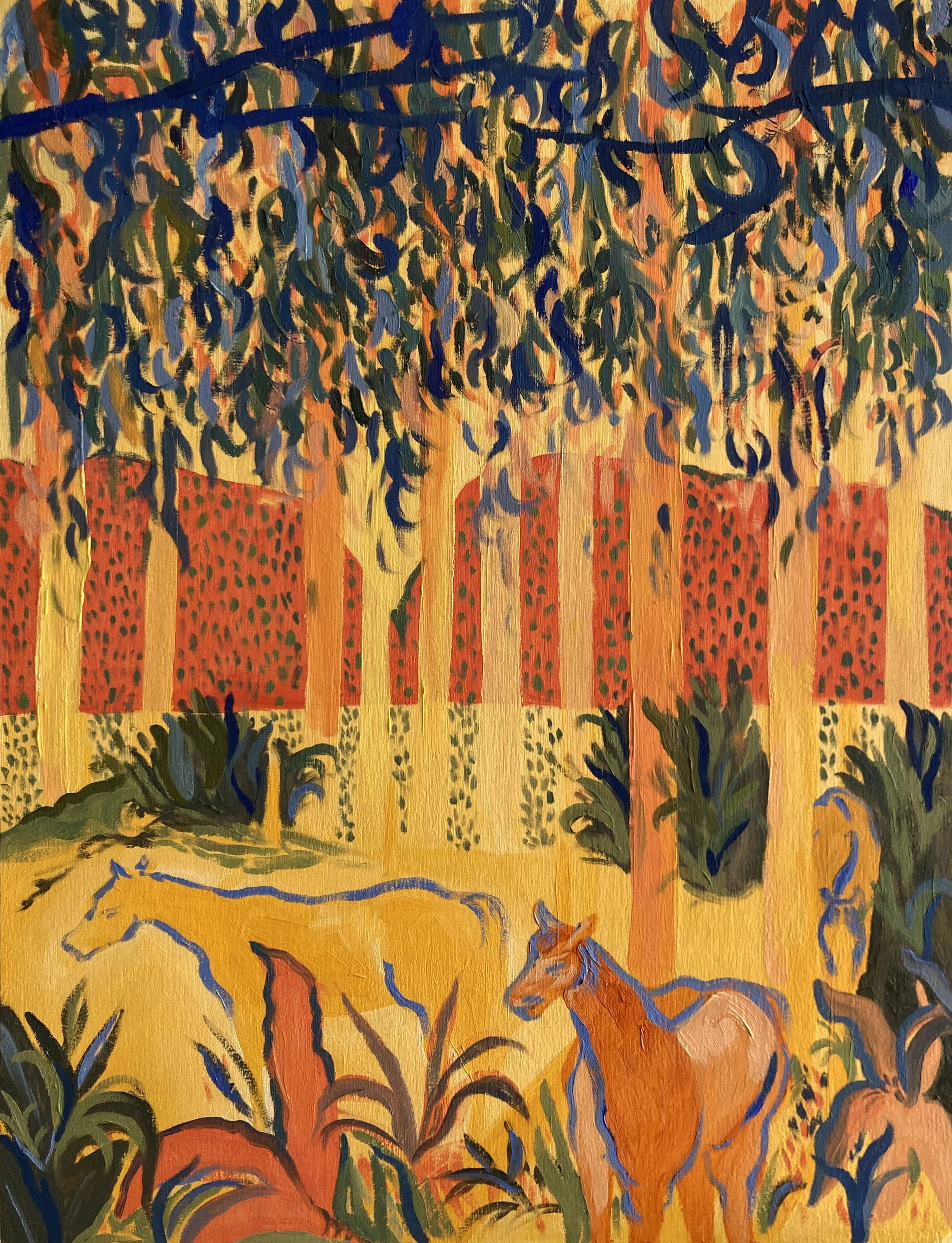
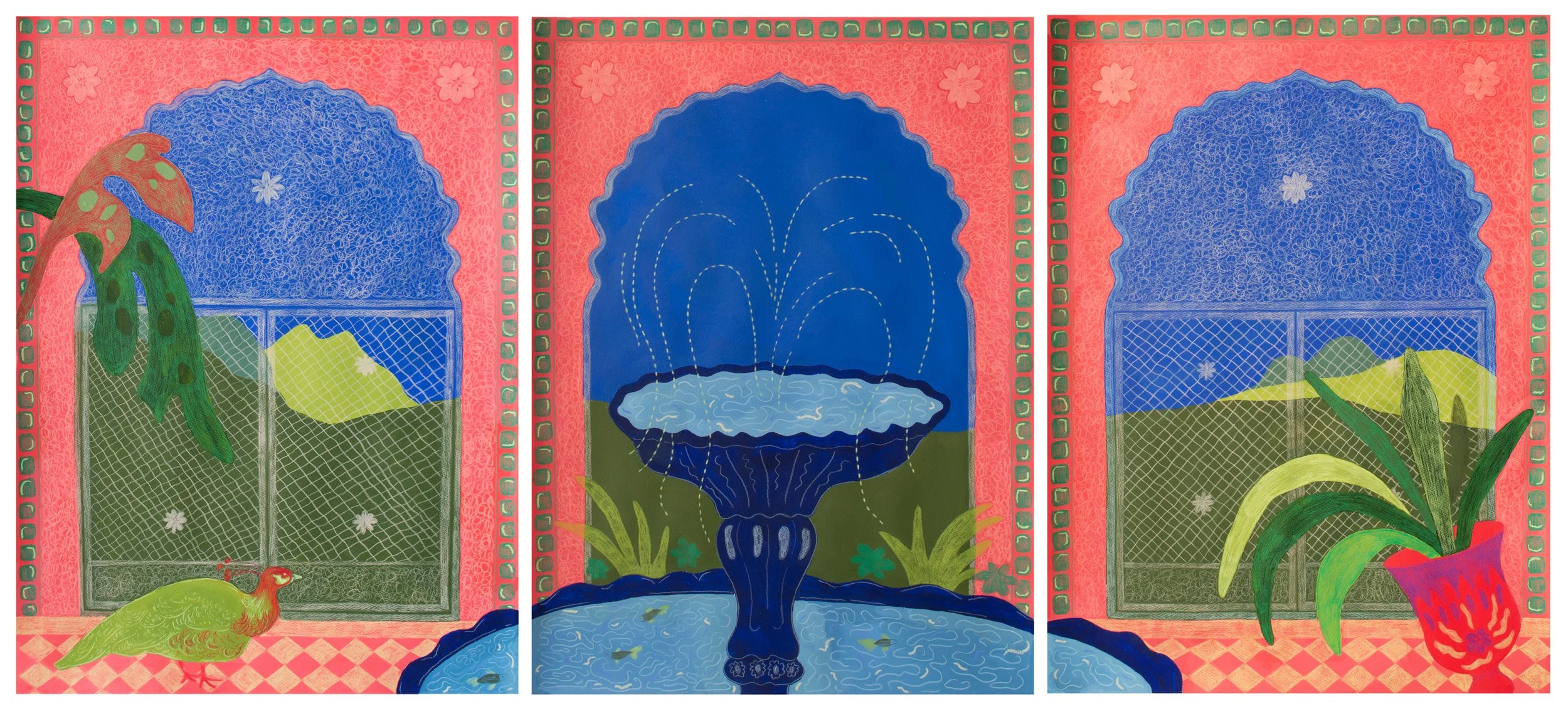
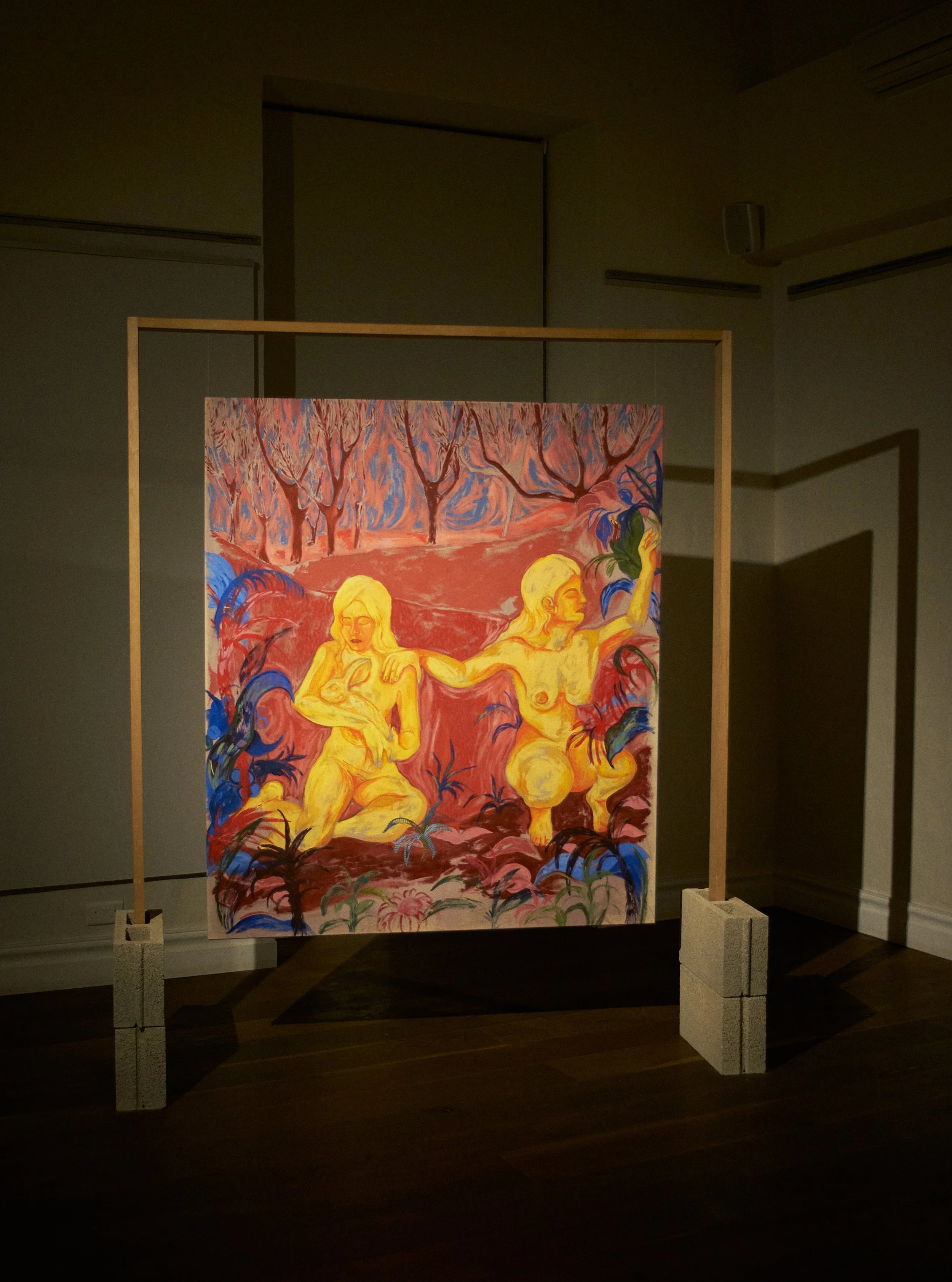
My practice exists at the intersection of drawing and painting, often introducing tactile elements of embroidery. The work is bold and chromatic, typically on a large scale. My architectural background frequently informs my process, manifesting in linear, precisely executed line work. However, I often balance this structure with an organic, intuitive approach where forms become more fluid. While figures and the natural world are recurring motifs, I frequently lean into abstraction to allow for a less literal and more emotive interpretation.
What inspires you?
I am an avid observer with my practice being rooted in the act of recording the world through the way I experience it. Inspiration lies in life’s simple moments. Memory and nostalgia play a central role within my work which allow me to build intimate and personal narratives from my very own lived experiences. Lately, this has evolved into a focused research topic: the concept of "Paradise" within the natural world and how that idea shifts across years of ecological and political change.
Can you speak about your process?
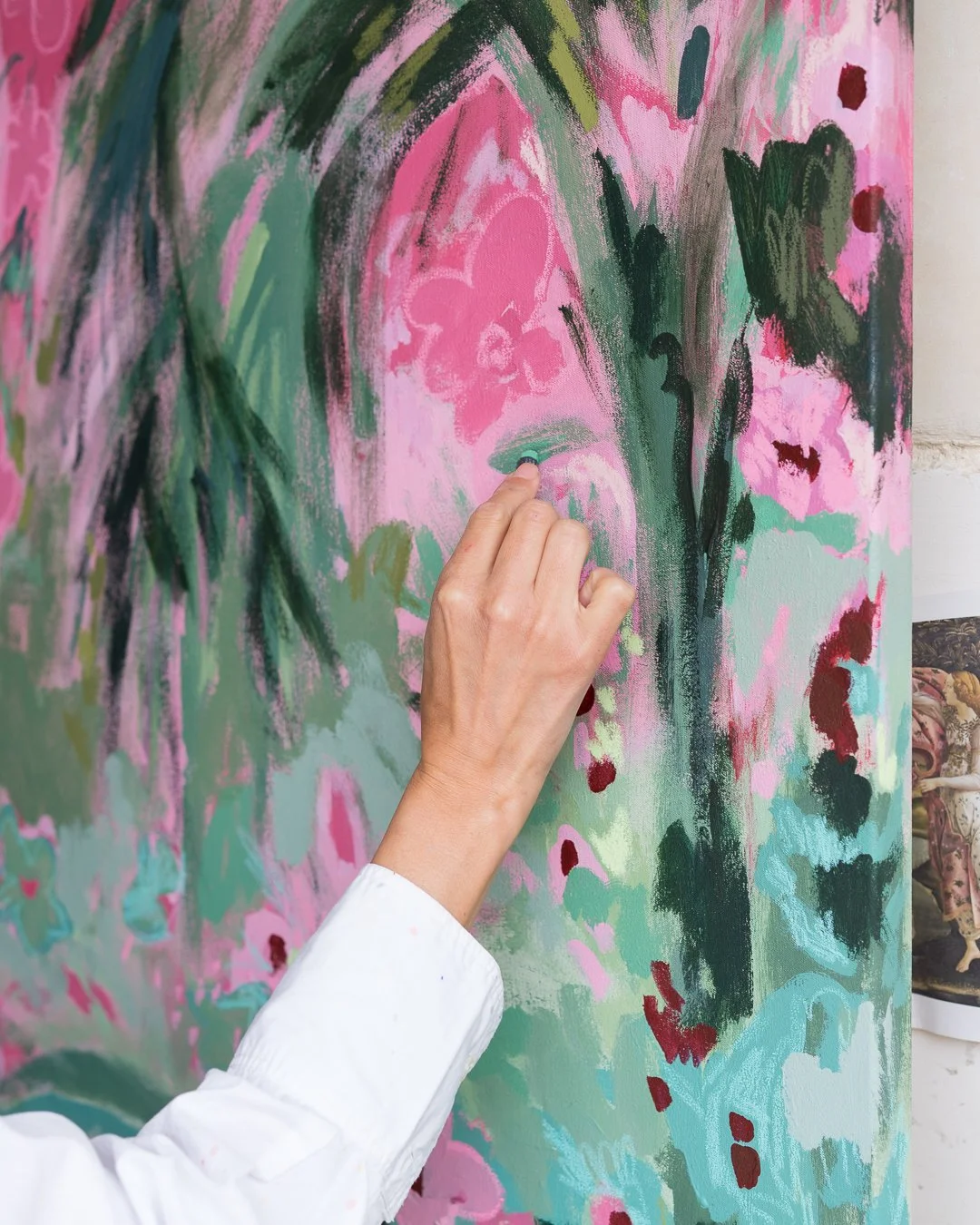
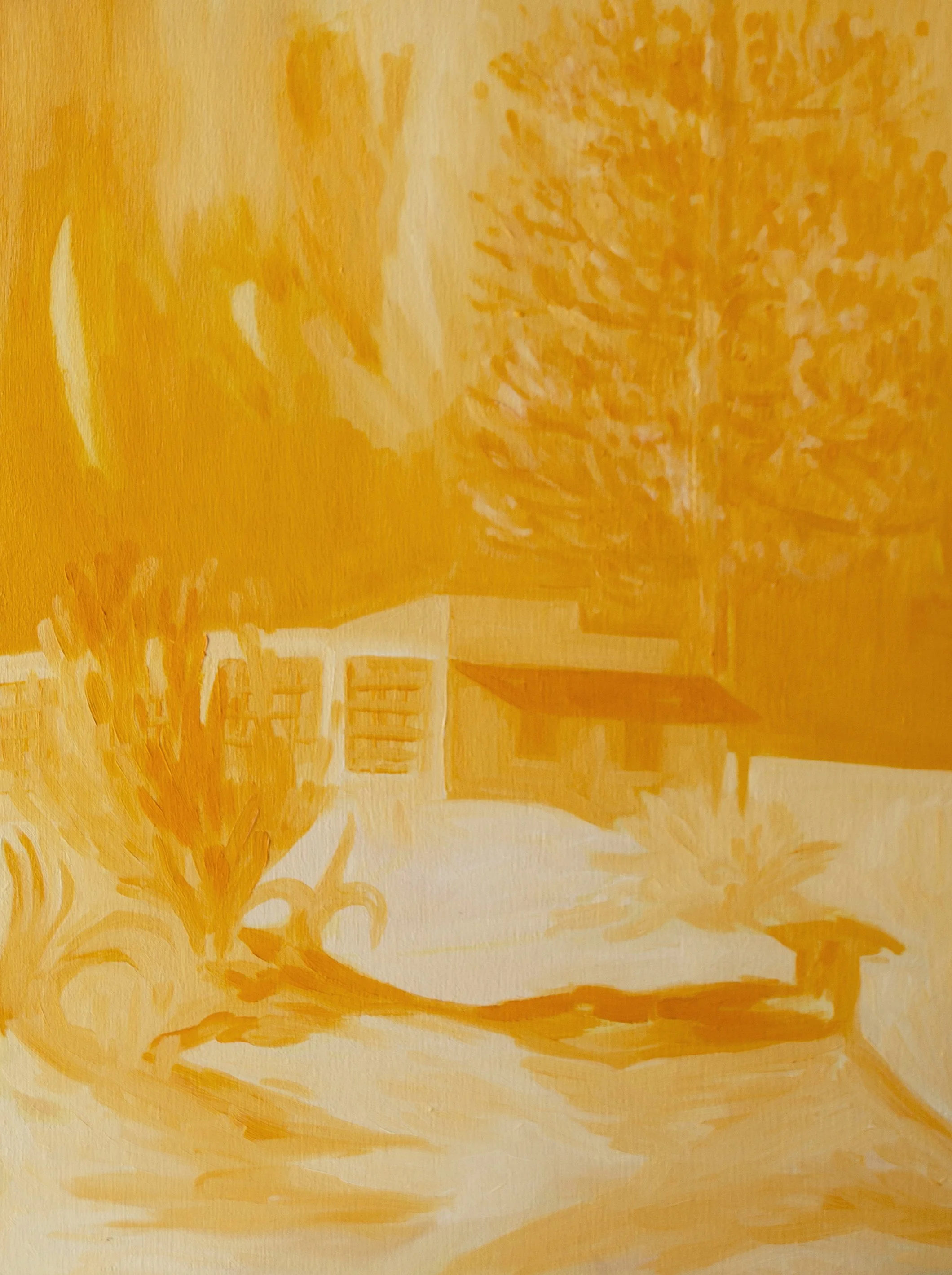
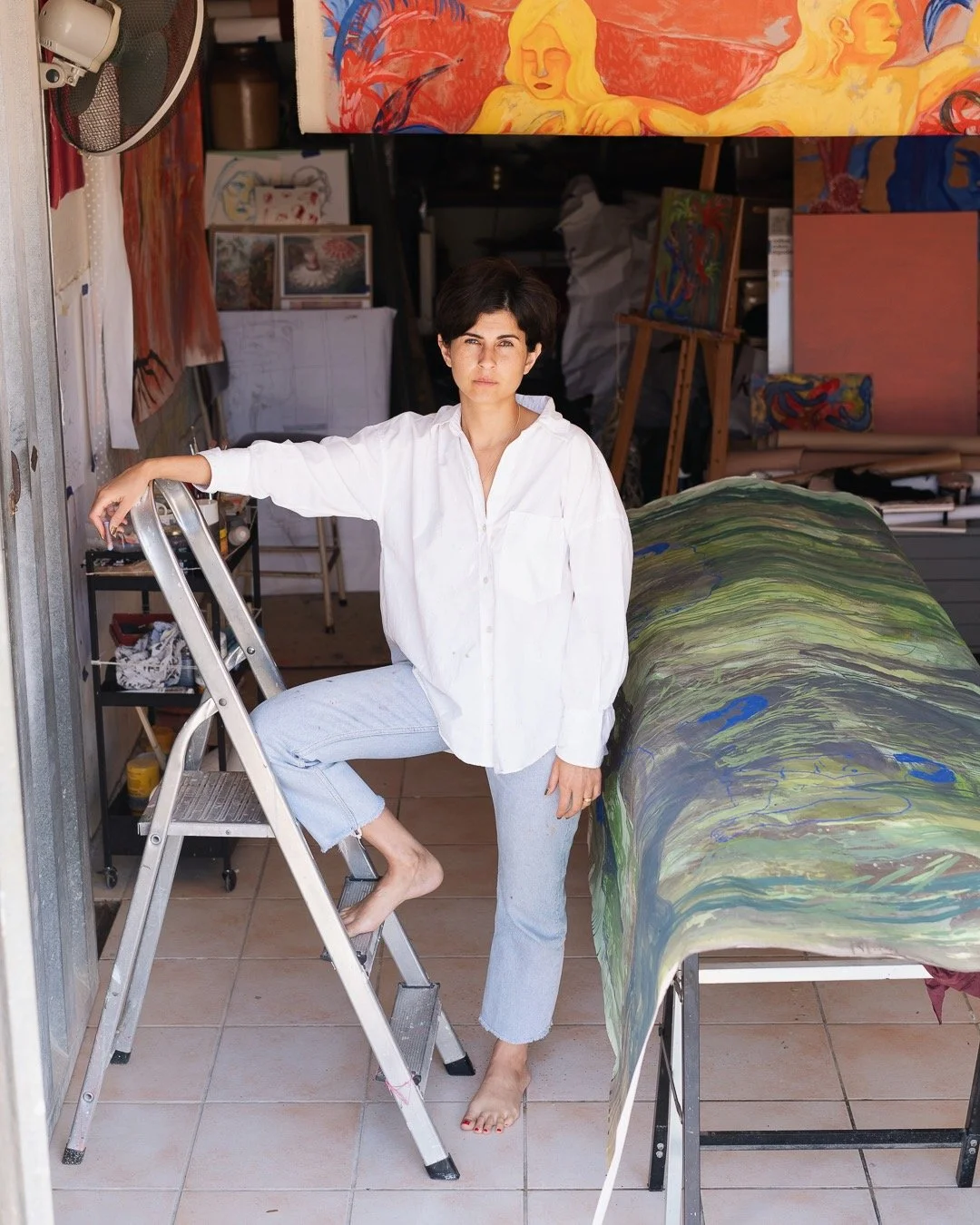
While I maintain an extensive library of sketches, my final pieces are not necessarily based on earlier drawings. I prefer an intuitive flow, often allowing myself to be guided by the rhythm of music in the studio. My studio is a space of controlled chaos that allows me to work on multiple pieces simultaneously. As I shift from one piece to the next, typically while allowing paint to dry, I assess the work, taking in the flaws, amending, reworking and adjusting.
There is a deep physicality at the heart of my work. Because of the scale, I am in constant motion; climbing ladders, stretching canvas, and moving across the floor. Many of my largest works aren't conceived as a single whole but grow organically from a small central point, expanding outward as the piece demands.
How did you become interested in art?
I’ve been drawing since a very young age, eventually studying architecture which provided me with a solid foundation in my creative practice. After spending years as a practicing architect I understood that my heart was truly in painting. But pursuing a career in the arts didn’t happen until much later. The true catalyst was a solo trip to Australia in 2020. When the pandemic hit and I returned home to no job, I began drawing as if there were no tomorrow, focusing all my energy into my artistic practice. It initially started with sketching friends in intimate settings as a way to find connection during isolation. As I dedicated more time to the studio, the work eventually shifted, organically evolving into the more ambitious, large-scale projects I create today.
Do you have any favorite artists, books, or quotes?
As a visual person, I am constantly absorbing cinematography and literature, but Ben Okri’s The Famished Road was a turning point for me. Its mastery of magical realism helped my brain begin to dream. Coming from a background of observation, I sometimes struggle to envision fictional realms but this novel helped me bridge the gap between reality and fantasy.
This bridge is essential to my current research, where I use novels to provide a base for my imagination to explore complex histories. Recently, The Poisonwood Bible by Barbara Kingsolver has informed my exploration of colonialism—a theme I am tracing through my travels to Cuba, Costa Rica, Australia, and India. These countries all share a colonial past, and I am interested in how those political legacies intersect with the changing ecology of the land.
What advice do you have for younger artists?
Dream without a ceiling, whilst pouring all your love and energy into anything you do.
Closing thoughts on creativity?
I believe the drive to express ourselves is a fundamental human instinct. We often pigeonhole "creativity," but it exists in everyone. History shows us that mankind has always had a desire to leave a mark. I recently read in Kate Grenville’s The Secret River about large-scale Aboriginal rock carvings in Australia; those marks are a testament to the fact that we have always sought to communicate our existence through and to the world around us. Art is less about being a hobby and more about how through it, we satiate the human need to be seen and understood.