Nancy Ivanhoe
Los Angeles, CA
Website
nancyivanhoe.com
Social Media
Instagram
How would you describe your work?
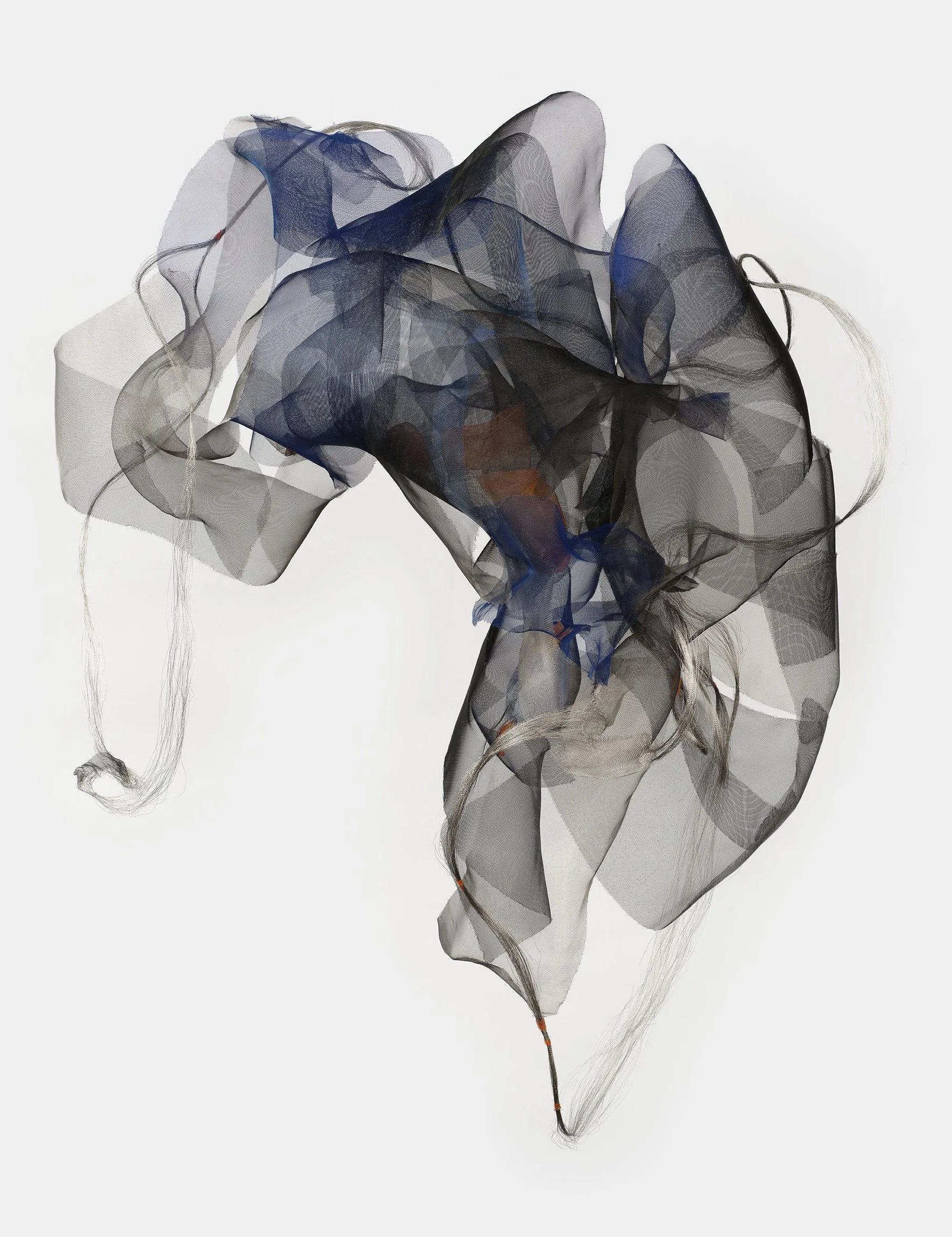
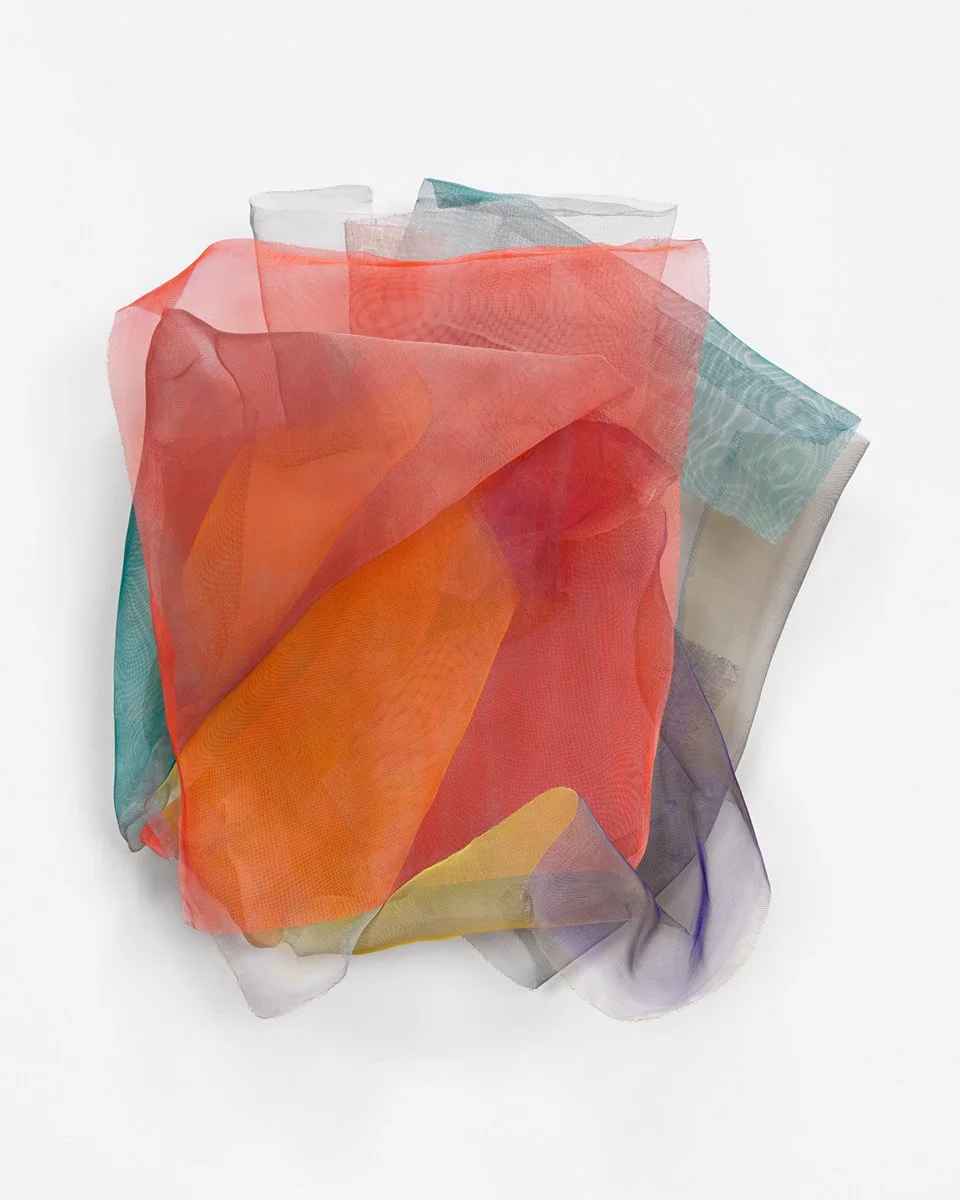
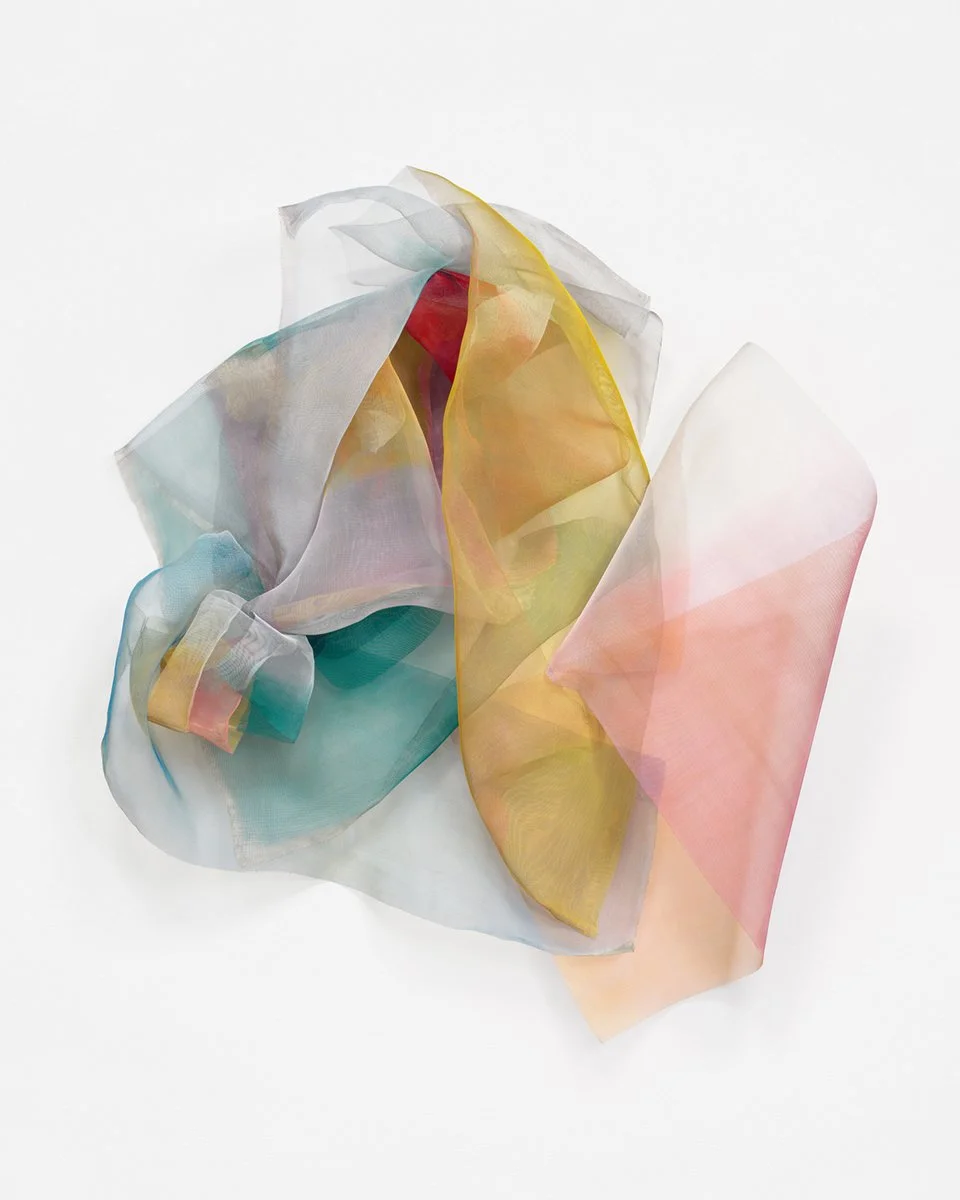
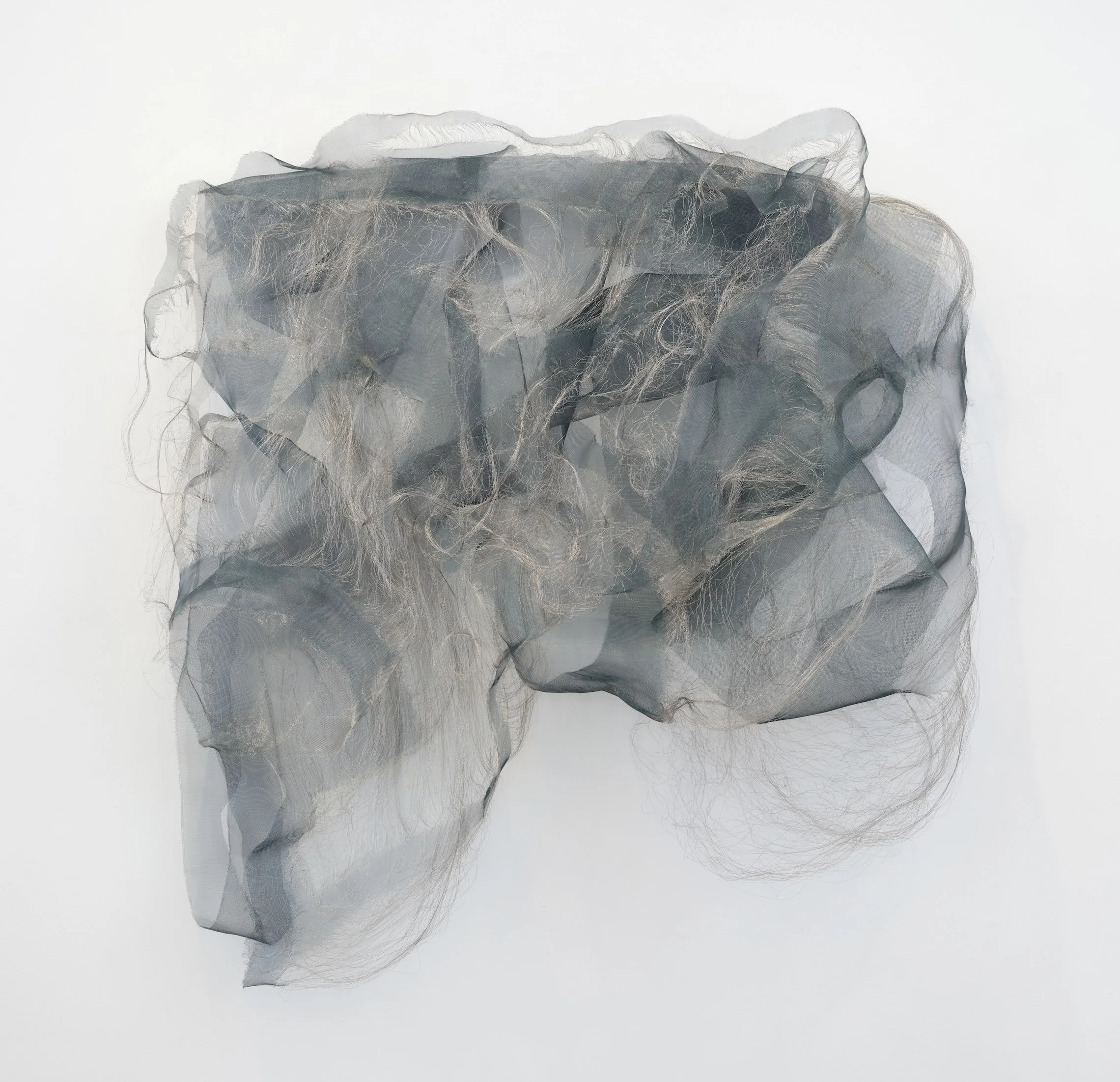
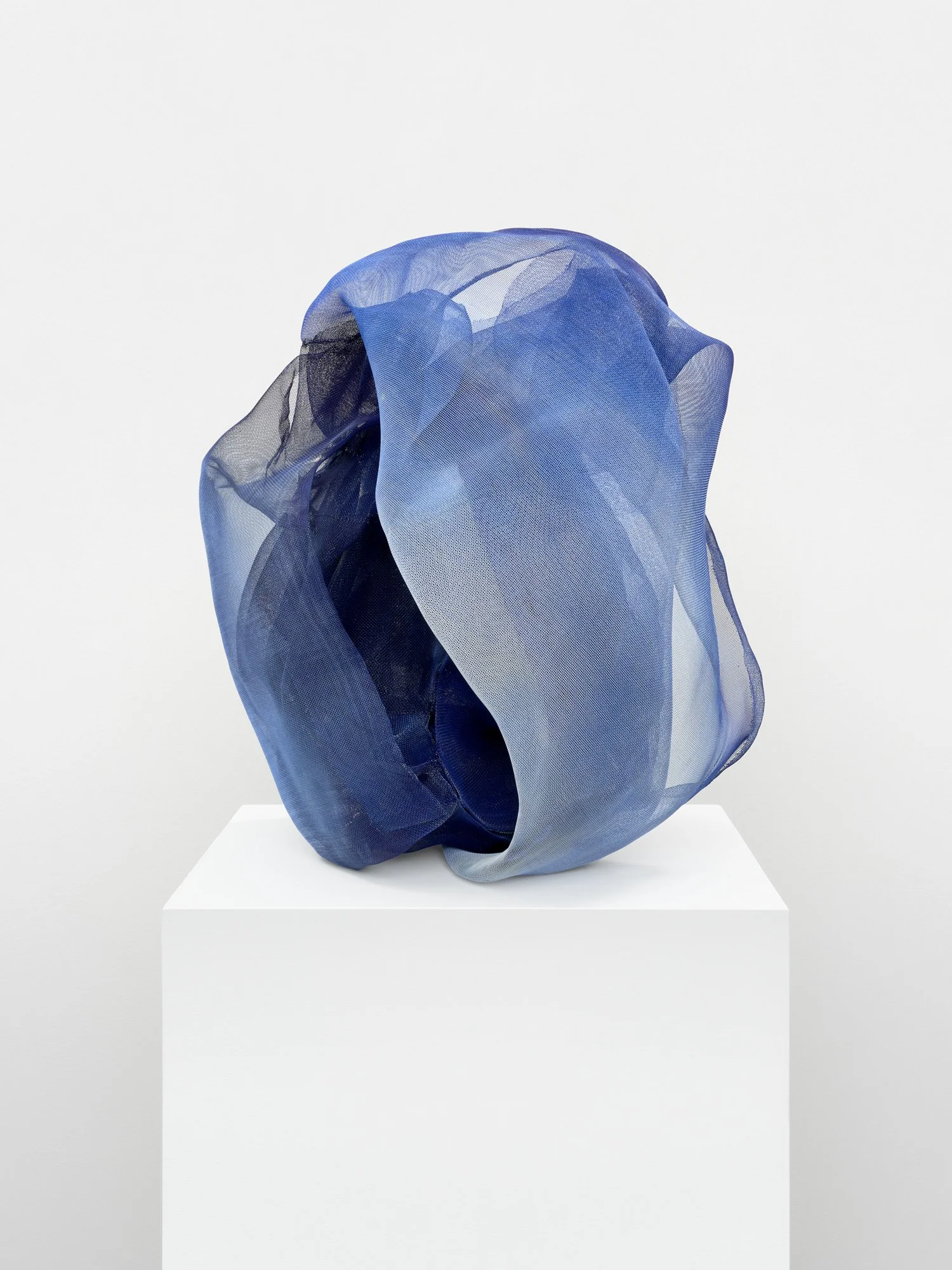
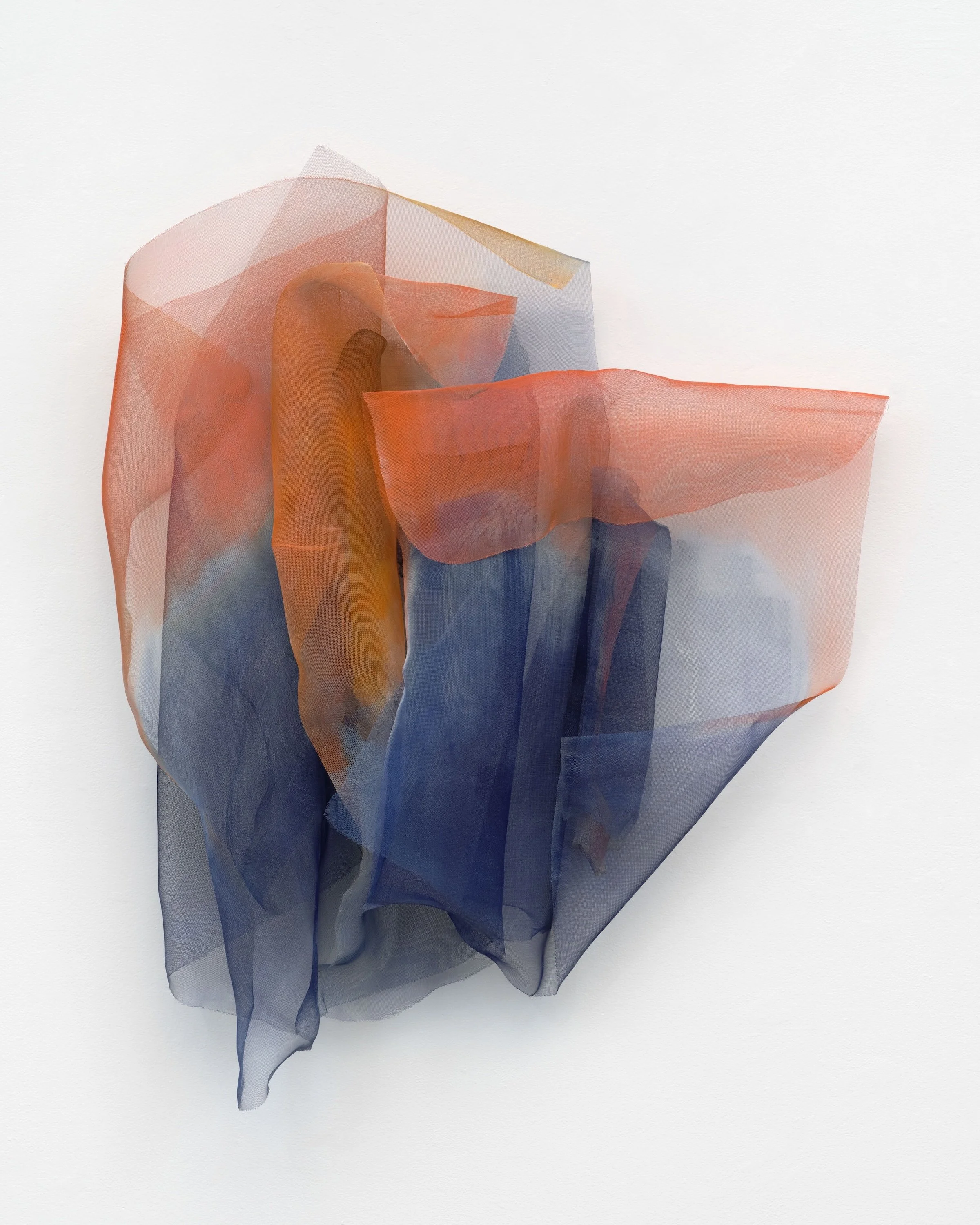
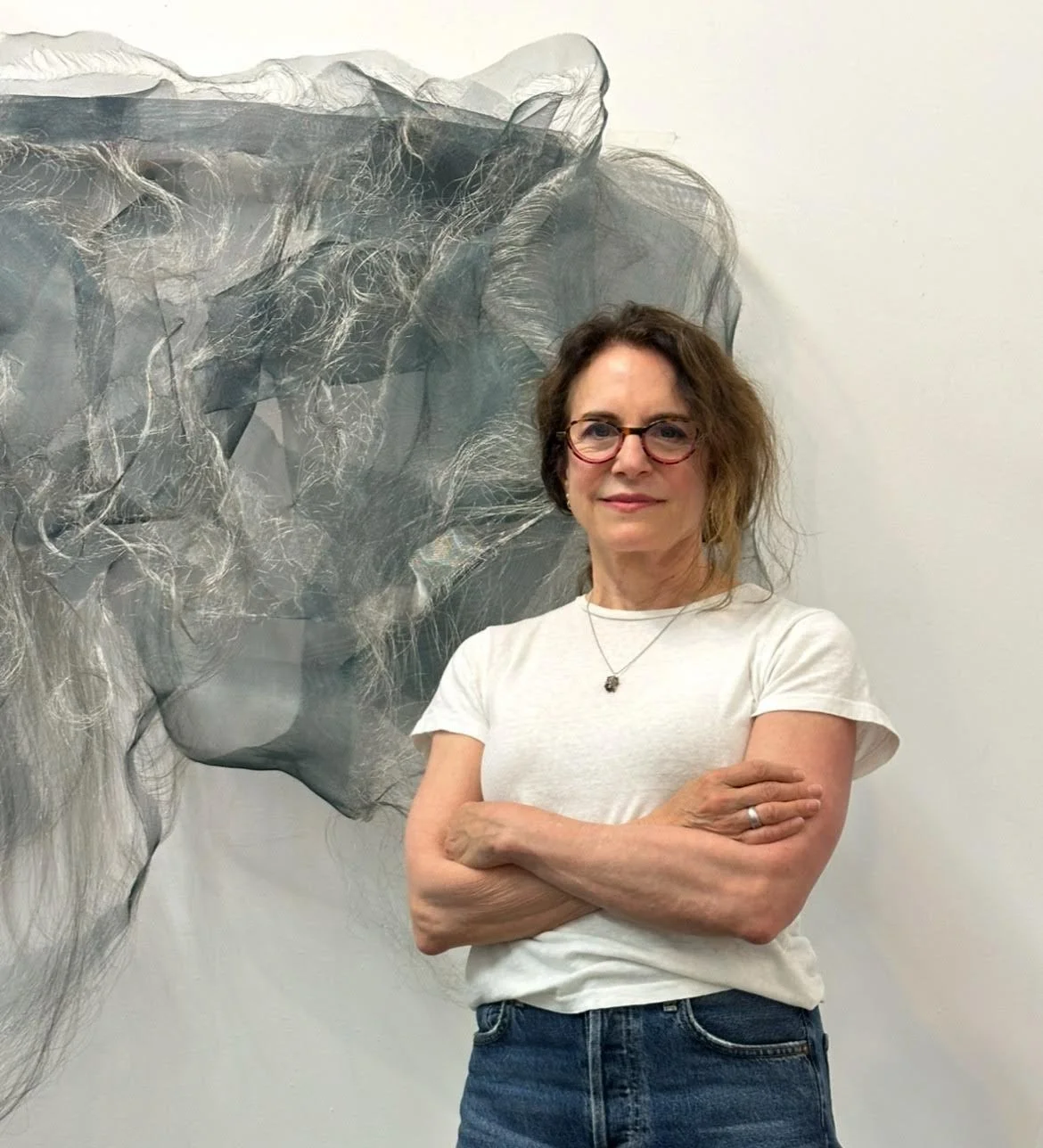
I come to sculpture through movement – through dance -so it’s no surprise that motion is imbedded in my work. I work with industrial metal screen, which might seem cold and rigid, but it’s surprisingly responsive. I paint, fold, and mold it, until it begins to breath on its own. That breath, that rhythm, comes straight from my early training in the Martha Graham tradition, where everything begins with inhalation and release. I build on these forms – one leads into another as they react and merge into a kind of visual choreography.
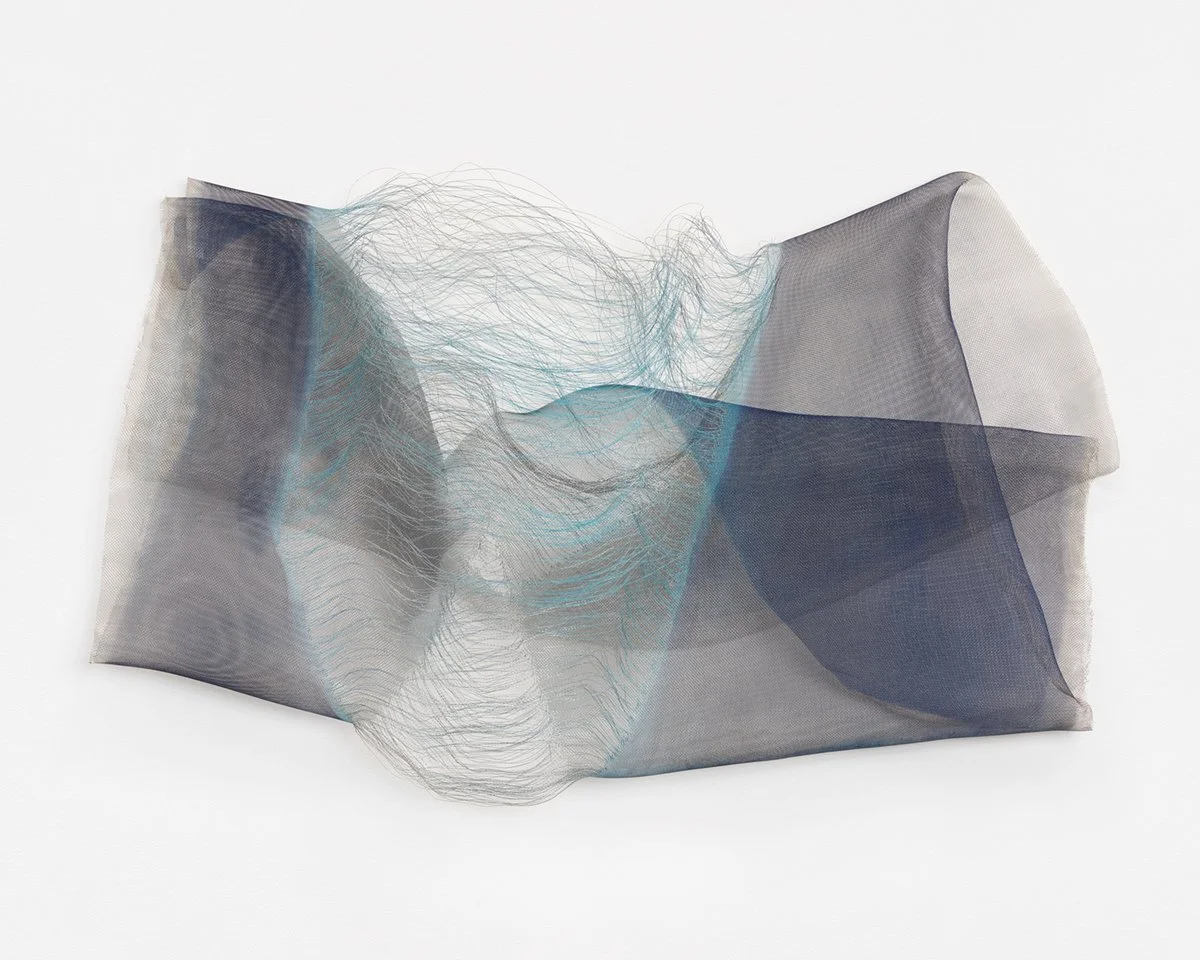
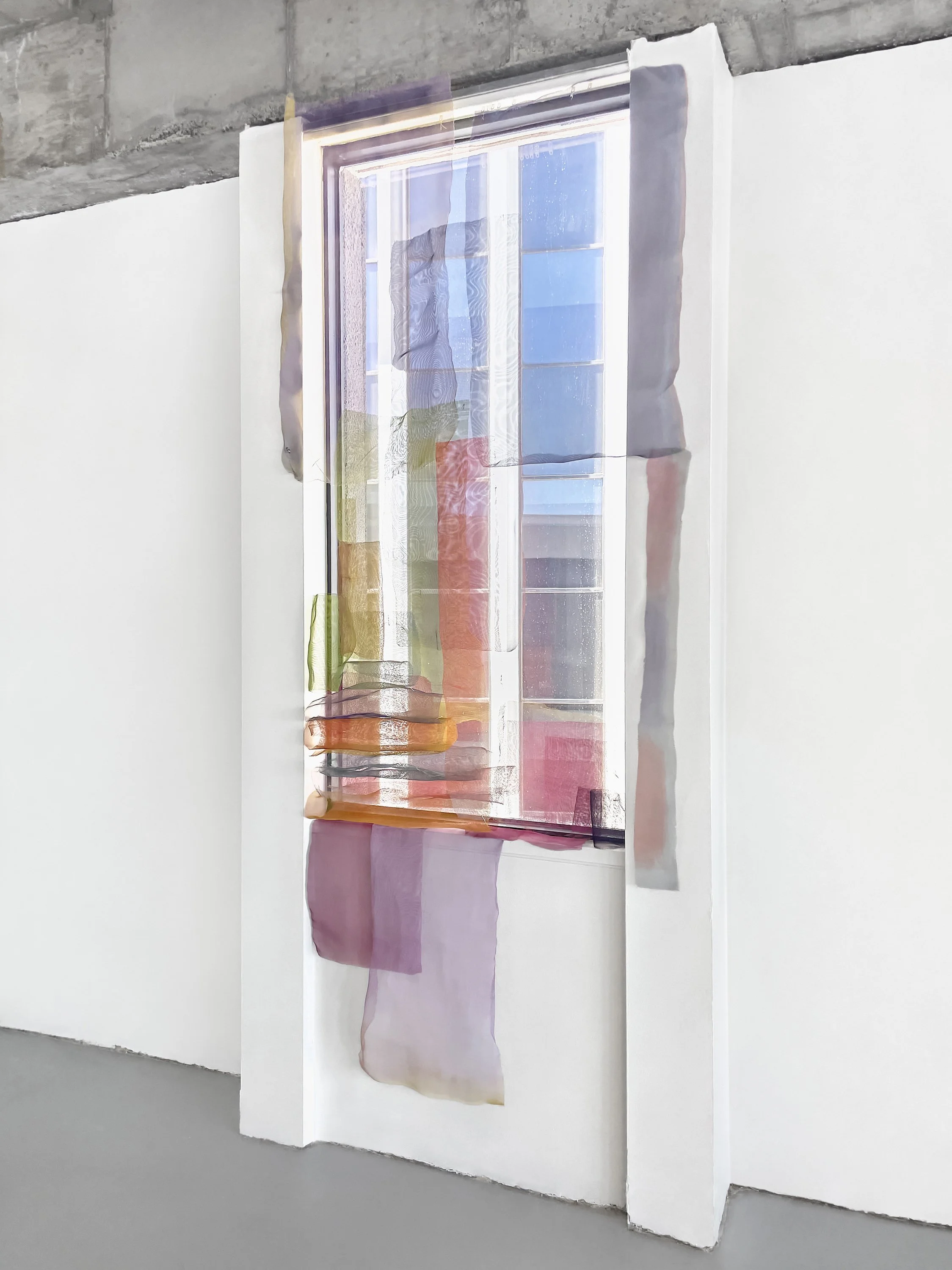
I consider the space I work in as liminal - my pieces are subject to possibility and change. They aren’t static objects but shift as you move around them. From one location a form may seem to inhale or fold in on itself, and then from another, expand outward again. I like to leave space for the viewer to discover how the screen is both a boundary and portal. It’s responsible for shifts in moirés, shadows, and blended colors when viewed from different angles. Nothing in my work is static, flat, or fixed.
Where do you find inspiration for your work?
As I mentioned before, dance is foundational to my work. Watching a dancer move through space reminds me why I started sculpting in the first place. There’s something about the expansion and contraction, that push and pull with and against gravity. I’ve been sketching during rehearsals with a dance company in LA, just absorbing their gestural shapes and energy.
Also, I live and work in Los Angeles, and there’s this particular kind of light here that’s hard to explain until you experience it. The California Light and Space artists of the ‘60s and ‘70s – like Robert Irwin- got it. I take long walks by the ocean and watch the light change on the water. That shimmer, that openness, it slips into the work whether I intend it to or not. The light in my studio becomes an active participant altering shadow and reflection within my pieces.
Can you speak about your process?
I primarily work with acrylic paint and metal screen. I usually start with sketches, but once I hang the mesh on rods in my studio, everything changes. I paint and sculpt, letting the forms build in response to each other. The rods span the width of my studio and are height adjustable so I can approach my materials from all angles. Each of my actions on the material is followed by a reaction; the pieces fold, open, and overlap creating shapes of gestural spontaneity within a structural form. I attach pieces together with knotted filaments unraveled from the same material.
The early stage of my work is additive until that moment the piece feels overdone. Then I have what I consider an “intervention” where I remove many of the built-up layers to allow it to breathe again so I can continue to work the piece with renewed sense of energy. I often question when a piece is done. If it’s in my studio, it’s fair game - I have no qualms about re-entering a resolved piece and evolving it into new work, in a sense, infusing it with new life.
For me, the studio is a place of curiosity and risk. It’s physical – I’m moving around the piece constantly – but also quiet. There’s a kind of private conversation happening between the work and me. I try to stay in listening mode until I see a new direction to explore.
How did you become interested in art?
I’ve been interested in art since childhood. I grew up in New York with a grandfather who loved art, and was in a sense, my first art teacher. He took me to the Met, the MoMA, the Whitney - every weekend was a museum date followed by the toy store (an early form of positive reinforcement).
Regardless of my stage in life, art always felt like a kind of necessity. Even when I wasn’t working formally, I was making things – collaborating with my kids making scarecrows for their Halloween Festival, figure drawing sessions and classes. Eventually, I returned to school at SFAI for an MFA which gave me the time, space, and uninterrupted focus to dive deeply into my practice.
Do you have any favorite artists, movies, books, or quotes?
Favorite Artists:
Ruth Asawa’s wire sculptures with their permeable thresholds, Eva Hesse’s explorations of unconventional materials, Phyllida Barlow’s architectural improvisations, Arlene Shechet’s material that appear to shift, gesture, and bend yet have structural integrity, Helen Frankenthaler’s fluidity of forms that flow into each other, Robert Irwin’s sensitivity to space, light and perception – and of course, Martha Graham’s philosophy of movement …there are still many more.
Some favorite quotes:
“It’s about asking questions of the material, not telling it what to do” – Phyllida Barlow
“There are no rules,” “That is how art is born, how breakthroughs happen” – Helen Frankenthaler.
What advice do you havefor younger artists?
I feel art is alive inside us, even when you’re not making it. There will be times when life pulls you in other directions – school, work, family, the unpredictability of life. But art keeps growing with you. In fact, I’ve found that sometimes the best shifts in my work happen after I’ve taken a break. I return to studio with new eyes, new questions, and often the work surprises me – it takes on a different rhythm, a deeper honesty. I feel this because art isn’t something separate from my life – it’s a way of seeing, a way of understanding. To me, art is like breath; you don’t always notice it happening, but it’s always there, keeping the whole thing alive.