Lisa Kellner
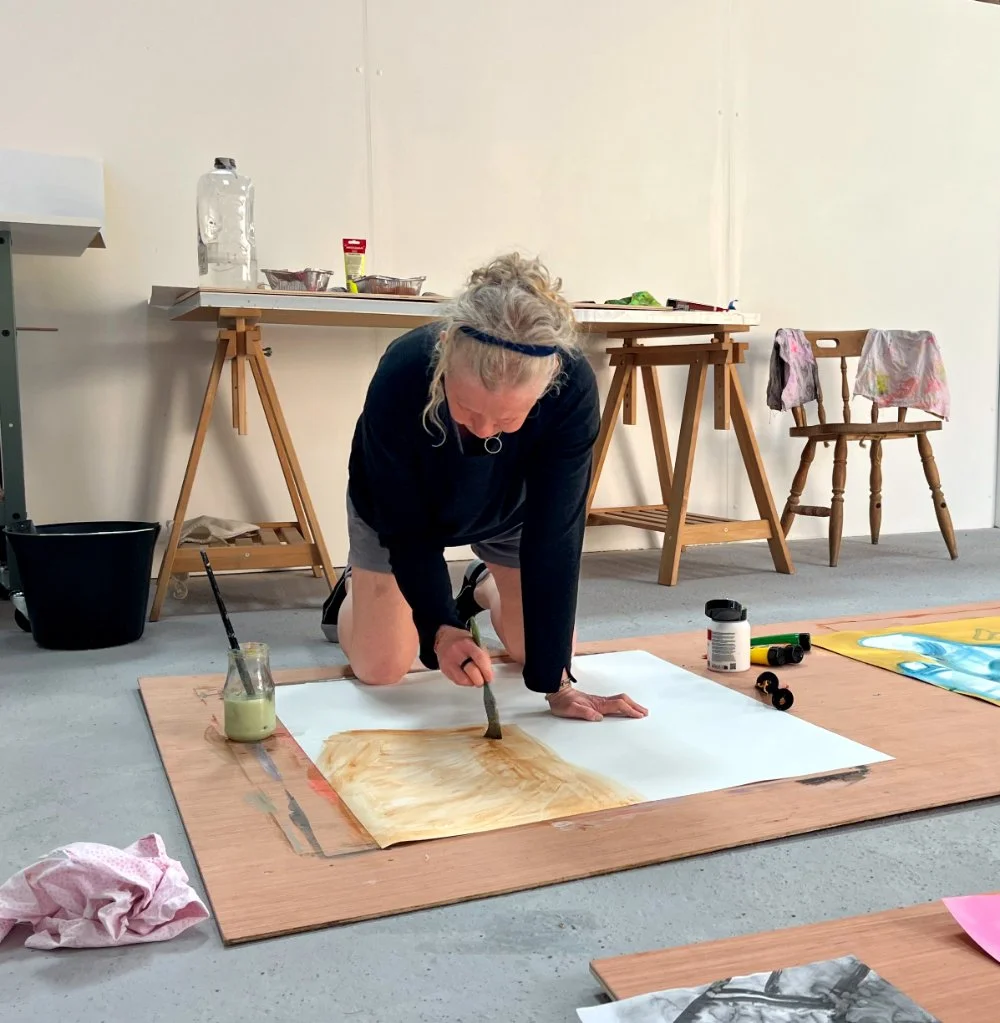
Deer Isle, Maine
Website
www.lisakellner.com
Social Media
Instagram
How would you describe your work?
My paintings are about the act of looking and how our own perceptions impact what we see. In each work, I am investigating the influence of personal perception on how we take in our surroundings. I use nature and flowers that I grow as a means to communicate about aging, how beauty is defined, and how we catalogue experiences into our knowledge base. My paintings merge painterly brushwork with an abstracted, minimal composition. This allows me to really hone in on a specific way of presenting an idea through paint.
What inspires you?
I am inspired by the activities that occur in nature; new births, predators and how the land is built up layer upon layer incorporating a multitude of ecosystems co-habitating together.. I am interested in how objectively nature deals with deterioration, destruction and cohabitation.
I am also inspired by the act of painting and the materiality of the paint itself. There is nothing more exciting to me than getting a new panel or canvas ready for painting. I take my time stretching the canvas, layering and sanding the gesso until the canvas / panel feels ready.
The square or rectangle shape that most paintings inhabit continues to provide so many possibilities to tell a story, share a thought and experience through a collaboration between the body and the act of painting.
Can you speak about your process?
My process begins by immersing myself into the landscape. I do a lot of hiking, walking and kayaking just to really put myself in the land (and sea) and experience it from that perspective. I take many photographs and draw thumbnail sketches in my sketchbook.
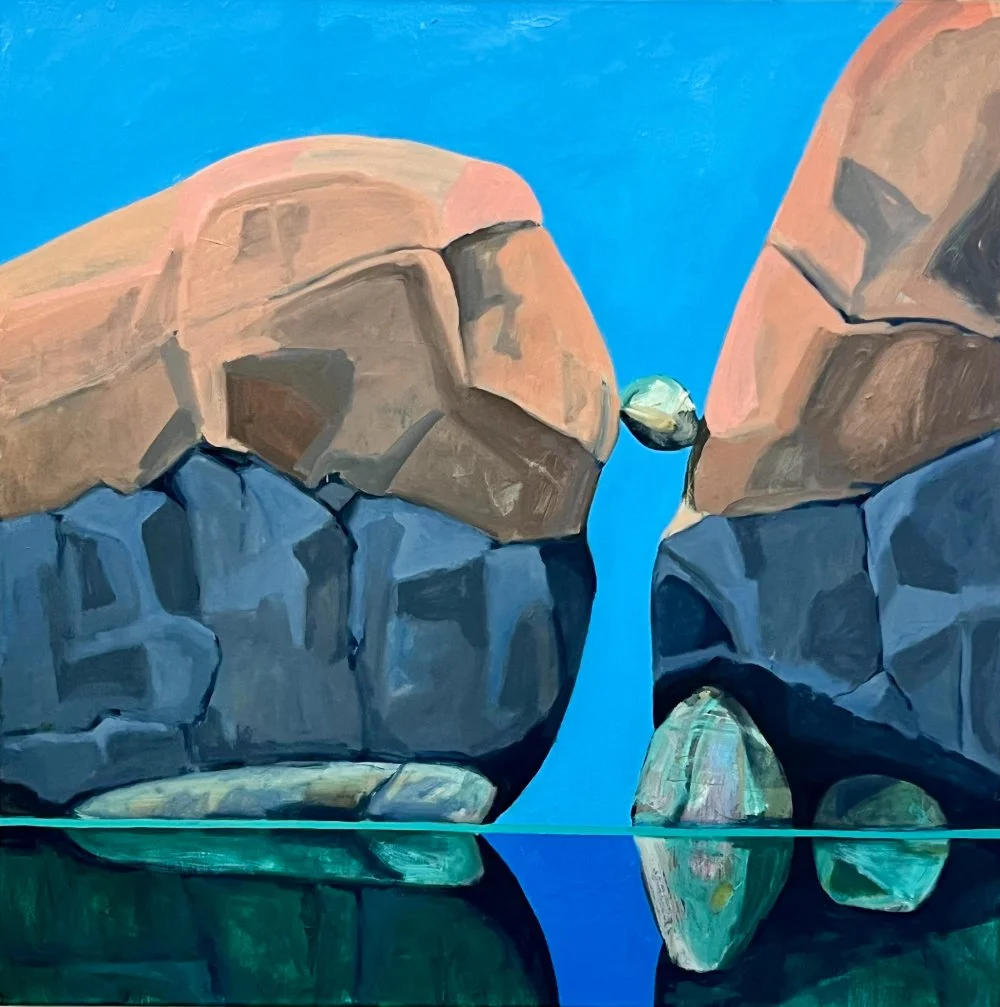
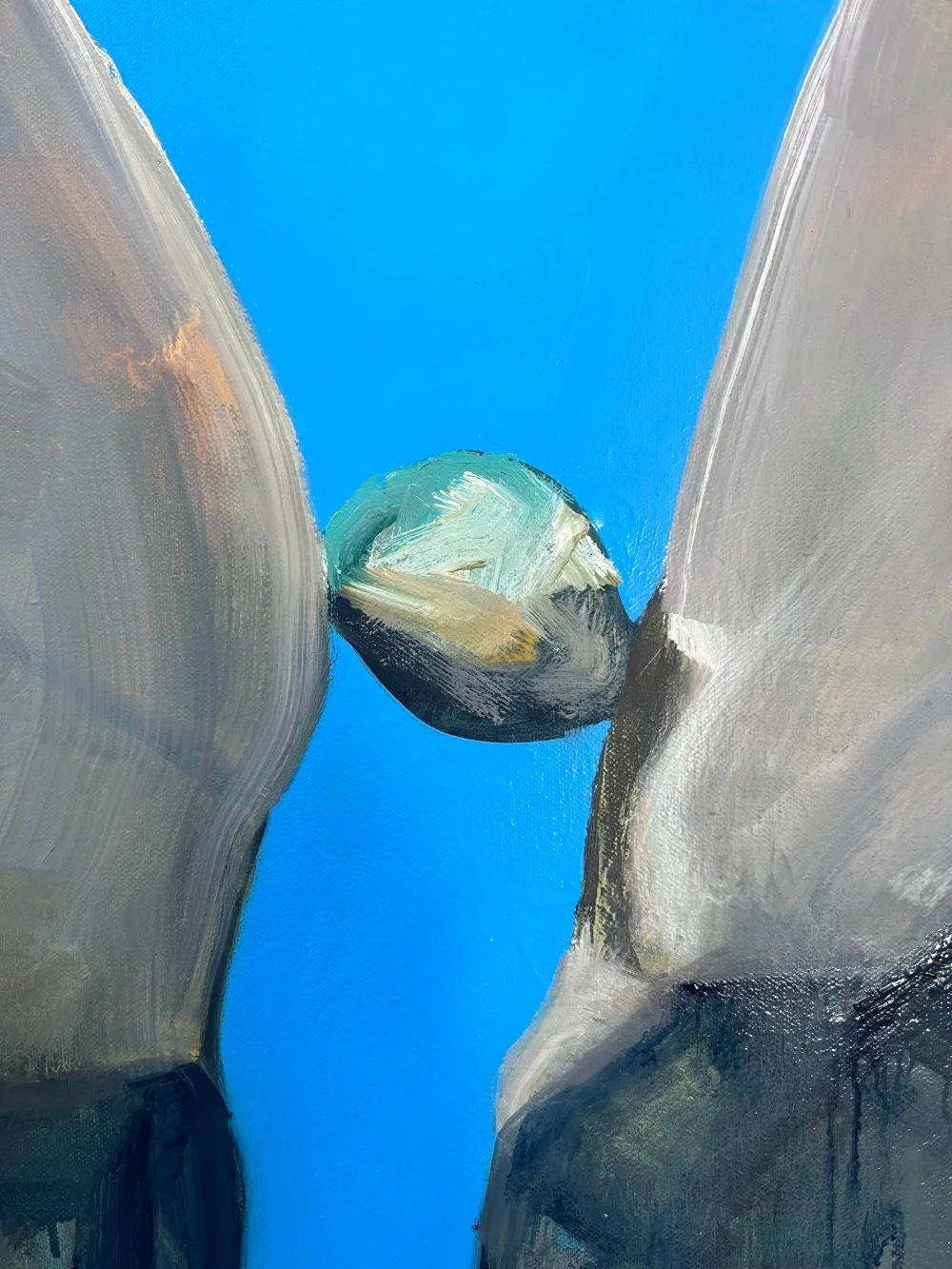
The drawings may be based on something I saw but are usually made up landscapes based on what I experience. The Mythical Creatures series is a series of abstracted land and sea scapes based on these explorations. In the studio I will begin by painting an underpainting on the canvas. The paintings become more and more invented as they progress. I take out and add in based not on what I witnessed but on the idea I want to focus on for that painting. Recently I have concentrated on the granite ledges that surround the island where I live. In the paintings they become creatures evolving over millions of years and weathered by many storms. Each one is unique and exudes a certain character. The paintings are an invented amalgamation of the many granite ledges I have sketched over the years.
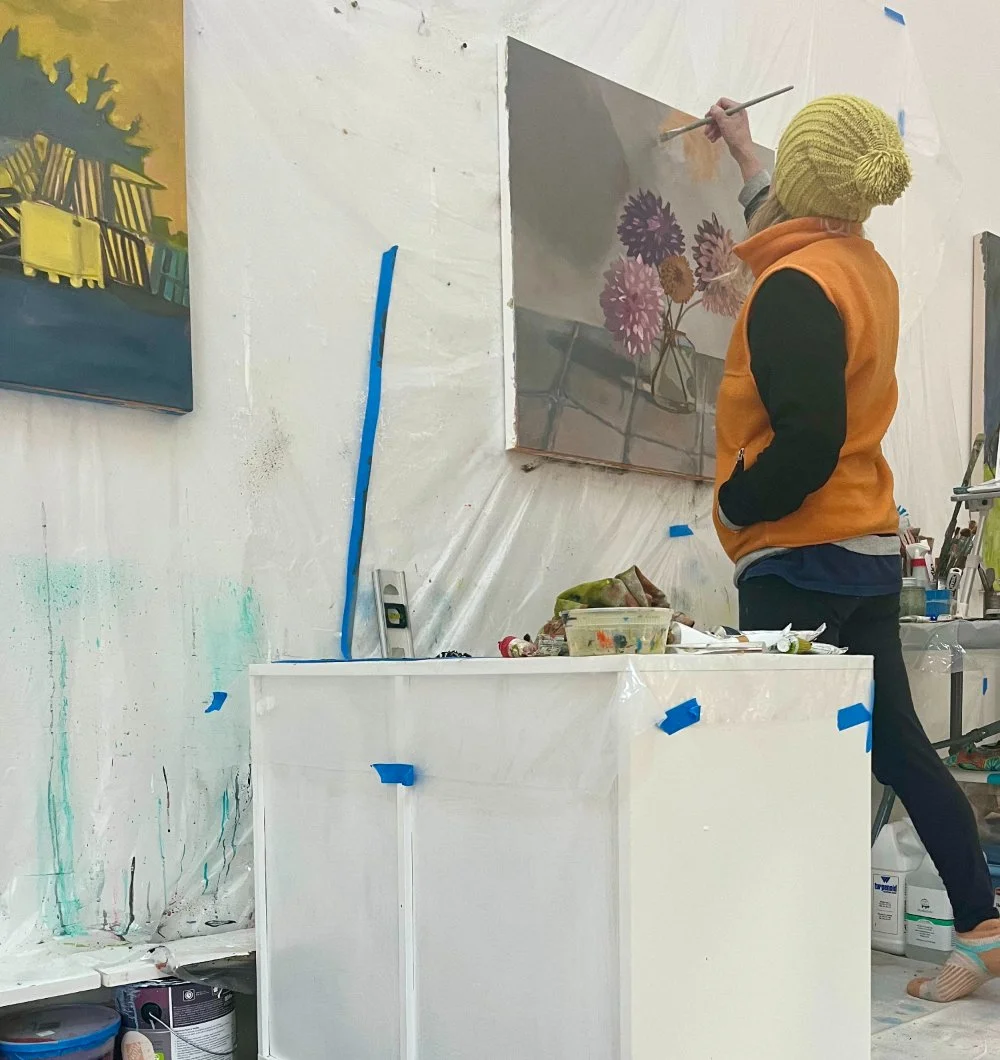
I also spend a lot of time in my permaculture garden that seems to be always evolving. I learn so much from this garden about organizing, growth, failure and death. I take a flower from seed to full bloom and then bring it into my studio to observe its fading. I am enamored with this process of aging and how absolutely beautiful it is. This is so counter intuitive to how we think about aging in society. Every day the flowers take on a new hue as they fall into themselves. The translucency becomes more apparent and new shapes evolve. I am trying to capture these moments in time. The Faded Glory series of paintings is a result of this constant study of what I grow or discover throughout the year. Each flower or still life takes on a certain personality with a unique character that I want to explore in the paintings. The still lifes become a way to talk about perception, aging and redefining beauty.
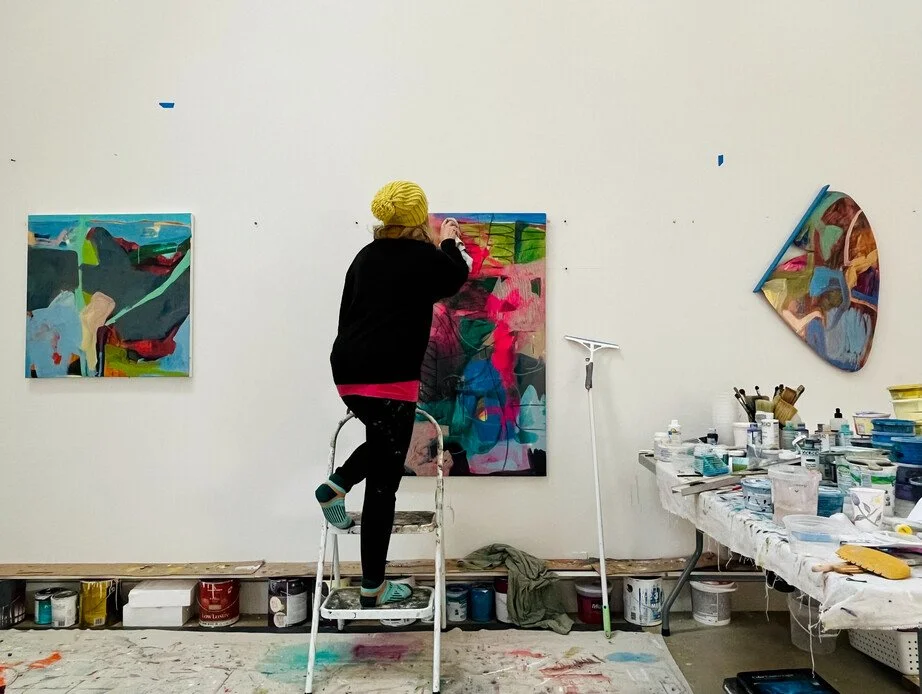
Each painting goes through a process of scraping back, sanding what’s there and layering on oil paint. When setting up a composition I take out a lot and invent a lot until the painting begins to take on the character of what I want to express. I use titles that become a guide for the viewer although I want the paintings to be open enough for multiple interpretations. That is what makes painting so exciting!
How did you become interested in art?
From a very early age I was always drawing. My family traveled a lot and lived in different countries. Drawing was a way for me to make sense of my surroundings. It was - and is - my comfort zone.
I remember living in Canberra, Australia and my kindergarten teacher had us do a project where we put paint between two pieces of wood. When we took them apart, what was there stunned me! It was an entire underwater universe that was made purely by chance. I think that was the moment that I discovered how art - and painting - allows you to see and think differently.
In high school, I had an amazing art teacher that really nurtured my growth and showed me it was possible to be an artist. Artists really learn from other artists and I am so grateful for all the artists whose work - and lives - I have been able to explore.
Do you have any favorite artists, movies, books, or quotes?
I’ve been looking a lot at Morandi and Pierre Bonnard. I am always looking for ways to marry lush painterly brushstrokes with a paired down minimal aesthetic. The book Morandi by Karen Wilkin is one I always go back to. Bonnard (World of Art) by Timothy Hyman is a wonderful little book packed with some of the best analysis of Pierre Bonnard’ s process and progress.
I also really enjoy Philip Guston: Painter 1957 - 1967 by Hauser & Wirth. This monograph explores a very transitional time for Guston between his highly abstract expressionist paintings and the later figurative work. You can actually see in these paintings that he is beginning to build shapes and forms into his abstract works. Something new is emerging and he wasn’t afraid to allow it in - even though he was known for his previous work.
I read (and write) a lot of poetry. E. E. Cummings is someone I always go back to. There is something so truthful and sincere in his words that feels very grounded. I have titled many works based on reading his work. Now though I read for insight and clarity.
“To be nobody but yourself in a world Which is doing its best day and night to make you like everybody else means to fight the hardest battle which any human being can fight and never stop fighting.”
― E.E. Cummings
What advice do you have for younger artists?
It is easy to get caught up in social media and the instant gratification it provides. But this does not sustain a career. Spend time getting to know who you really are without all that and discover what excites you, challenges you. Be honest with yourself about why you make art in the first place. An art career has ebbs and flows. In order to survive both you need to be clear on what truly motivates you. The act of painting itself will guide you more than any list of goals or thinking. Don’t be afraid to fail or make bad paintings.
When you really let go, you find yourself and what your work is really about.
Any more thoughts about art, creativity, or anything else you would like to share?
Never be afraid to change the way you make art. Follow your own guidance rather than any external influences. Those won’t last but answering to yourself will.