Frank Campion
Clemmons, North Carolina
Website
frankcampionart.com
Social Media
Instagram
Facebook
How would you describe your work?
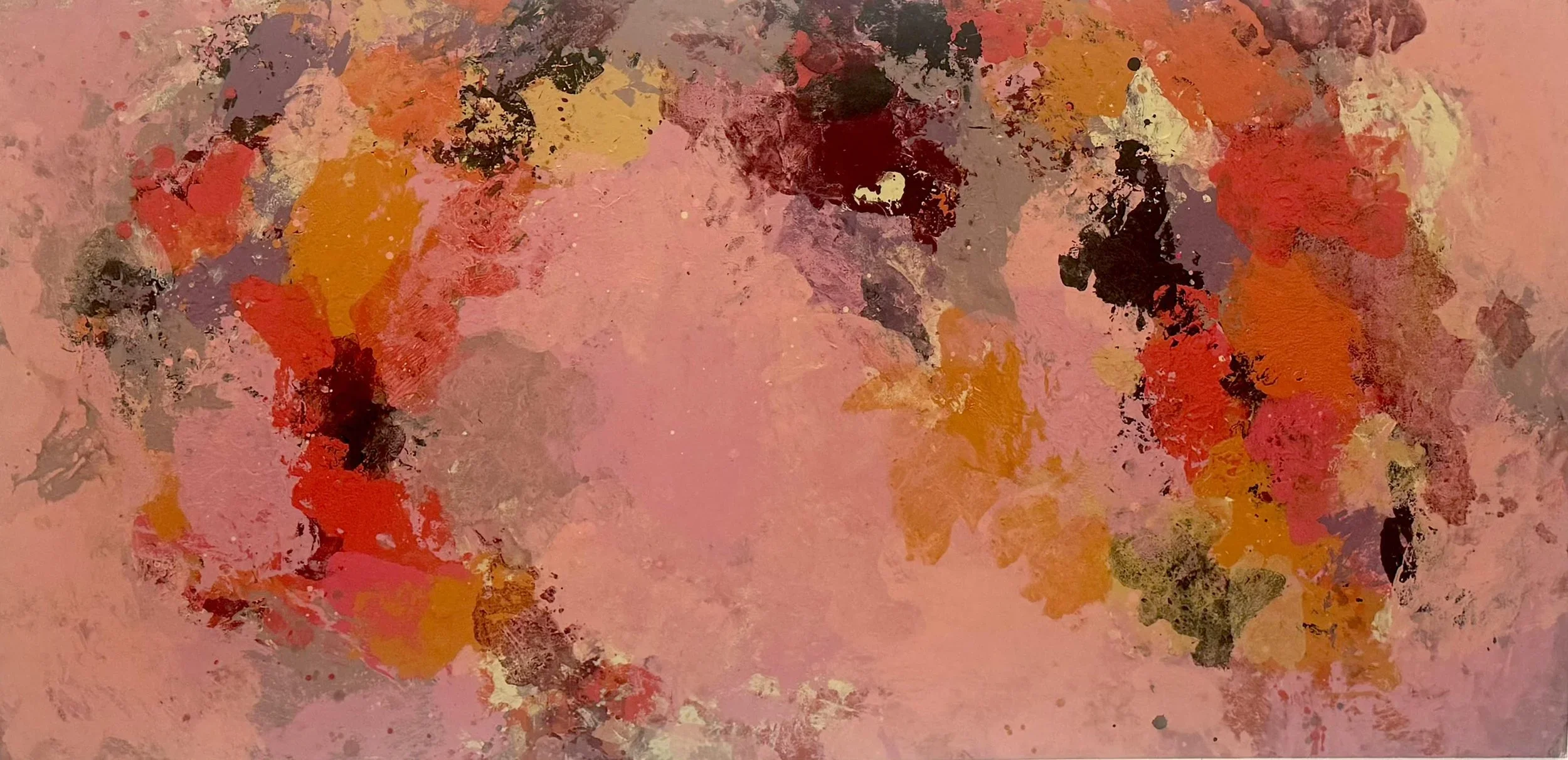
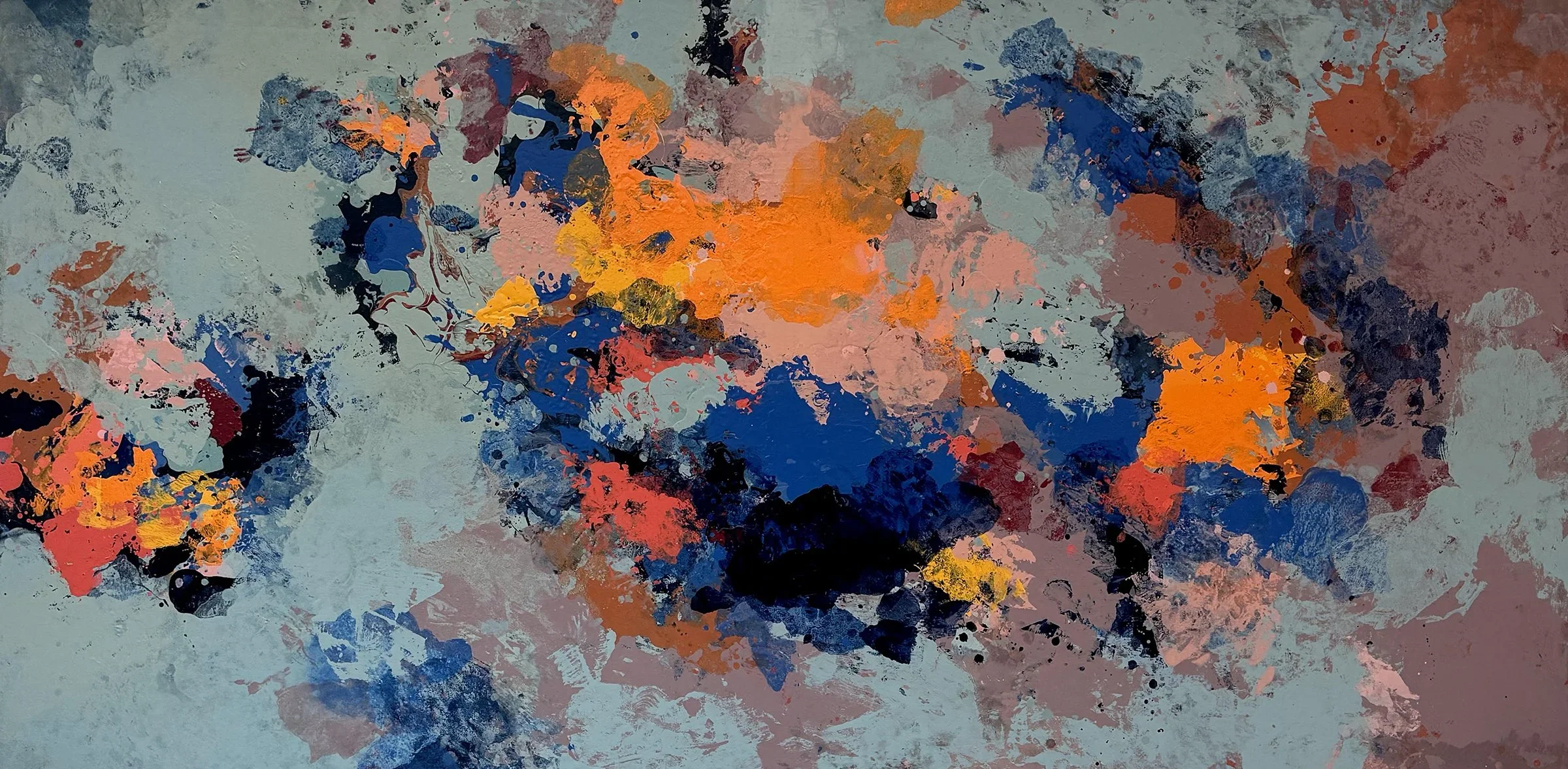
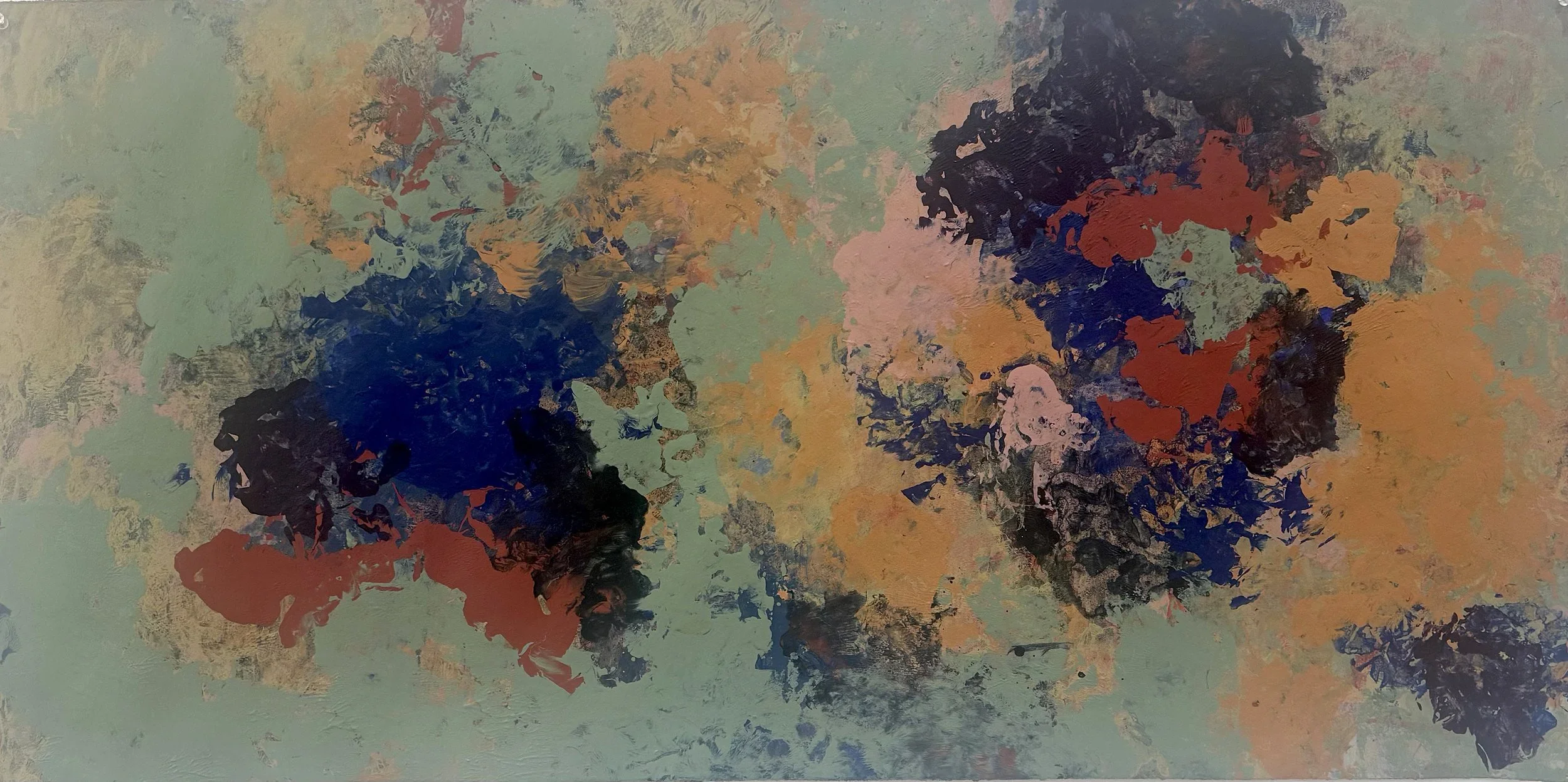
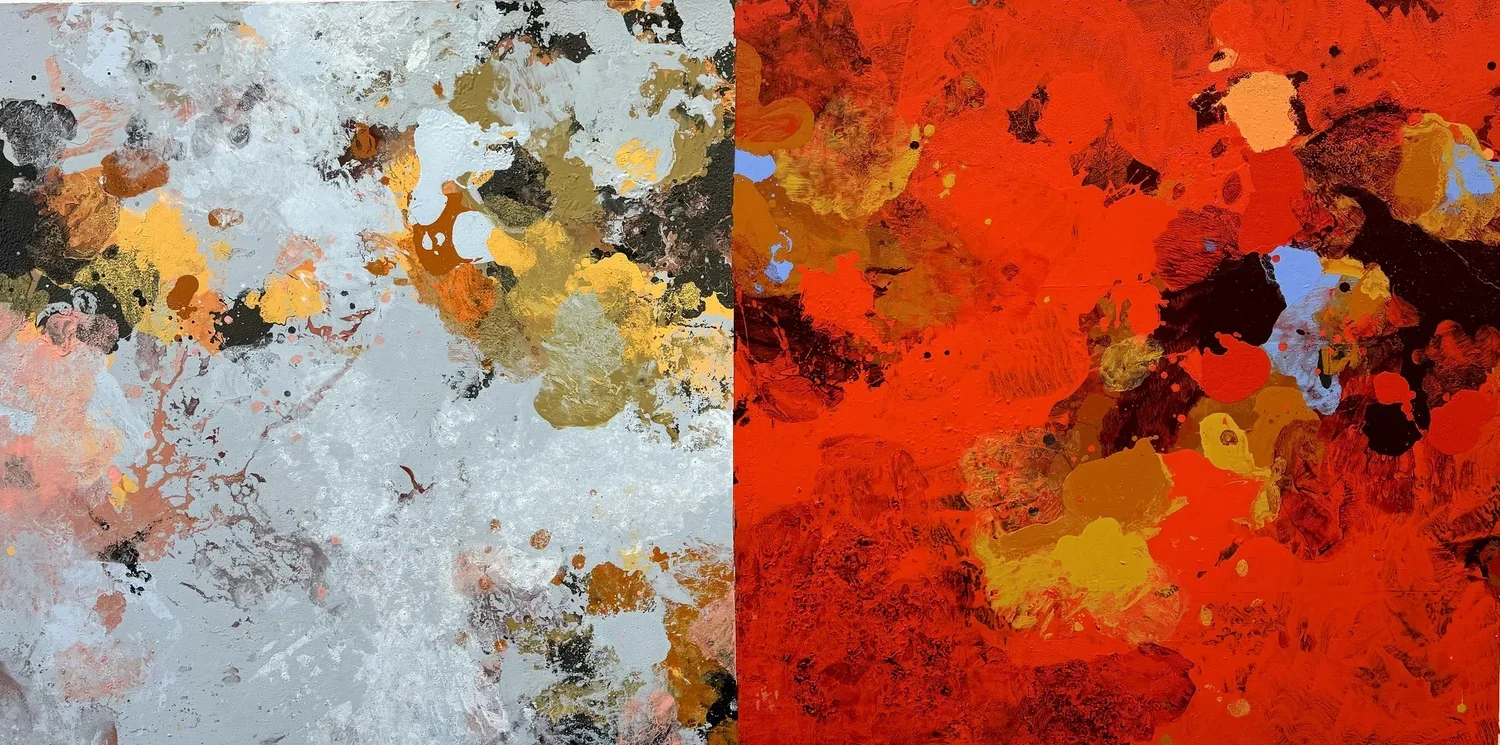
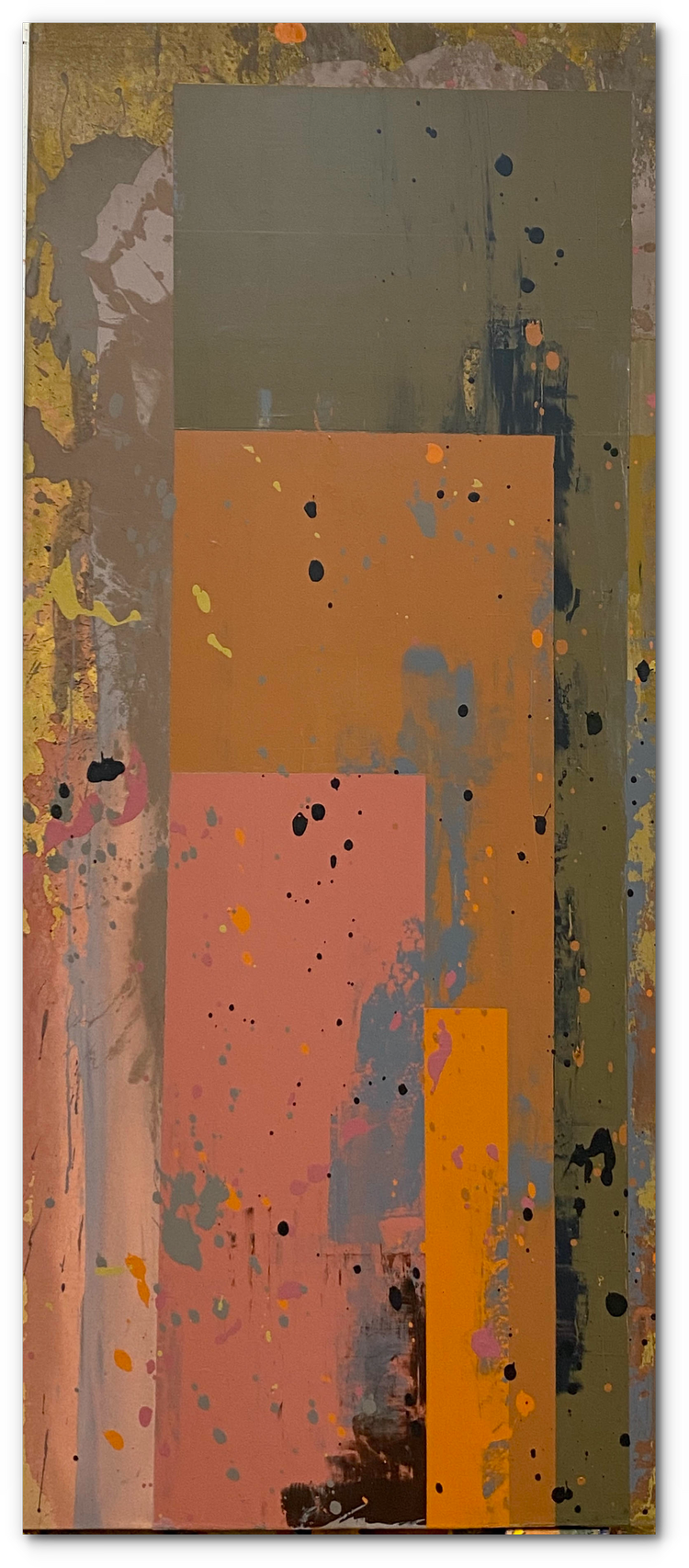
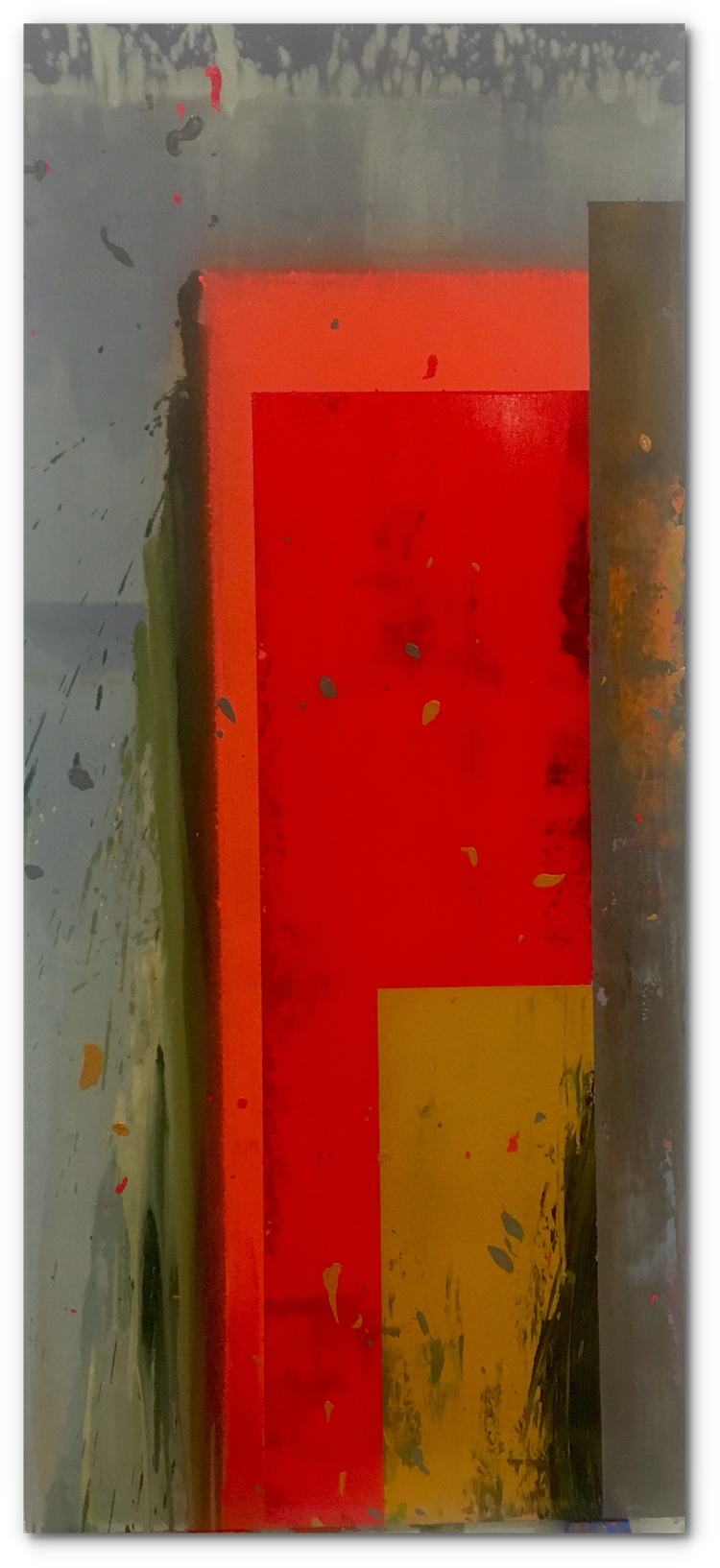
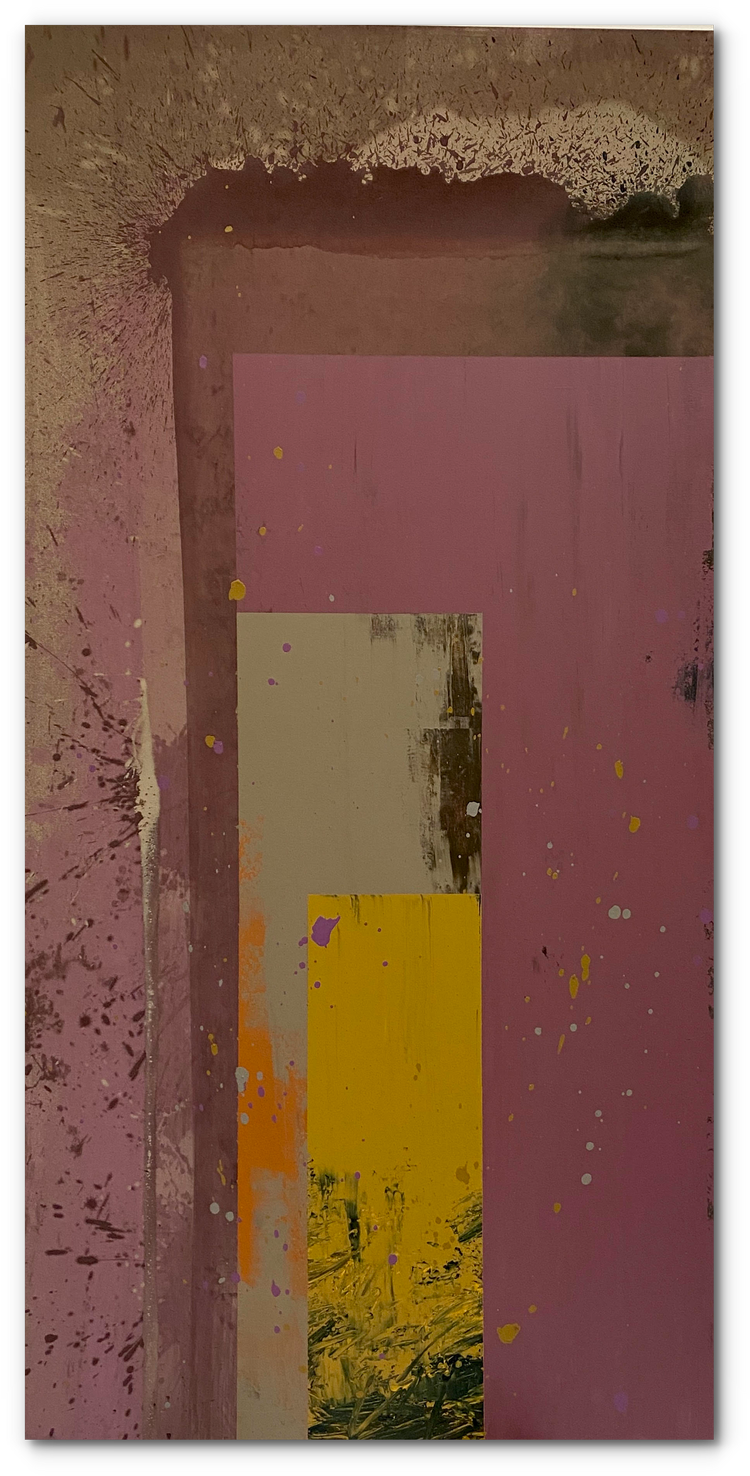
This is really hard. If I really could, there might be no reason to work. Anyway, in a general kind of way, my greatest interest is color and color relationships. For me, color is paint and paint is color, so it is integrally tied to the final surfaces. Color is very emotional and creates all kinds of different moods reflective of different shades of feeling.
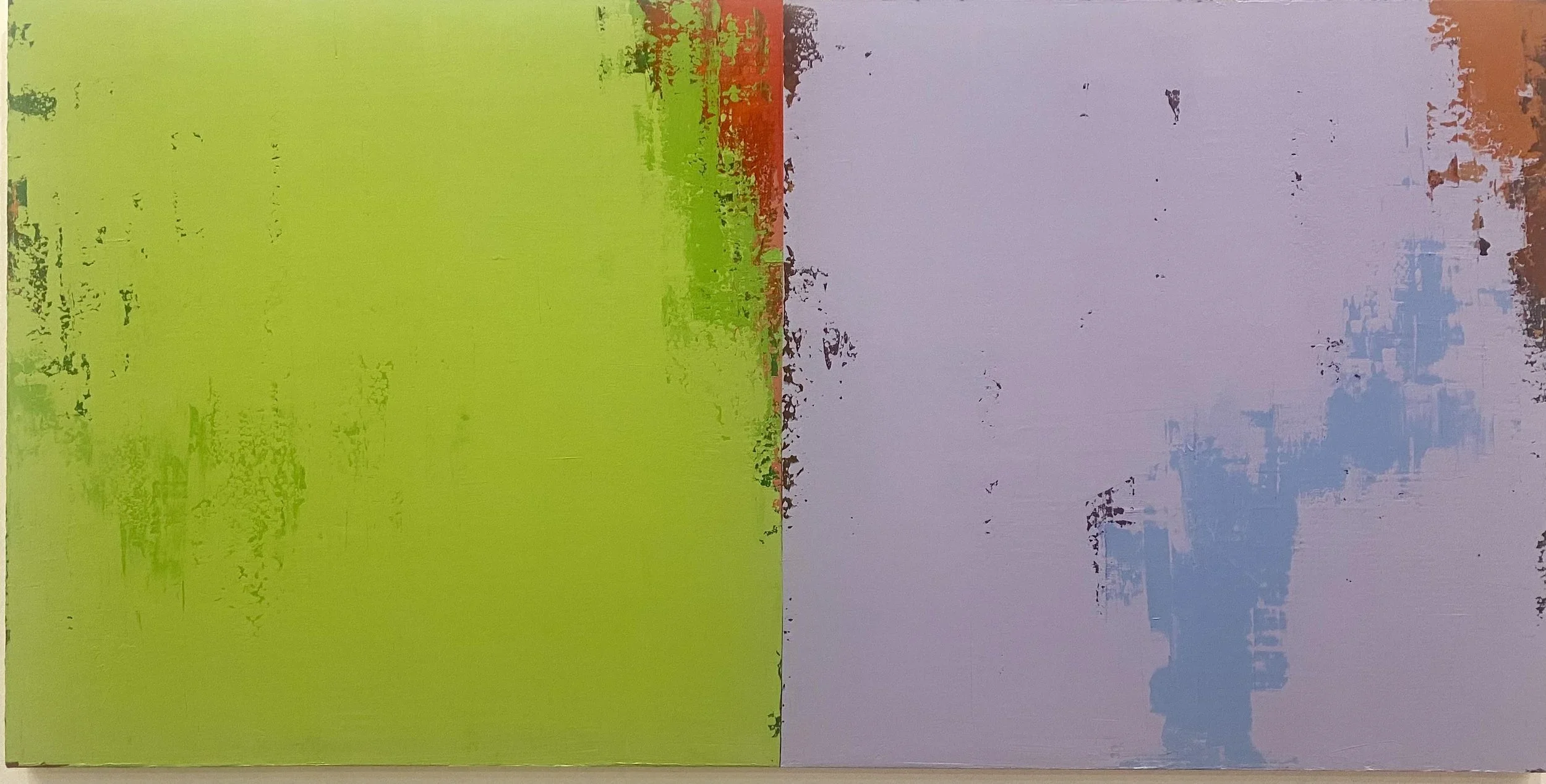
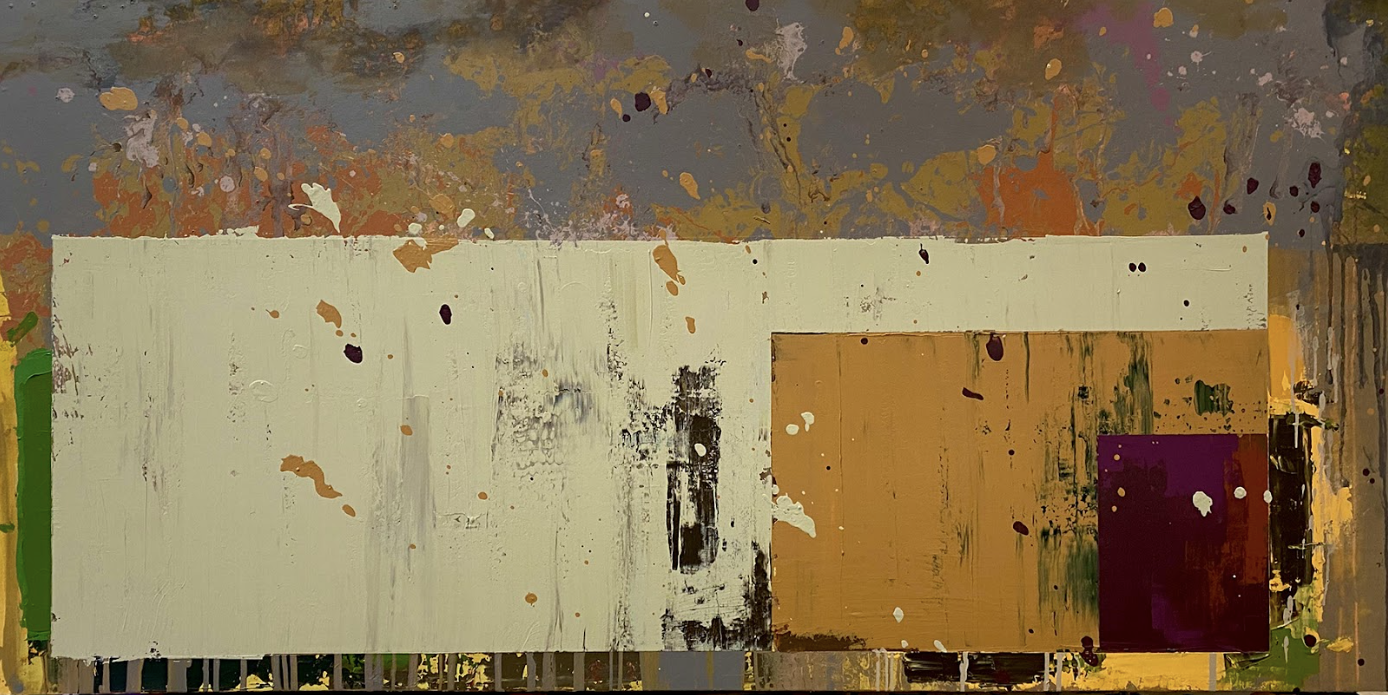
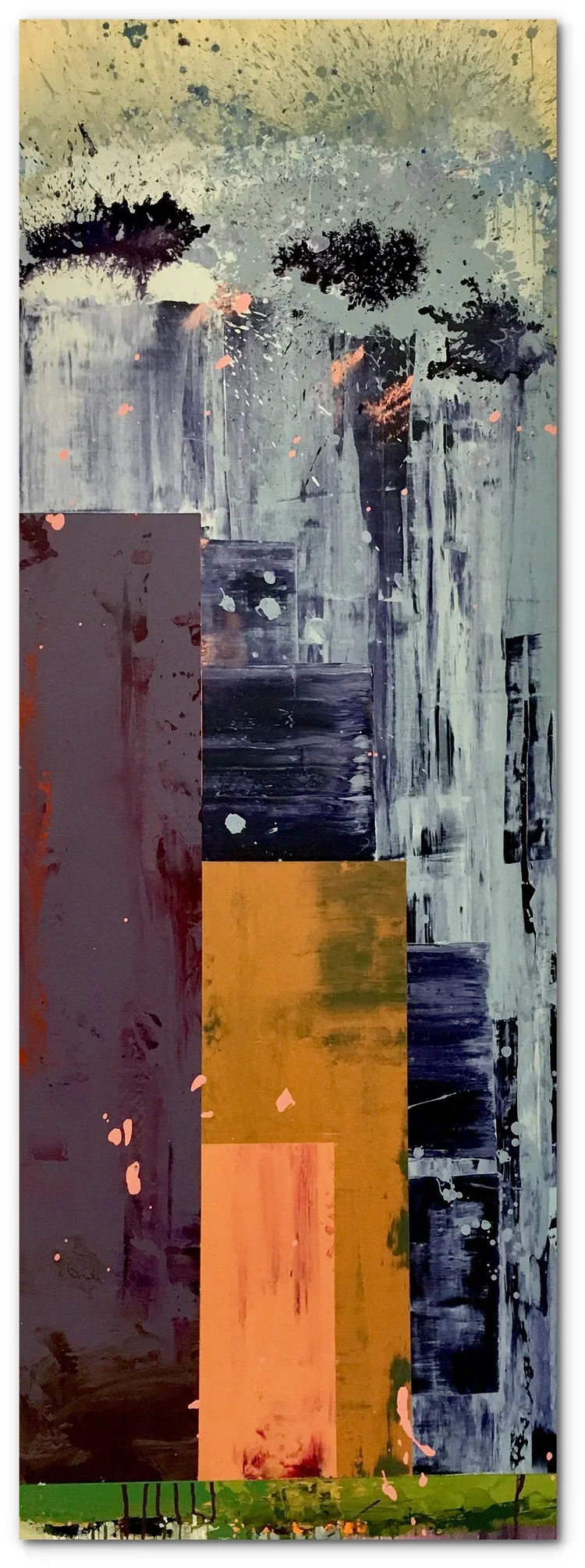
A variety of contrasts are also important: bright/dark, thick/thin, soft and liquid/sharp and solid. Looking back on the last 15 years or so, I tend to play rational geometry against random painterly incidents. Hopefully, that makes sense.
A painting is felt through the eyes and it either “works” or it doesn’t. I guess it’s very intuitive. I always start with some kind of intention, but the material, the paint, very quickly establishes itself and generally refuses to cooperate. Then it’s game on.
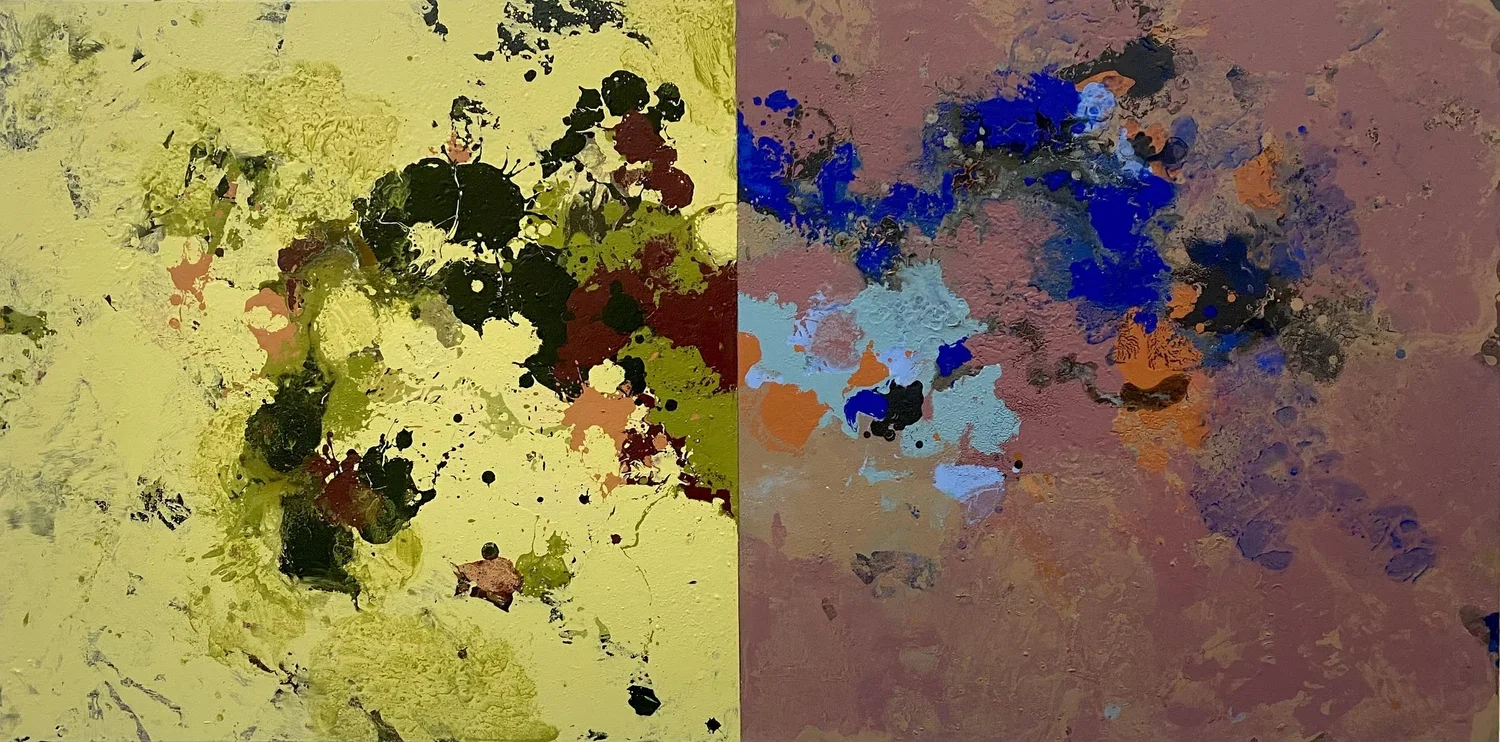
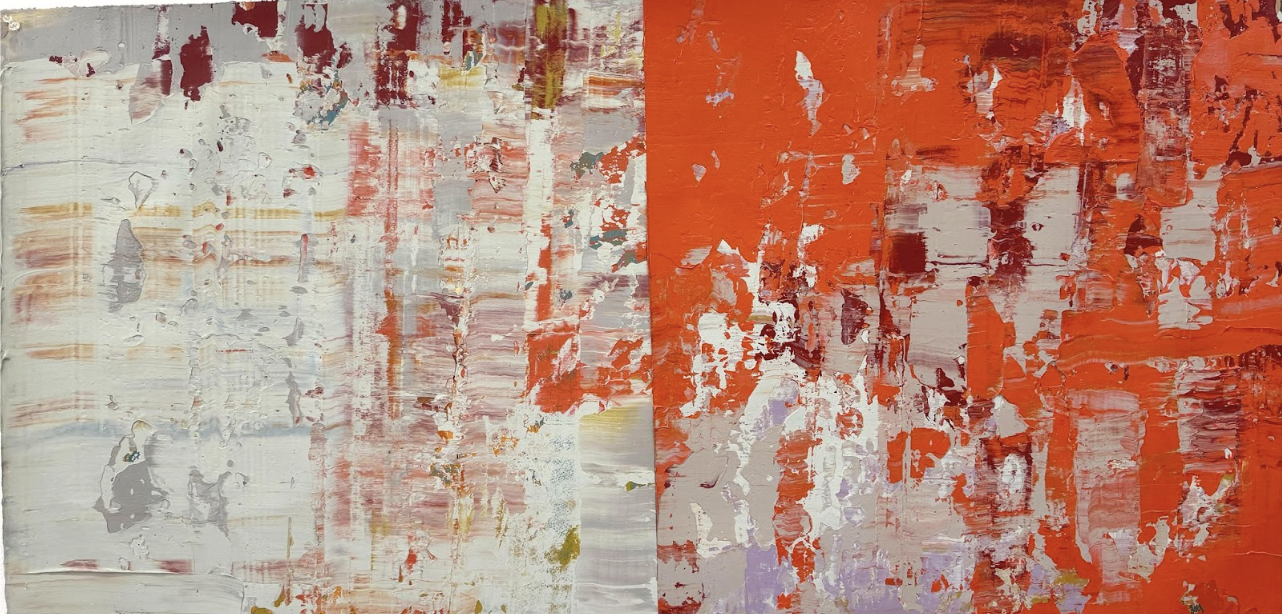
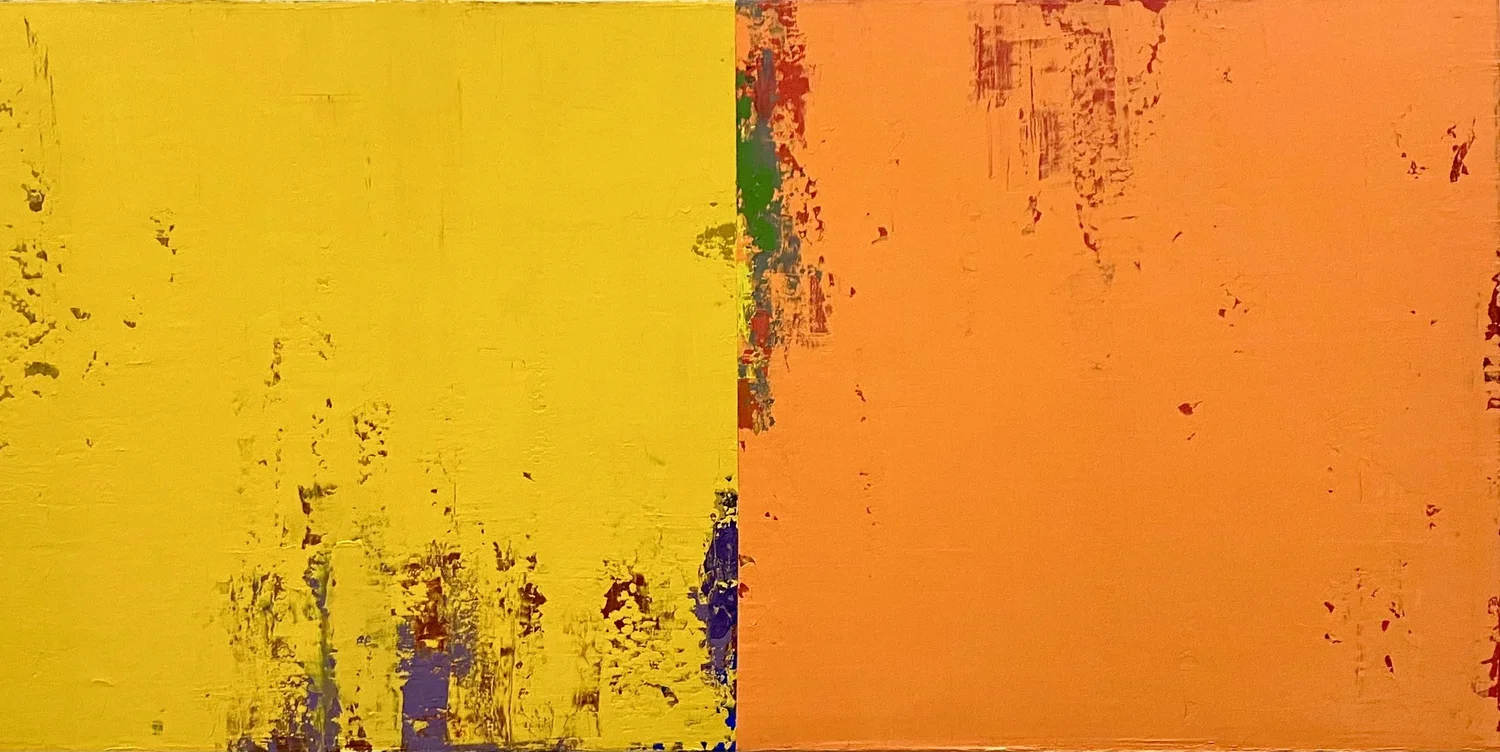
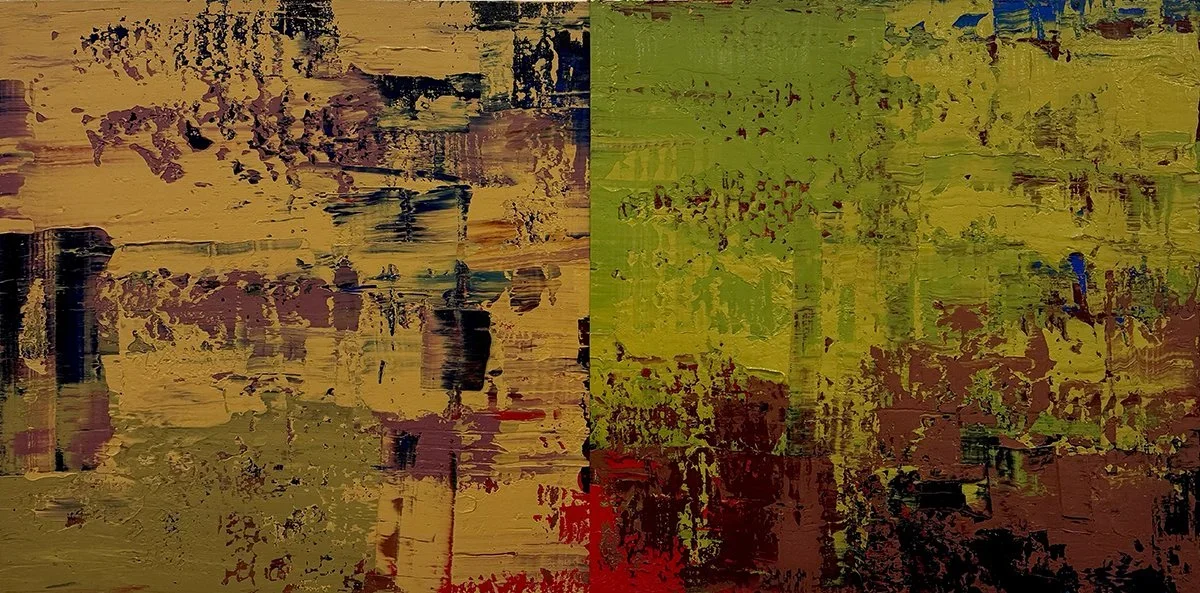
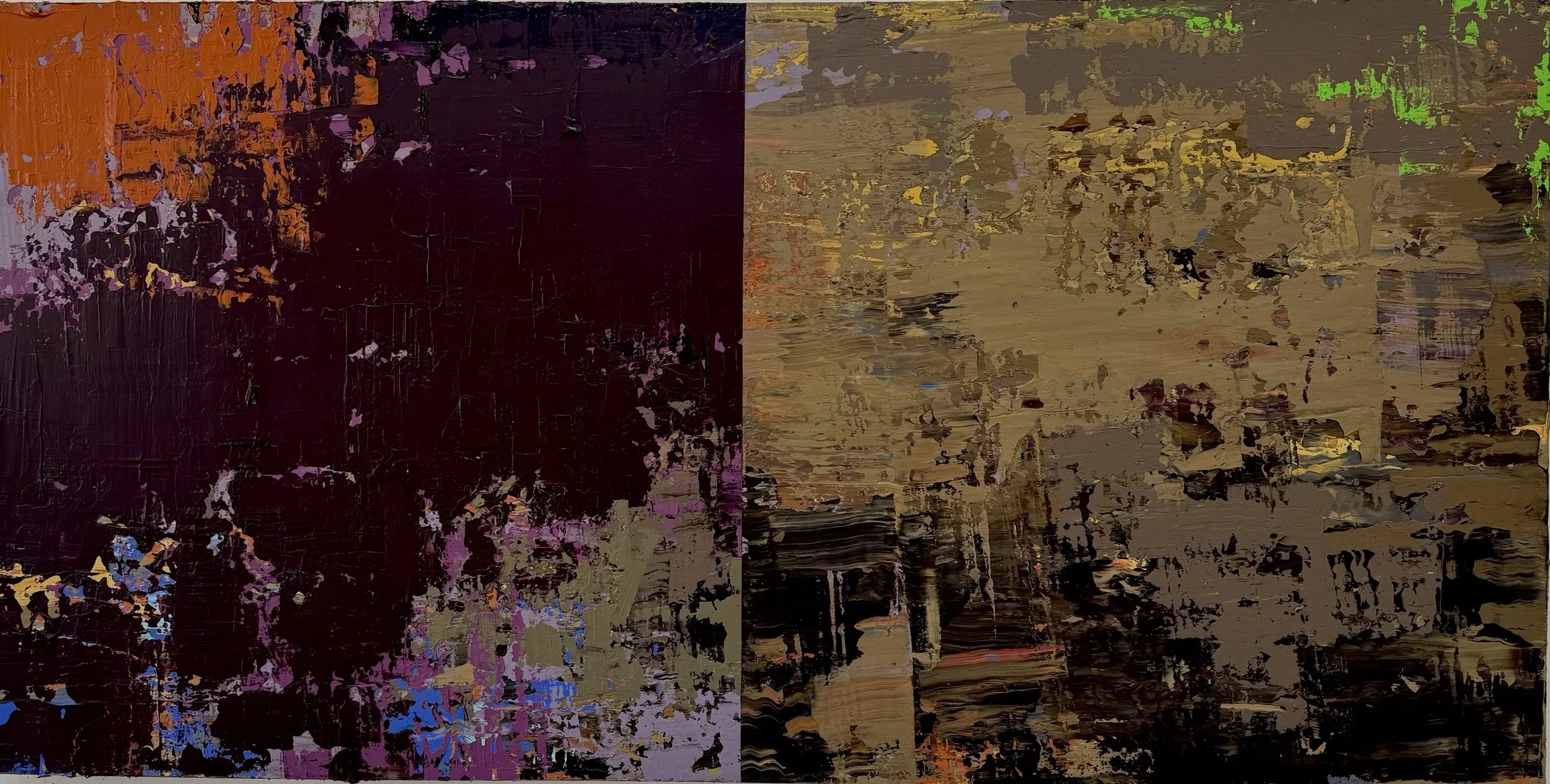
My current series, “dichotomies” is all about color and color relationships. I’ve also tried to eliminate the notion of “foreground” and “background.” It started with a very minimal mindset – seeing how little I could do to create a complete thought or feeling. Later versions are much more atmospheric or organic. Most recently, I’ve thickened the paint and kind of tortured it into exposing all kinds of mysterious random incidents within the context of a strict geometric composition.
All that is kind of a formal read on it. The conceptual basis of the “dichotomies” series comes from the binary way we tend to describe the people, places and events of everyday life: good/bad, right/wrong, like/unlike, true/false, etc. How is it possible to hold two, possibly conflicting thoughts in our heads at the same time? The potential for finding connection can be great.
What inspires you?
Interesting surfaces whether natural or man-made. Moss on stones. Lichens. Moss. Coral. The exposed sides of demolished buildings. Places where posters have been posted, torn off, and reposted. Distressed surfaces that have been painted and papered over and over again only to crack, fade and peel.
I have to say that in the end, my work really comes out of itself. Every answer poses new questions.
Can you speak about your process?
It’s kind of all over the place. What’s easiest to talk about is the current series of “dichotomy” paintings. I cover up the first half of the painting and go to town on the exposed half. When it’s in a good place (whatever that means), I reveal the covered half to see how the halves might relate. That usually requires covering up the first half and painting the second half. This goes on until I can’t think of anything else to do and the painting no longer annoys me. There are usually some really interesting, random connections as well as “near misses” and a kind of spatial ambiguity
I use acrylic paint. The biggest benefit for me is that you can pretty much do anything with it, e.g., paint thin over thick, keep layering it up until the cows come home. I used to paint with oils and while the drying time gave me a larger window to work the surface, it tended to be kind of unstable especially when laid on thick over a large surface.
How did you become interested in art?
I grew up in New York City, in Manhattan. My mother was an editor, a model, an interior decorator and worked for fashion magazines as well as clients, both commercial and residential. She had a great “eye.” She also started her own fashion label, “Ann Campion” and was sort of a pioneer as a woman who “had it all” in the 1950s and early 60s – family career, etc. My father was a writer and editor for LIFE magazine and later handled the press for the New York Stock Exchange and The American Medical Association. So he had a great “ear.” We also had a summer home in East Hampton where in the early 50s, my mother met Jackson Pollock and bought some of his prints at clothesline art shows just before he blew up the art world. She routinely took us to the Met, Guggenheim, Whitney, and especially MoMA and made sure my sister and I were exposed to the art and culture of the day in a big way.
I distinctly remember standing in front of a giant Jasper Johns painting of a map of the United States. I think I was ten. It kind of blew my mind. But I remember looking around the museum and seeing all these adults studying the art on the walls and thinking to myself, “This is something grown-ups take seriously. This is a big, serious thing.”
From that point on I began to think of myself as some kind of artist. In grade school, I made friends with our art teacher and on weekends would go paint with him on the West Side. In college, I also took many Independent study classes from one of the painting professors. After graduation, he took a job as the Chairman of the Art Department at a small college in New Hampshire and hired me as a junior instructor. This gave me the time and wherewithal to develop some work which would become the basis for my first show in Boston at The Boston Center for the Arts.
Do you have any favorite artists, books, movies, or quotes?
The list would be enormous on any given day. Hans Hoffmann certainly.Matisse. Brice Marden. Gerhardt Richter. My college mentor, Robert S, Neuman. Alfred Leslie, Ellsworth Kelly. It’s a pretty mixed bag, but I think every artist has to have a village or at least grandparents.
I think these films can be found on YouTube:
The Price of Everything - an HBO documentary trying to examine the question of how value is defined for an artist’s work. How can some paintings sell for multiples of millions of dollars and who decides. It’s both enlightening and kind of horrifying as well.
The Art of Making It - this doc takes a look at how some artists “make it” and others don’t. The essential premise is that certain art schools provide distinct advantages to their graduates by introductions to gallerists, collectors, and other VIPs in the art world.
Never Look Away - this is a German film based on the life of Gerhardt Richter. It has subtitles and was nominated for an Oscar in the Best Foreign Film category. It’s a story that is essentially unbelievable and yet true about one of the most important living artists.
As to quotes, there are so many. These are among my favorites including one of my own:
“Every good painter paints what he is.” – Jackson Pollock
“There are no ugly colors.” – Brice Marden
“Art is never finished, only abandoned.” – Leonardo Da Vinci // Willem DeKooning
“When the sandstorm comes, pray to Allah for deliverance, but tie your camel to a tree.”
– Sanskrit proverb
“Color is my day long obsession, joy and torment.” – Henri Matisse
“If I could say it in words, there would be no reason to paint.” – Edward Hopper
“I take an object and do something to it. Then do something else to it.” – Jasper Johns
“Be who you are and say what you feel because those who mind don’t matter and those that matter don’t mind.” – Dr. Seuss.
“Mostly I sit and stare waiting for God to yell in my ear.” – Frank Campion
What advise do you have for younger artists?
At the age of 35, I had a great studio in Boston down near North Station. I had been selected for a high profile exhibit of Boston abstract painters at the Institute for Contemporary Art. That led me to my choice of local galleries. I signed on with a great gallery and had three solo shows there which were mostly sold out. One of my paintings was acquired by the Boston Museum of Fine Arts and during that process, Clement Greenburg came to my studio with the museum’s curator of contemporary art.
As the time for my next show rolled around, the gallery director came to the studio to see the new work. I could tell right away, she was troubled by what she was seeing and I asked her what the problem was. She said, “This isn’t you.” That was kind of a shock to the system. I explained that the work was evolving in what I thought were exciting new ways and that this was pretty typical of an artist’s development. She then explained to me that while she understood that, she had a waiting list of collectors expecting to see work similar to early shows. And that if she showed the new work, she would have to start all over again educating them and bringing them down the path.
We agreed to disagree. But from that moment, I was haunted by questions about my own motivation. Was I in the business of “producing” a “product” for an “audience”? Or was I really following my own muse. Throw in the fact that my studio lease was coming up and that I owed the art supply store a lot of money. So there I was at 35 with no house, no car and no health plan and struggling to understand what the heck I was doing and why.
This all took a few years to process. I describe it now as a “lover’s quarrel with the art world.” In the end, I boxed everything up and put it in storage. I got a job as a writer/art director/creative director at an advertising agency - a very creative job working with lots of very different people. In 1989, I was recruited to an agency in North Carolina.
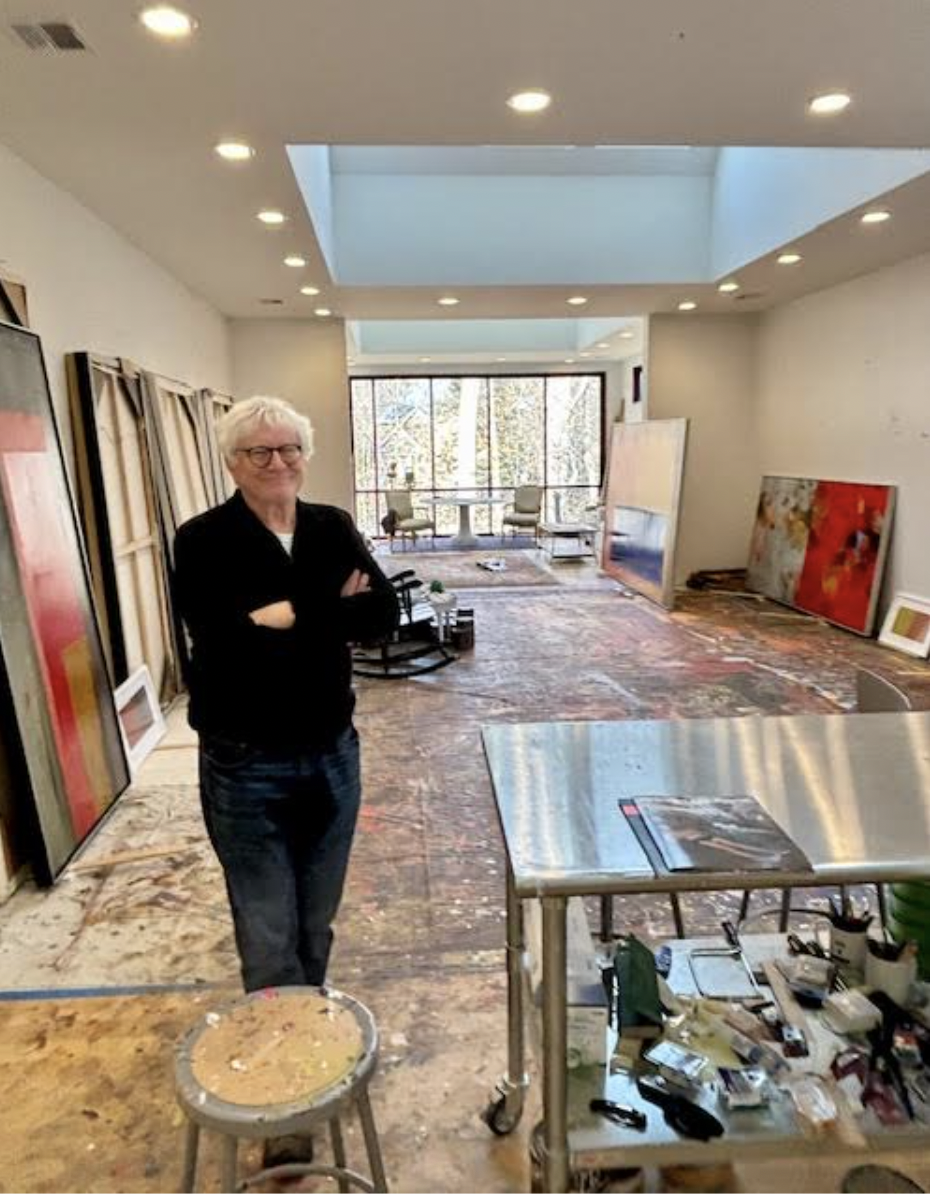
In 2012, my first wife fell ill and I retired a bit early to take care of her. It became pretty clear she wasn’t going to survive. She had known me as an artist in Boston and she asked me to seriously consider making art again in retirement. After she passed, I created a little drawing studio in the basement. With a heavy heart and wondering if I had the mojo to undertake it all, I started to fulfill her wish. And the motor turned over and I was very quickly off to the races.
All of this is to say, stay true to your vision, inspiration, your path. Don’t let anyone push you off the tracks. These days I like to say, I paint for an audience of one and that whether the stuff is any good or not, is really someone else’s problem. I don’t “need” to sell paintings now to support myself. I’m free of that dire necessity. The art world is pretty crass and generally unkind. Don’t take it personally though it’s almost impossible not to at least to some extent.
I don’t know if as an artist you can be a fair judge of your own work. Many is the night I’ve left the studio thinking, “You’re a mess, you’re no good, it’s all trash, etc.” Only to return the next day and realize that there is something really interesting there to build on. Of course the opposite has also occurred. Leaving the studio thinking, “I’ve really cracked it this time…wait’ll they get a load of this…” Only to come back the next day wondering where whatever it was went.
The main thing is to keep going. I didn’t, but I lucked out and got a second shot.