High Falls, New York
Website
www.lynnetobin.com
Social Media
Instagram
How would you describe your work?
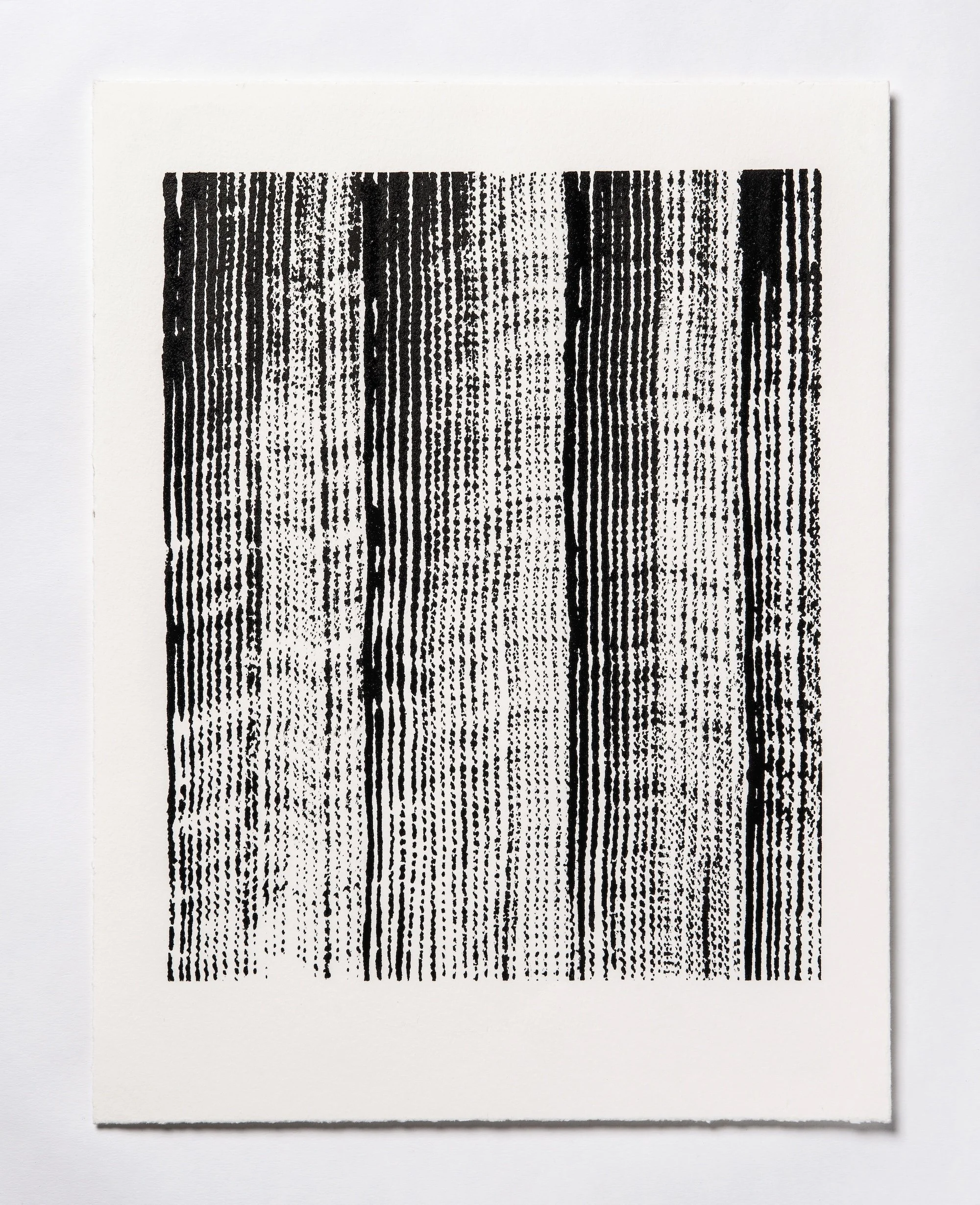
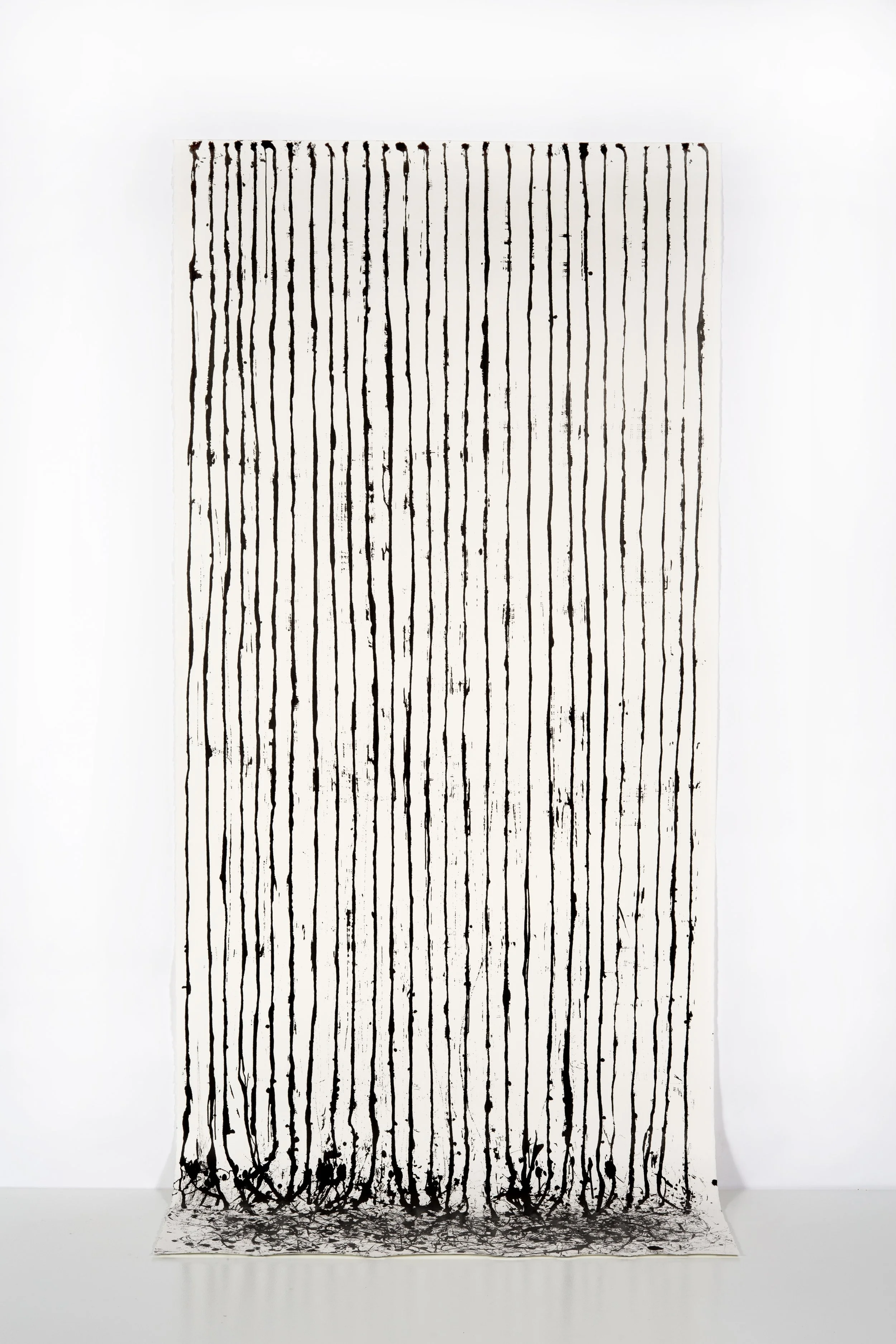
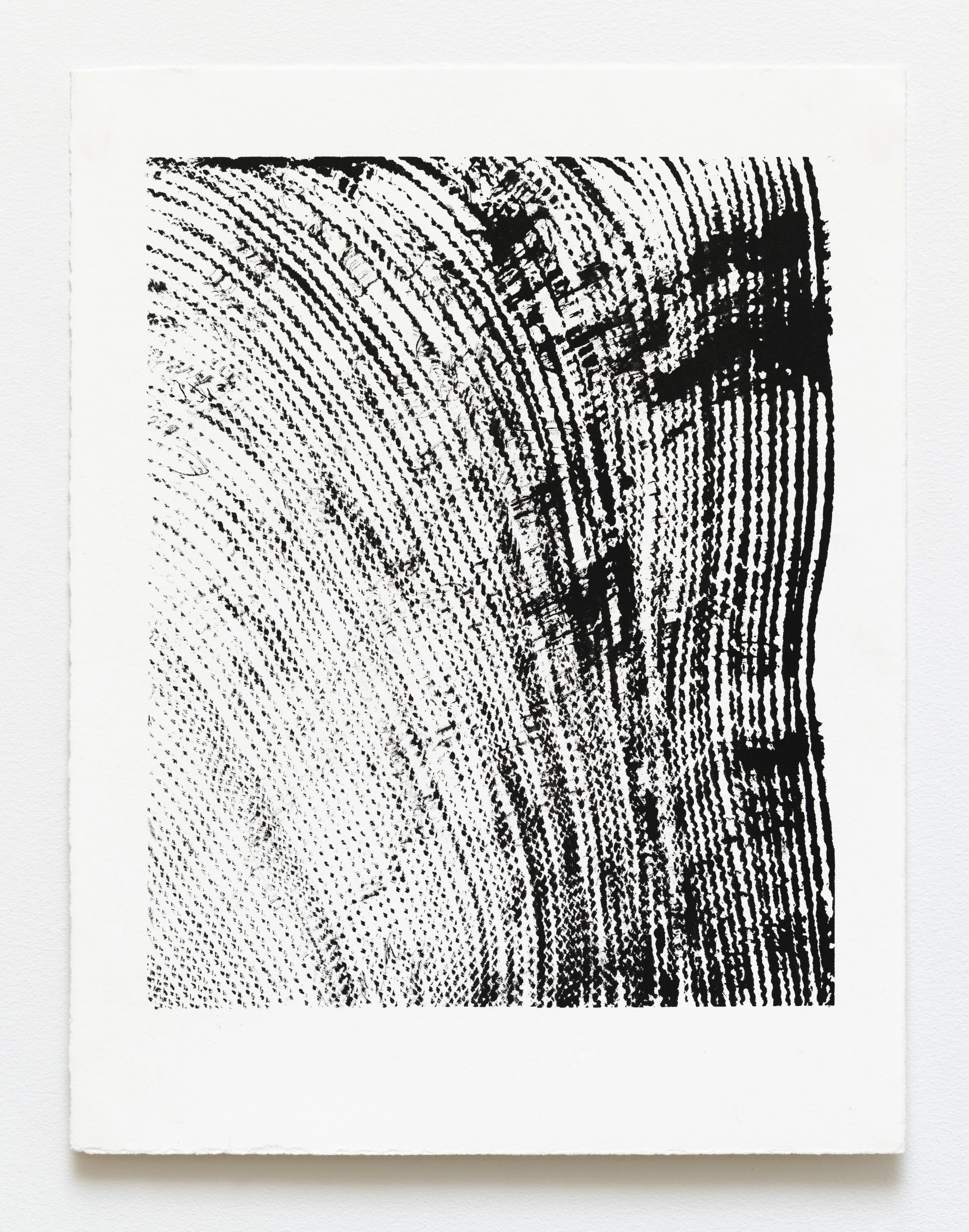
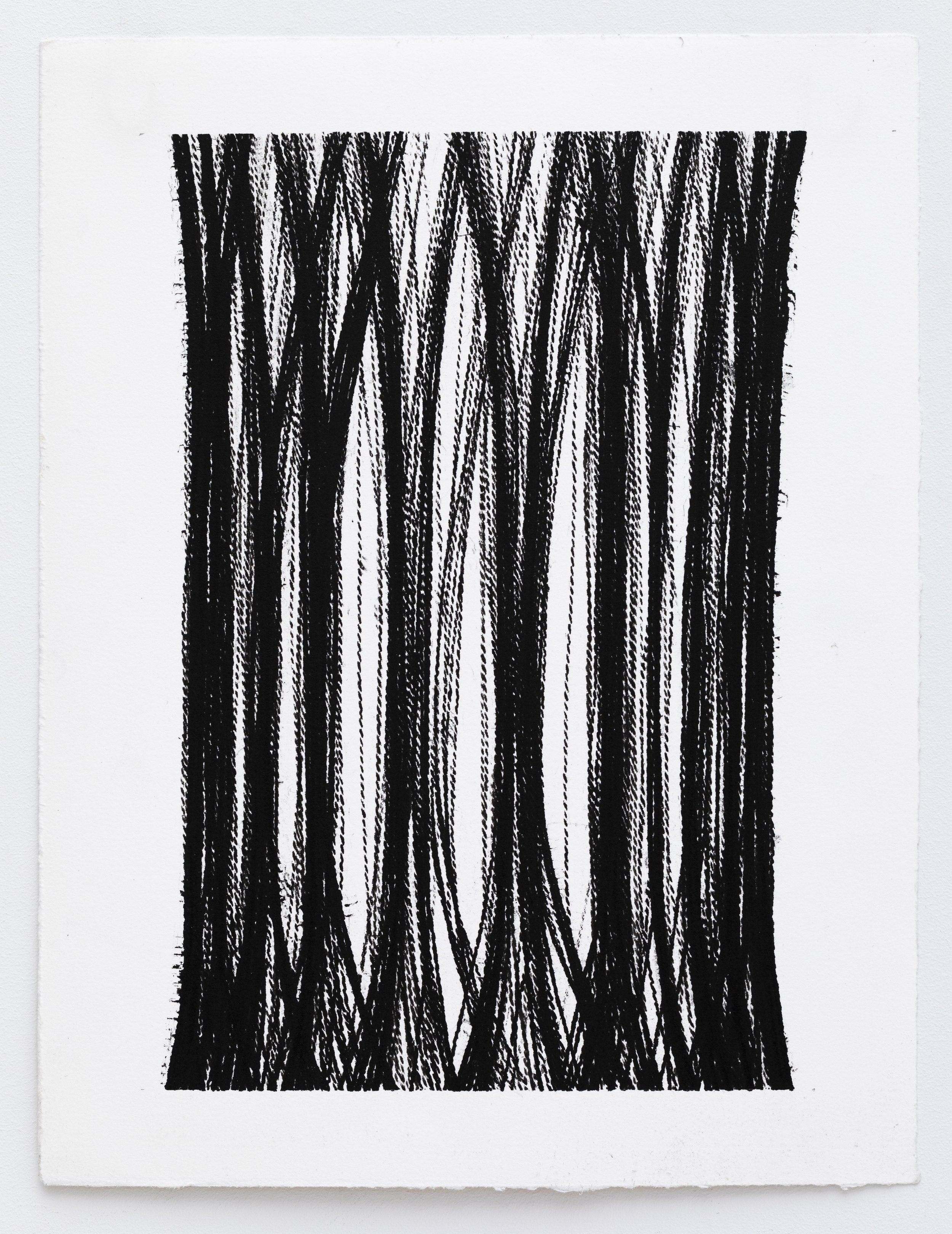
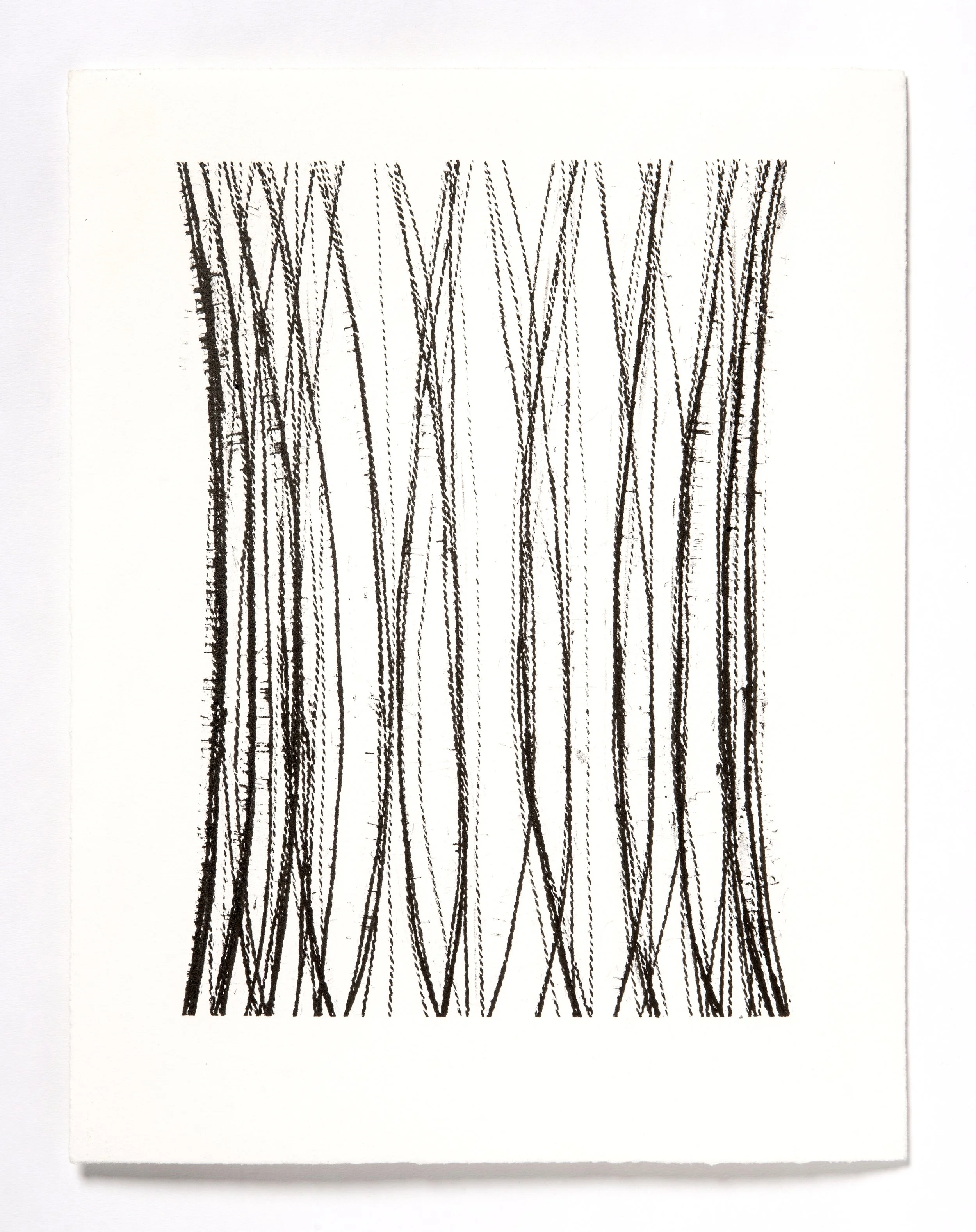
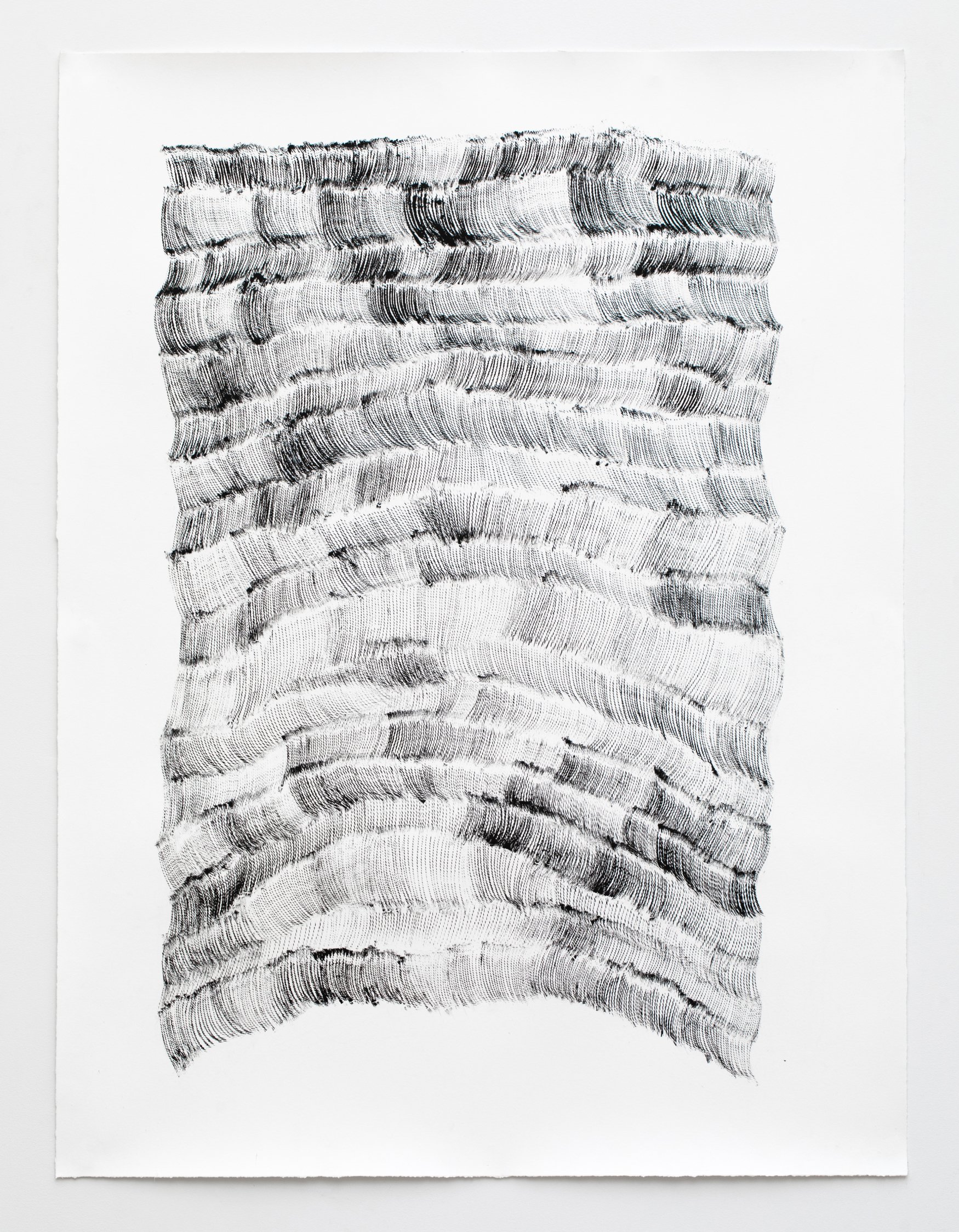
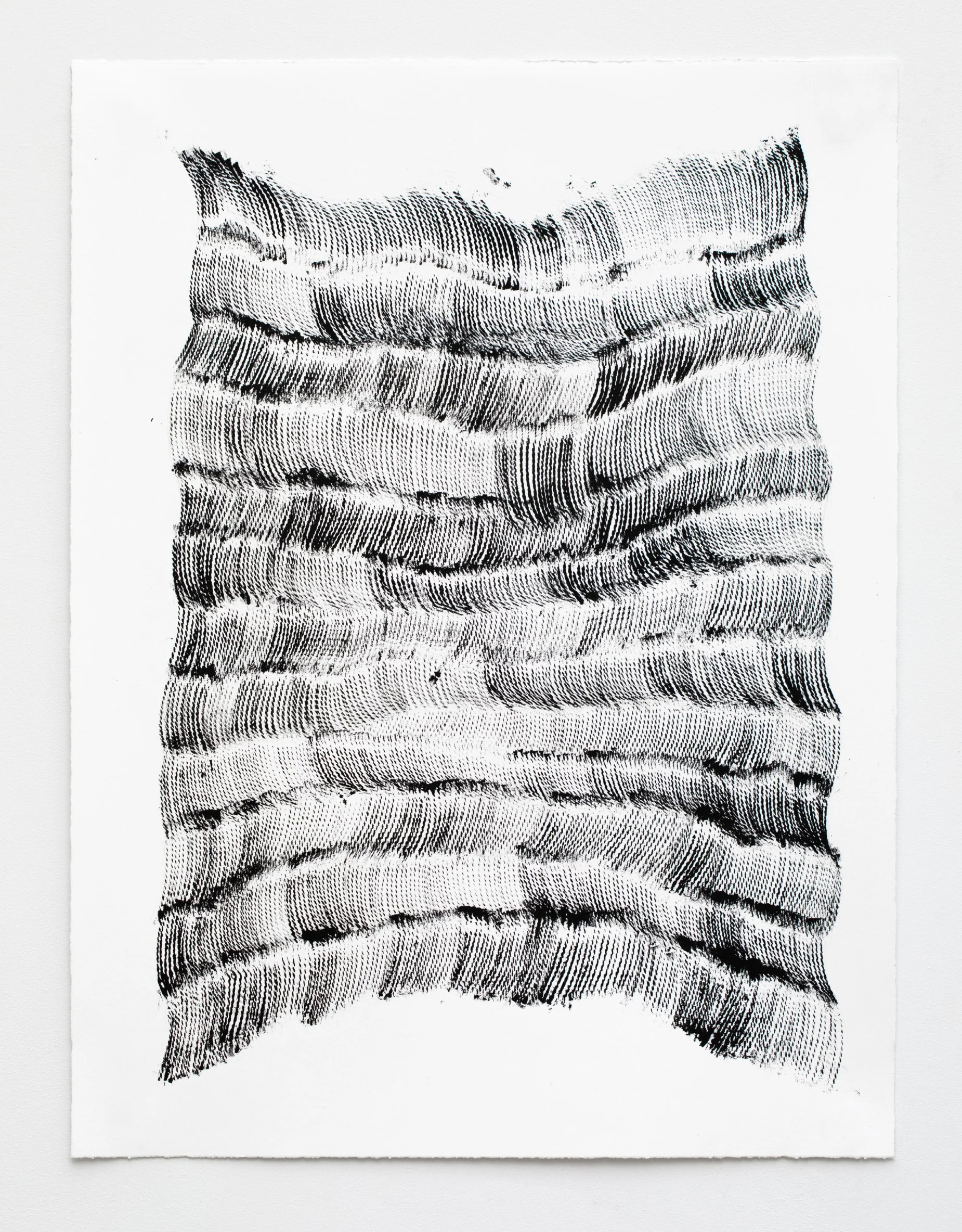
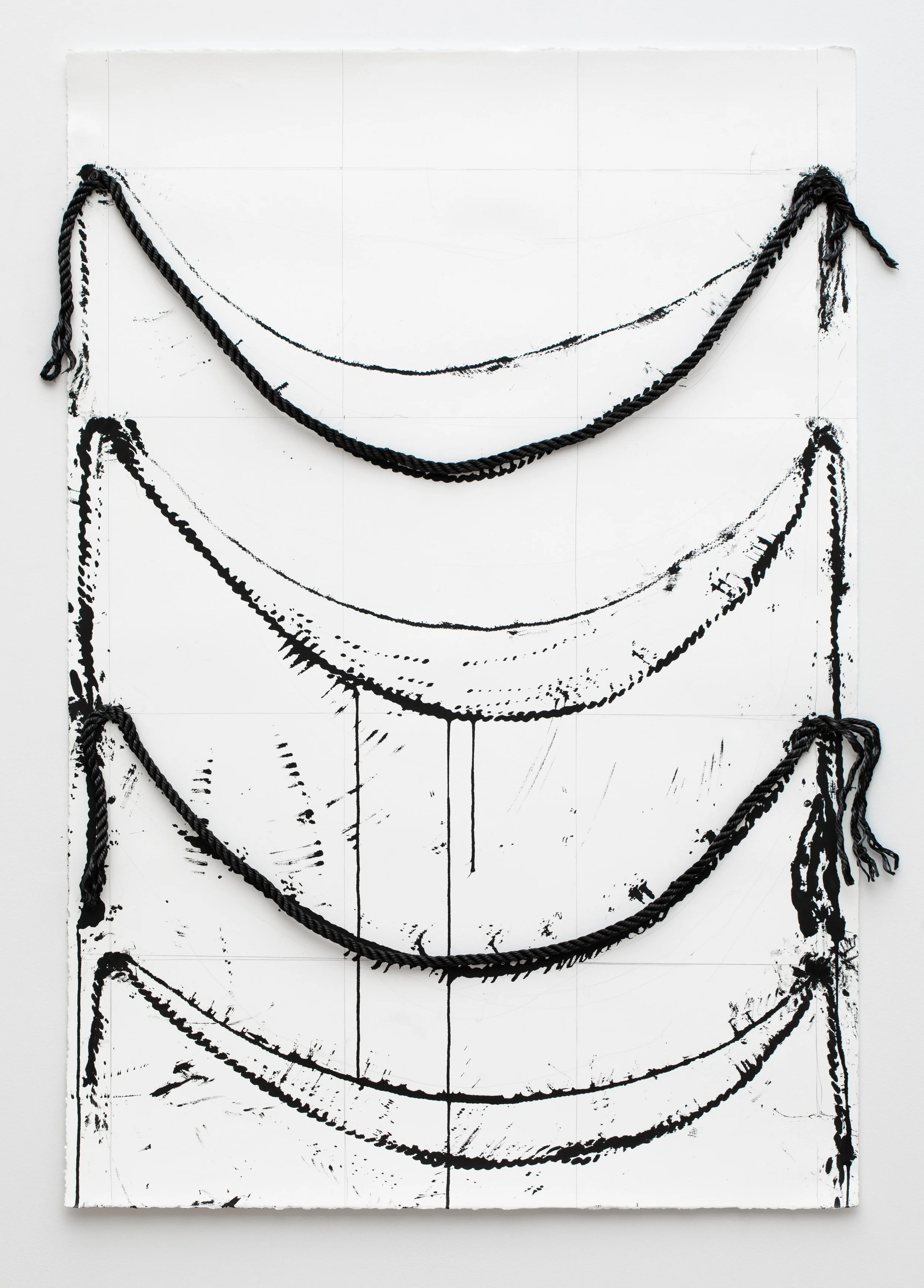
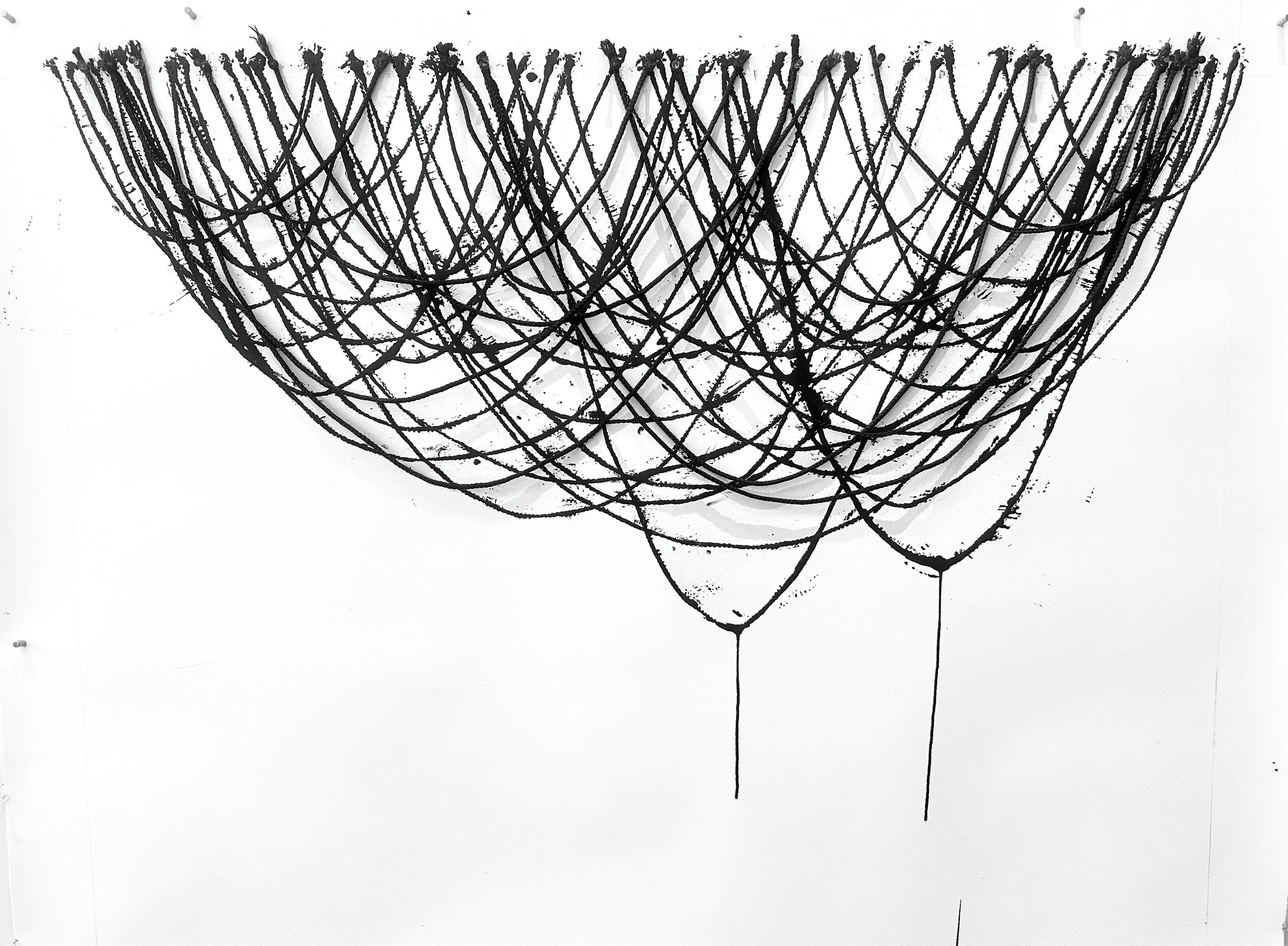
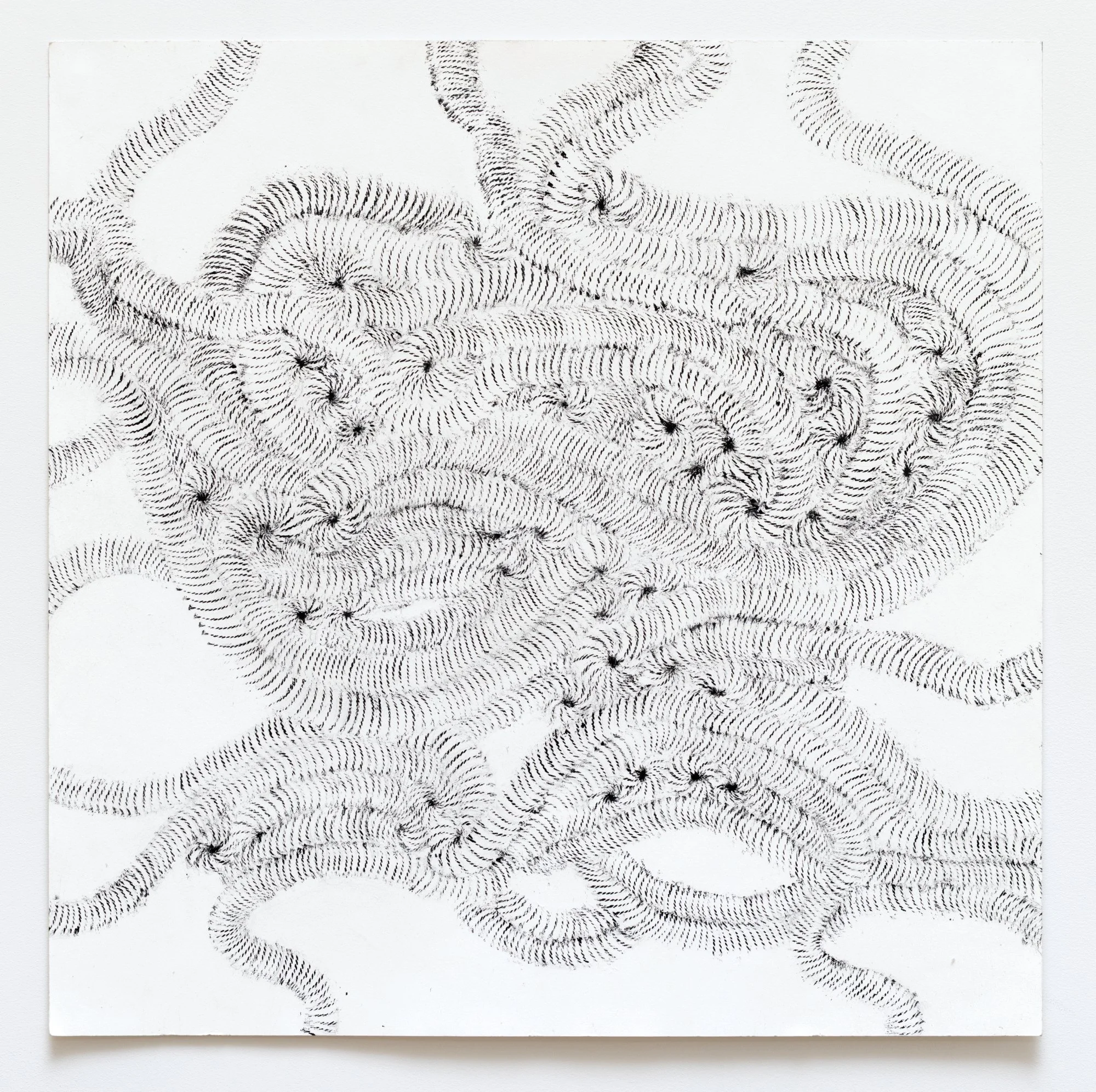
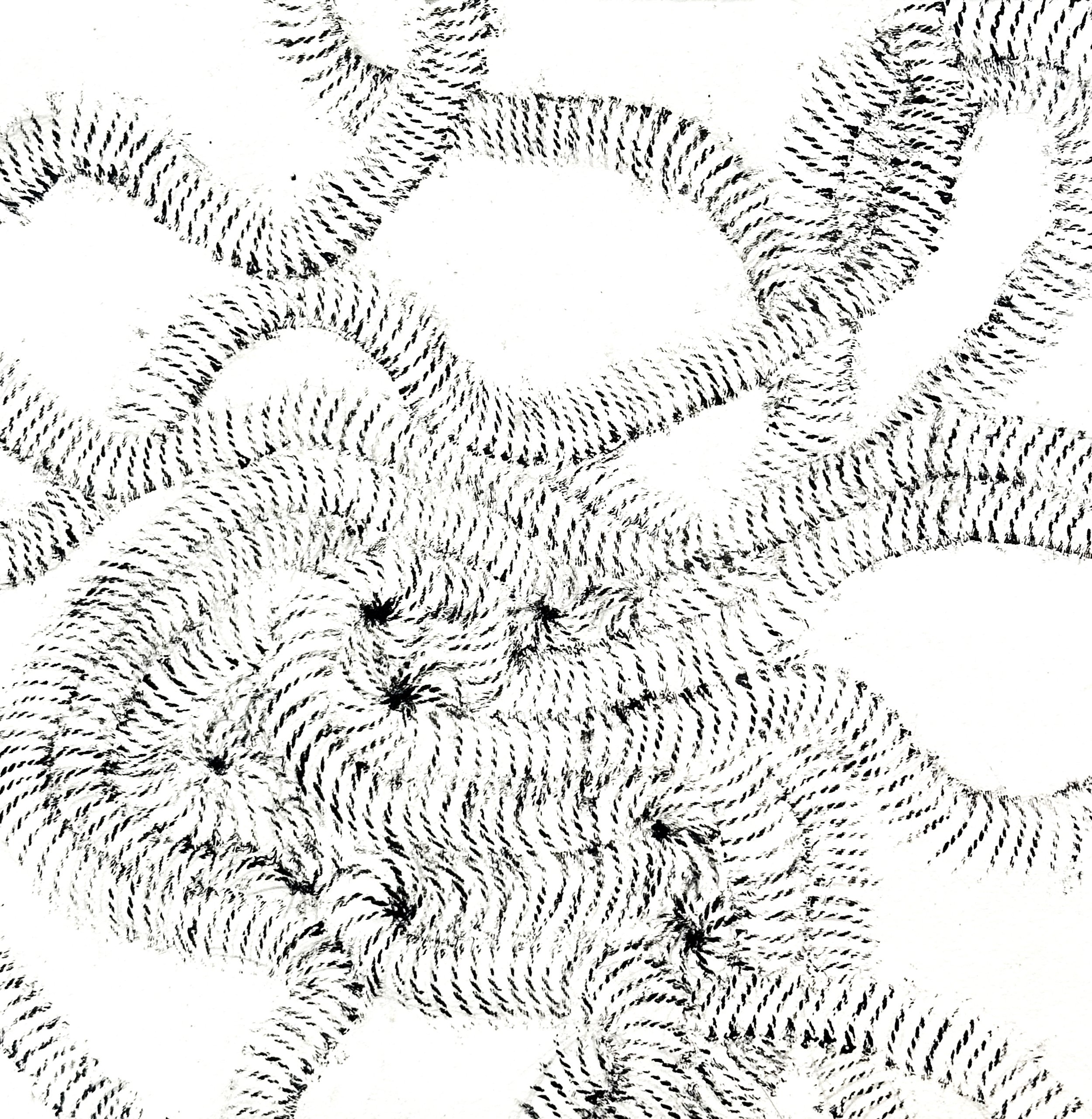
In my drawings, I use ink, rope, and string to generate lines that are at once deliberate and unpredictable. In their repetition and accumulation, the lines create fields of tension, separation, connection, and space. The first Line Studies drawings largely consisted of repeating vertical lines. As the series has evolved, the lines began to curve, the patterns and textures more directly relating to the tools I use to create the work—string and rope.
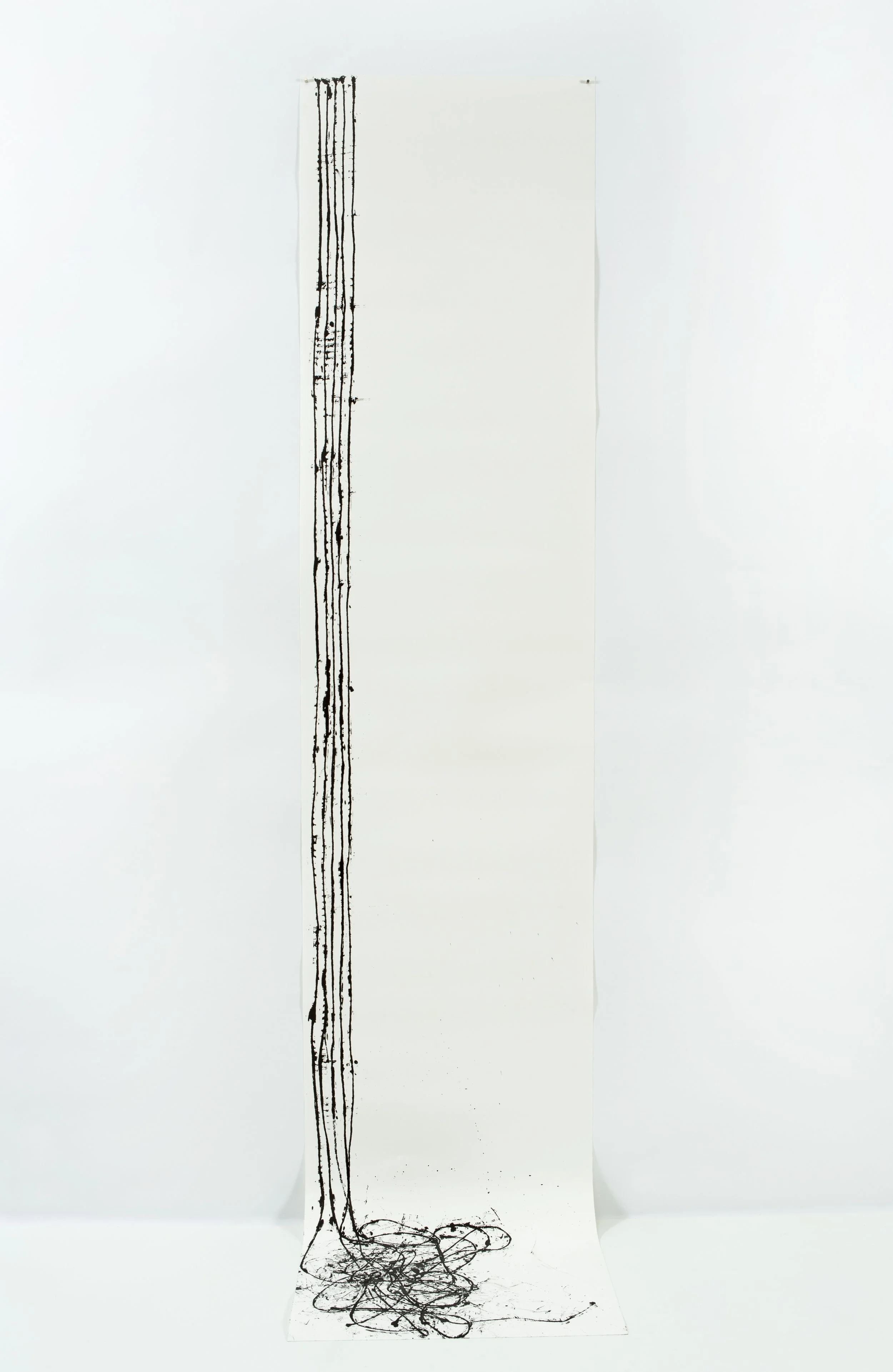
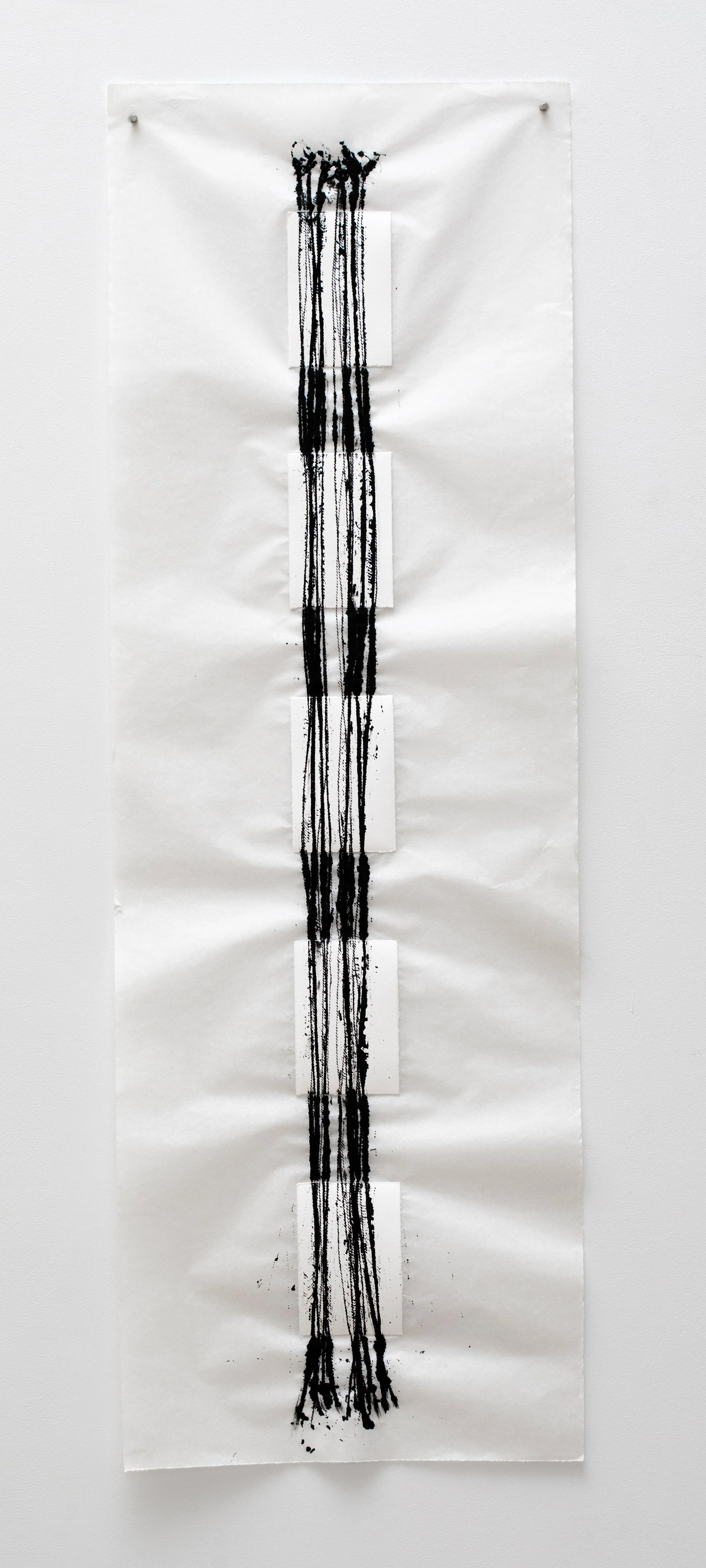
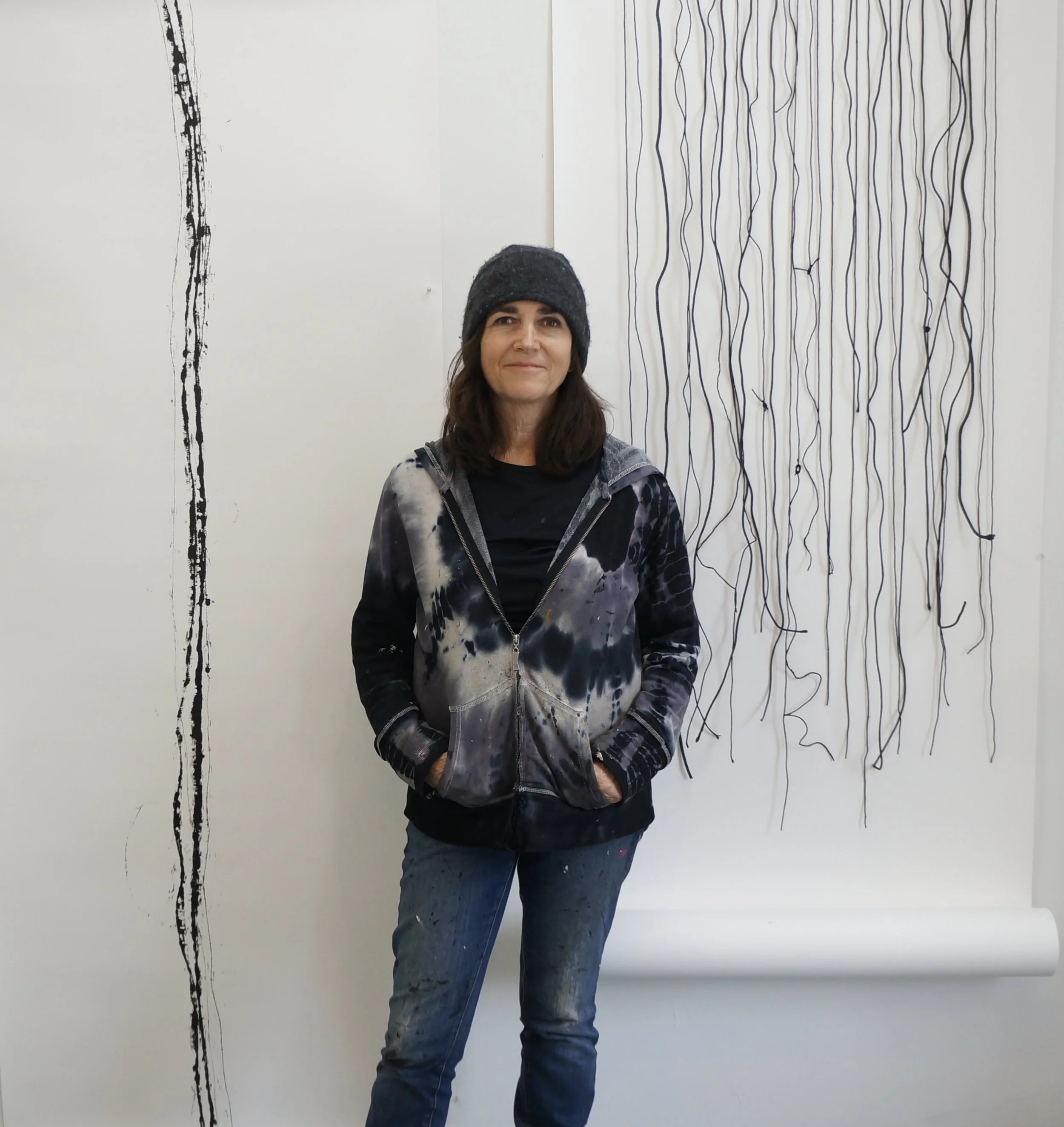
A sense of presence and space is shaped by the meditative process of working line by line and by my lifelong meditation practice. Presence, space and an emphasis on the unfolding moment are central to my work. In my most recent drawings, the rope and string have been incorporated into the drawings as three-dimensional lines.
What inspires you?
I am inspired by the rhythms, patterns, textures, and materials of daily life, particularly the handwork traditionally associated with women—stitching, mending, and weaving.
The lines in my drawings often recall textiles, suggesting threads on a loom woven together across the surface of the paper.
So much is communicated in the way an artist draws a line. I have drawn my whole life and I am fascinated by the fundamental act of drawing a line—its movement, rhythm, weight, and how a simple line can convey emotion and presence. The Line Studies series grew out of a life long fascination with drawing and became a way to push its boundaries, inviting viewers to reconsider how they experience line, texture, and negative space.
Can you speak about your process?
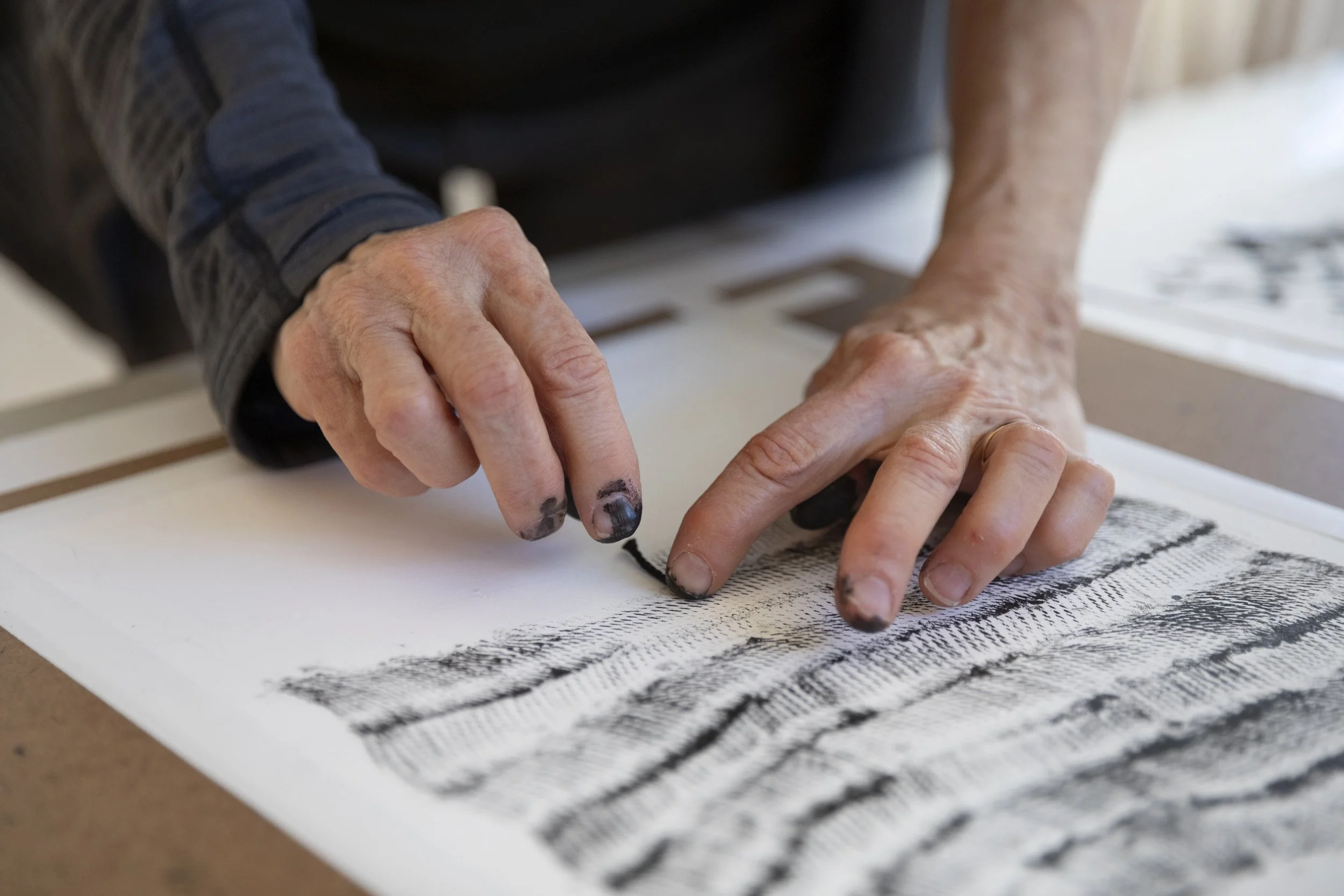
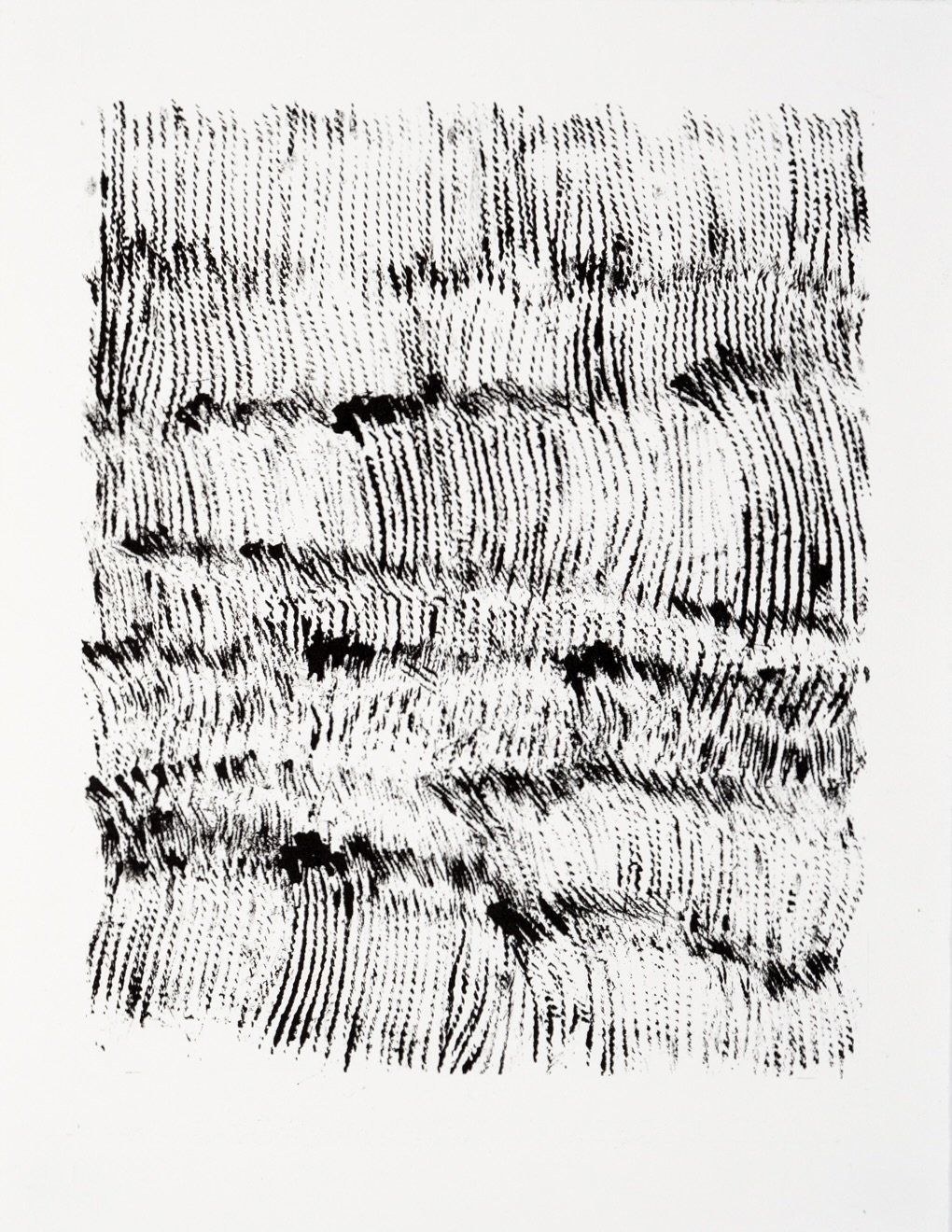
Working primarily on paper, I dip string and rope into black sumi ink and press each ink-saturated thread onto the surface, building the drawing, line by line. I love the stillness of the studio and the meditative experience of working in this way on paper.
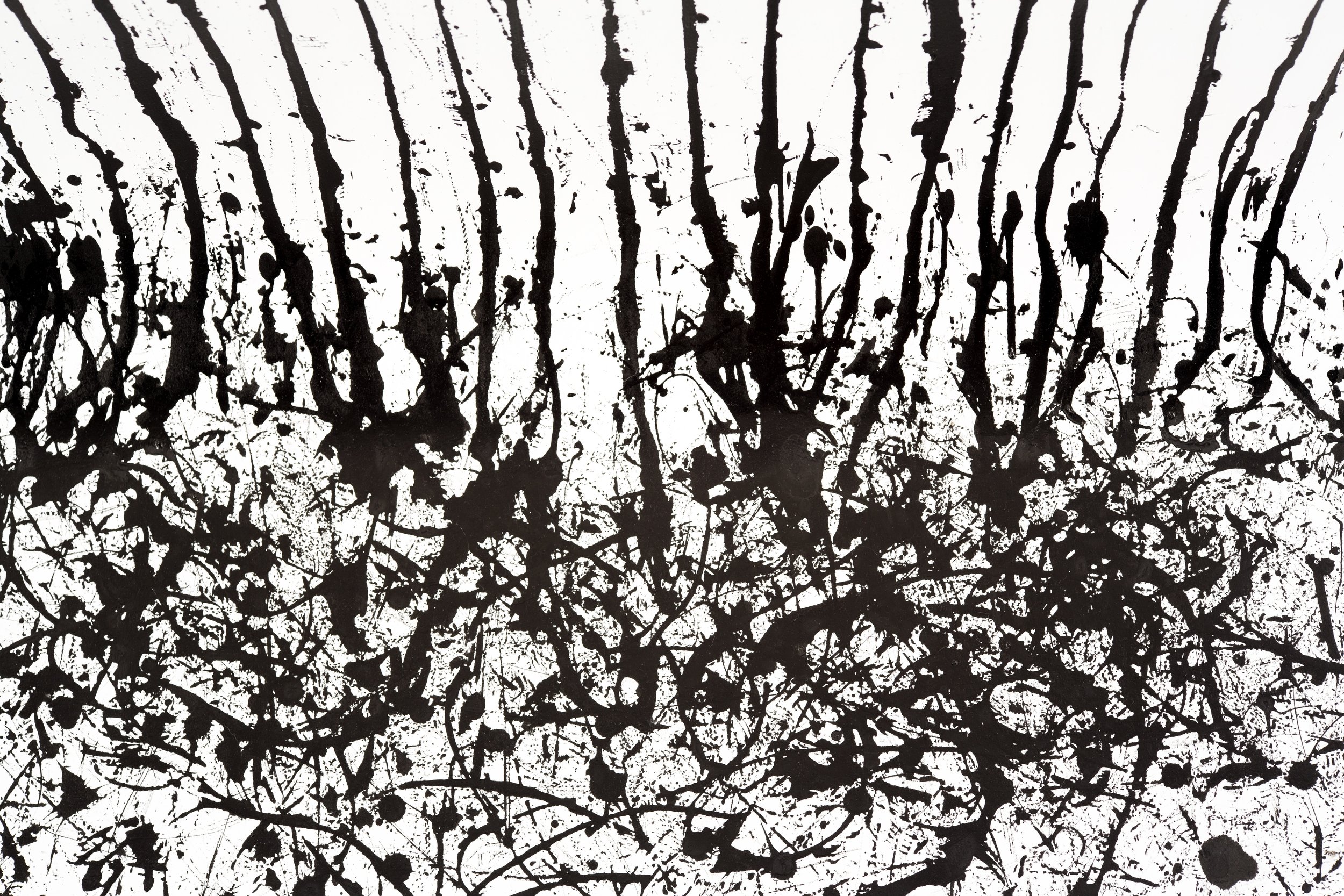
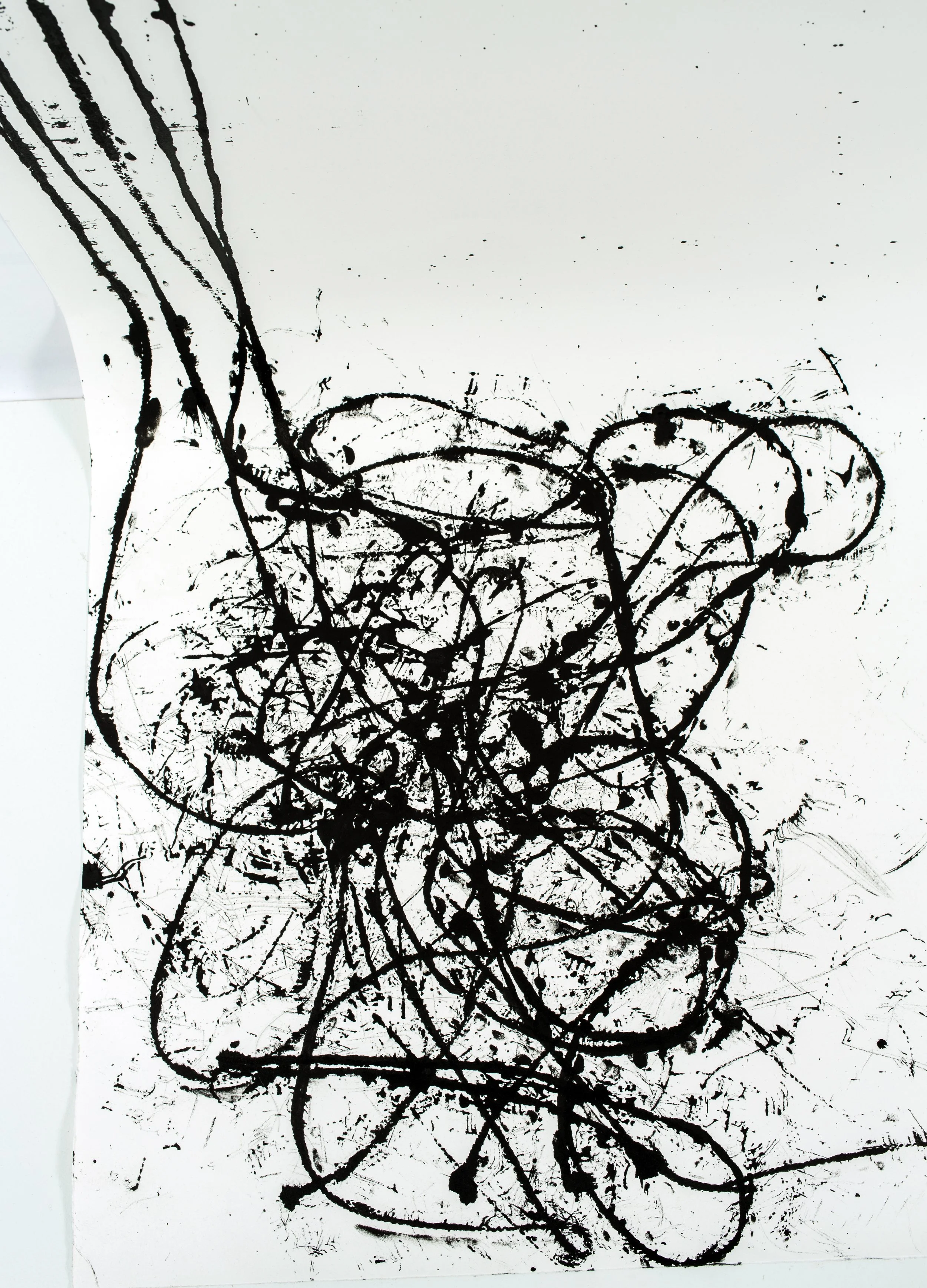
In my work there exists a dichotomy between the structure of repeating lines and the unrestrained marks that emerge from working with materials saturated in ink. I am drawn to the unexpected qualities of these marks—their irregularities, textures, and accidents—which give each drawing its unique character. There is a subtle balance between intentionality and uncertainty, between establishing a structure and allowing the materials to lead me somewhere unanticipated.
I work in series, often developing several simultaneously, and moving between large and small-scale drawings. In the early stages of this work, I spent considerable time exploring the physical properties of my materials, particularly the behavior of ink as it was absorbed and released by the string. In one series, I repeatedly pressed an ink-soaked string onto the paper, forming multiple lines until the ink was depleted. I then re-inked and began again. The resulting drawings have an almost rhythmic, musical quality, shaped by the repetition of marks and the gradual variations in their intensity and texture.
I rarely begin with a fully formulated idea of what a drawing will look like. Each new line changes the relationships within the composition, and the work often reveals itself only when the final mark is made. Yet when I see the finished drawing, there is a sense of familiarity, as though I have arrived at something I already knew but could not have anticipated.
As the work evolves, so do the materials, gestures, and ideas. Each series grows out of the last, opening new possibilities and often leading me toward the next. Through this ongoing process of repetition, attention, and discovery, the work continues to unfold.
How did you become interested in art?
As far back as I can remember, I wanted to be an artist. I was not exposed to art in my immediate family but when I was five, an older cousin would play art teacher and I was her student. Drawing quickly became a way for me to formulate ideas, process feelings,
and to express myself. In the 4th grade, a visiting teacher showed us masterworks from famous artists and I still to this day remember which paintings were shown. In high school I had a great art teacher who assigned a drawing a week. In the beginning I spent 30 minutes a week drawing. By 12 th grade I would spend up to 24 hours spread out over many weeks on a single drawing. My parents constantly told me to stop drawing and do my homework. By the end of high school I was a really good draftsman and it was in college that I was exposed to contemporary art.
Do you have any favorite artists, movies, books or quotes?
Eva Hesse is my favorite artist and muse. In my last year of college, I vividly remember entering a room at the Chicago Institute of Art which was displaying one of her sculptures, No Title (Wall Hanging) 1970. I was unfamiliar with her work and was able to experience it without any preconceptions. I was so deeply moved by the work and it fully transformed my understanding of what art could be. When I returned to school, my own work changed dramatically.
Other favorite, influential artists include: Agnes Martin, Louise Bourgeois, Ruth Asawa, and Cy Twomby. Also Robert Irwin, Sol LeWitt, Harmony Hammond, Joan Mitchell, Sheila Hicks, Robert Rausenberg, among many more. I am always looking at art and love finding new artists whose work I admire.
Some of my favorite quotes:
On Art: “Presence is far more intricate and rewarding in art than productivity.” Maria Popova
On drawing: “Could drawing be said to be the ambiguity through which we know ourselves?” - Deborah Harty
On Line: “Each line is now the actual experience with its own innate history. It does not illustrate-it is the sensation of its own realization.” - Cy Twombly
“The measure of a drawing is not its technique but what is meant within its spirit- what you are striving to say with your line.” - Richard Tousette Dart
What is your advice for younger artists?
One of the hardest parts of being an artist is navigating rejection without losing faith in your work. Whether applying for exhibitions, grants, or residencies, rejection is inevitable. It’s easy to become caught up in others’ opinions, but it’s important to stay true to your own artistic vision and what matters to you. There are a lot of obstacles but be persistent and as gentle as you can with yourself. Listen to yourself. Give yourself permission to make bad art and to fail. Not knowing and the willingness to fail opens the door to creativity. It’s easy to become too serious and restrictive. Allow yourself the freedom to experiment and to play! Follow your inner voice and trust that the work will tell you what it needs and where it wants to go. You need to be quiet enough to hear that inner voice. Be careful with comparing yourself with other artists. Everyone’s path is unique. You want your artist friends to succeed. Their success makes you stronger and having a community of strong artists is a huge benefit.
Finally, there will be periods when you can’t work as you’d like. When I was raising my children, I couldn’t be in the studio very much, but I continued sketching and photographing things that inspired me. I discovered that the impulse to make art doesn’t disappear. The ideas I carried with me during that time eventually found their way into my work. When I returned to the studio, it felt as though I already had a body of work inside me– it was as though there was no time gap. It’s not a straight linear path. The creative path ebbs and flows.
Any more thoughts about art, creativity, or anything else you would like to share?
In my experience, when I am available to the creative process, the work begins to guide me. I’ve learned to step aside, to listen, and to allow something to move through me and reveal itself.
A favorite art quote:
“When you start working, everybody is in your studio- the past, your friends, enemies, the art world, and above all, your own ideas- all are there. But as you continue painting they start leaving, one by one, and you are left completely alone. Then, if you’re lucky, even you leave.” -John Cage as recounted by painter Phillip Guston